


More news on this day
Travelers at Boston Logan International Airport faced a difficult start to the day on July 3, as publicly available data showed 143 delayed flights and 10 cancellations disrupting travel across North America, Europe, and Asia.
Get the latest news straight to your inbox!
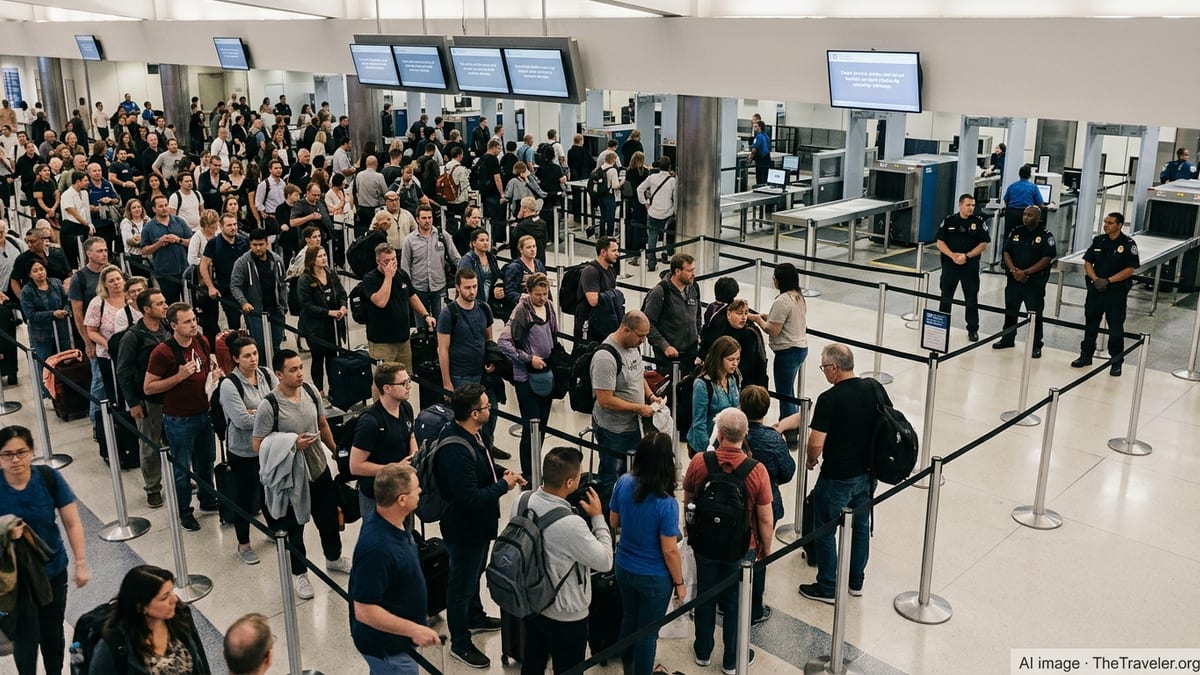
Wide Network Impact From Boston Hub Disruptions
The disruption at Boston Logan rippled far beyond New England, affecting routes linking the airport with destinations across the United States, Canada, Ireland, Italy, Spain, Hong Kong, and other international markets. Traffic between Boston and major Canadian hubs such as Toronto and Montreal was among the most affected, with regional carriers including Air Canada, Jazz, and Porter Airlines experiencing notable operational challenges.
Services operated by large U.S. carriers and their international partners were also caught in the disruption. JetBlue, Delta Air Lines, American Airlines, United Airlines, Southwest Airlines, and Alaska Airlines all recorded delayed or canceled departures or arrivals, impacting connections to key domestic hubs and transatlantic gateways. European services to destinations in Ireland, Italy, and Spain, together with long haul links to Asia, were reported among the routes affected as delays at Boston cascaded through airline schedules.
The combination of delayed departures and missed connections complicated travel plans for passengers connecting through Boston onto international flights. Reports indicate that travelers on evening departures to Europe and overnight services from North American cities into Boston faced timetable changes, longer journey times, and in some cases last minute rebookings.
Operational data regularly highlight Boston Logan as a critical and busy hub for both domestic and international networks. When irregular operations occur at the airport, knock-on effects often spread quickly, particularly during peak summer schedules when aircraft utilization and load factors are high.
Airlines Most Affected, From Flag Carriers To Low-Cost Operators
Among the airlines experiencing the highest rate of disruption were Air Canada and its regional affiliate Jazz, which together support a dense schedule of cross-border flights between Boston and multiple Canadian cities. Published coverage of the day’s performance indicates that several departures and arrivals on these routes were delayed or canceled, impacting both point-to-point travelers and those connecting onward to Western Canada and transatlantic services.
JetBlue, one of Boston’s largest operators, also reported multiple delayed services as the day progressed. With a network that spans major U.S. cities, the Caribbean, and selected transatlantic destinations, any disruption to its Boston operation can swiftly affect passengers far beyond New England. Delayed departures to cities such as Los Angeles, San Juan, and key hubs in Florida created downstream scheduling pressures for aircraft and crews.
Southwest Airlines, which links Boston with its U.S. network of primarily domestic routes, was similarly impacted. Disruptions on these services can be particularly challenging for travelers relying on tight connections through Southwest focus cities to reach secondary destinations across the United States. Publicly accessible flight-tracking data showed schedule changes on selected services touching Boston during the affected period.
In addition to North American carriers, a range of international airlines serving Boston, including European and transatlantic operators, registered delays. Flights to and from Ireland, Italy, Spain, and other European markets were among those reporting schedule deviations, underscoring how a single day of constrained operations at a major hub can echo through multiple long haul and regional networks.
Operational Pressures Behind The Disruptions
While a detailed, single cause for the July 3 disruption has not been formally identified in public statements, several structural factors are widely recognized as contributors when irregular operations emerge at Boston and other major hubs. Aviation analysts frequently point to air traffic control staffing constraints, high summertime traffic volumes, and tightly timed turnarounds as elements that can quickly reduce an airline’s ability to recover when the schedule is strained.
Industry reports published earlier in 2026 have highlighted how even brief weather or airspace restrictions at large Northeast airports can lead to ground holds, flow control measures, and runway congestion that compound throughout the day. In such conditions, carriers often prioritize long haul departures and critical connectivity flows, which can result in cancellations or extended delays on shorter regional segments, including those to and from Canadian and smaller U.S. markets.
Past analyses of Boston Logan’s operating environment also point to the airport’s role as a multi-airline hub handling dense banks of early morning and late afternoon departures. When disruptions occur during these peak periods, airlines have limited options to re-time flights without significantly affecting later rotations. As a result, disruptions can propagate, increasing the number of delayed services and raising the likelihood of cancellations to restore schedule integrity.
Observers note that this pattern appears to have been reflected in the latest disruption, with a mix of large network carriers and regional operators adjusting operations as the day progressed. The cumulative total of 143 delays and 10 cancellations illustrates how quickly irregular operations can scale once the schedule for a busy hub begins to fray.
Passenger Experience: Missed Connections And Rebookings
For passengers, the disruption translated into longer waits at gates, missed connections, and in some cases overnight stays or extensive rerouting. Travelers connecting in Boston from domestic and Canadian flights onto transatlantic and transpacific services appeared particularly vulnerable, as delays on feeder flights narrowed or eliminated available connection windows.
Publicly available guidance from airlines and airport information channels typically encourages passengers to monitor flight status closely on days of widespread disruption and to build additional time into connections, especially at busy hubs like Boston Logan. On July 3, the concentration of delayed services meant many travelers needed to rely on same-day standby lists, alternative routings through other U.S. hubs, or rebooked itineraries on later dates.
Consumer advocacy groups often emphasize that during operational disruptions, communication and timely information are critical for reducing passenger frustration. While airline and airport mobile applications, text alerts, and display boards provide real time updates, irregular operations can still create uncertainty as schedules are repeatedly adjusted. The experience at Boston illustrates the challenges travelers face in interpreting evolving departure times, gate changes, and seat availability when a large share of the day’s operation has been affected.
Travelers holding itineraries in and out of Boston over the coming peak summer weeks are likely to pay close attention to the latest performance data and weather forecasts, particularly for afternoon and evening departures. Many frequent flyers recommend selecting earlier flights where possible and allowing generous connection times when routing through New England and other congested Northeast corridors.
Broader Implications For Summer Travel Reliability
The events at Boston Logan add to a series of operational challenges that have characterized parts of the North American air travel system in 2026. Industry observers have noted that while overall capacity and demand have largely recovered, infrastructure and staffing have not always kept pace with the renewed intensity of schedules. The result, as seen in Boston, is that relatively modest disruptions can trigger extensive downstream effects.
For airlines, days with high levels of delays and cancellations can require significant effort in repositioning aircraft, reassigning crews, and accommodating displaced passengers, all while maintaining compliance with duty time regulations and safety protocols. The need to protect key long haul services and high revenue markets can further shape which flights are preserved and which are trimmed when schedules come under pressure.
For travelers planning international journeys connecting through Boston to destinations in Canada, Europe, and Asia, the latest disruption serves as a reminder of the importance of contingency planning. Travel experts frequently advise building flexibility into itineraries, considering travel insurance that covers disruption, and remaining prepared for schedule changes, particularly during busy summer periods.
As the peak holiday season advances, performance at Boston Logan will be closely watched as an indicator of broader system resilience. The experience of 143 delays and 10 cancellations in a single day illustrates both the central role of the airport in connecting multiple regions and the ongoing vulnerability of complex airline networks to concentrated operational stress.