


More news on this day
Hundreds of travellers across Europe are facing long queues, missed connections and overnight airport stays as more than 500 delayed flights and at least 20 cancellations hit major hubs including Paris, London and Amsterdam, disrupting operations for easyJet, Lufthansa, Air France, Ryanair and other leading carriers.
Get the latest news straight to your inbox!
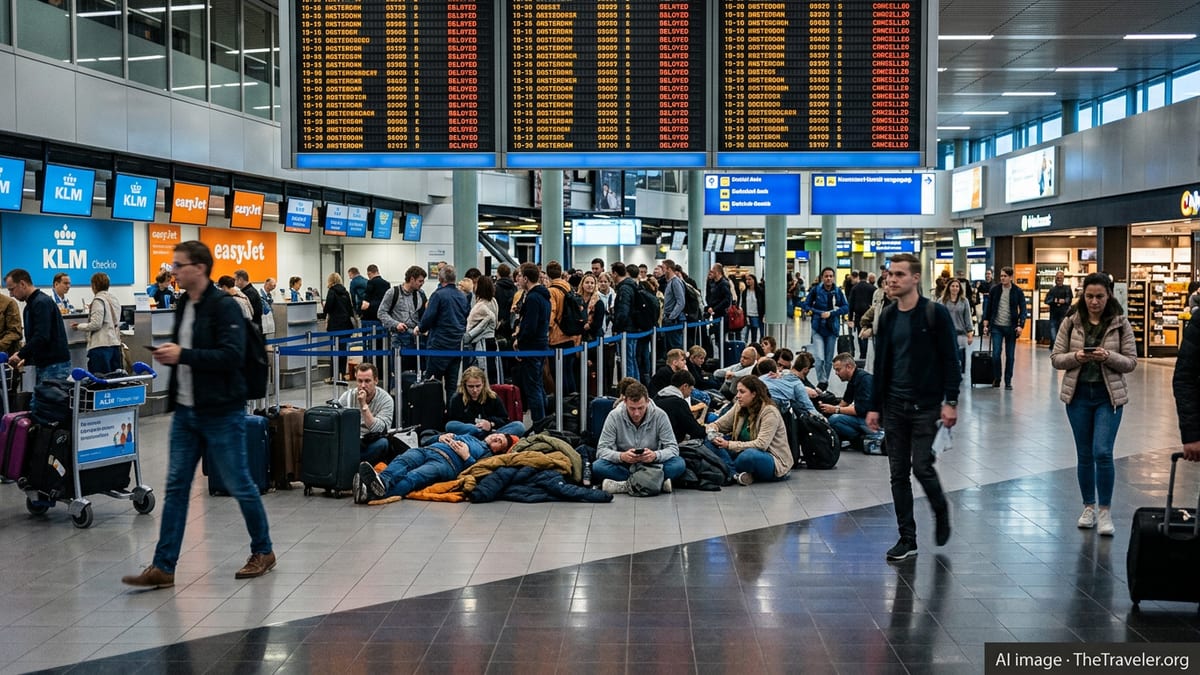
501 Delays and 20 Cancellations Snarl Summer Getaways
Data compiled from European flight-tracking and disruption-monitoring services over the past 24 hours indicates that 501 flights have been delayed and at least 20 cancelled across key airports serving France, the United Kingdom and the Netherlands. The largest clusters of disruption are concentrated at Paris Charles de Gaulle and Orly, London Heathrow and Gatwick, and Amsterdam Schiphol, where departure boards have been dominated by late-running services.
Publicly available information shows that the disruption is affecting a broad mix of full-service and low-cost airlines. Air France and Lufthansa are seeing persistent knock-on delays across their European networks, while easyJet and Ryanair are contending with schedule slippages on short-haul leisure routes linking France and the UK with Mediterranean holiday destinations. Additional delays at secondary French airports, including Nice and Paris Beauvais, are adding pressure to already crowded travel corridors.
While many flights are departing eventually, the cumulative effect of even moderate delays has created missed connections, tight turnarounds for aircraft and crew, and a rolling backlog of passengers seeking rebooking. Travel analysts note that disruption on this scale quickly ripples across Europe’s densely interconnected aviation system, particularly when it hits multiple hub airports on the same day.
Reports from aviation tracking platforms suggest that the current pattern is consistent with a broader spike in irregular operations across Europe this year, with several recent days registering more than a thousand delays and dozens of cancellations spanning Paris, Amsterdam, Madrid, Frankfurt, Copenhagen and London.
France at the Epicentre of Widespread Disruption
France is again emerging as a focal point of travel disruption, with airports including Paris Charles de Gaulle, Orly and regional gateways reporting hundreds of delayed flights and clusters of cancellations in recent weeks. French-language industry coverage highlights days where close to 900 flights across Charles de Gaulle, Orly, Nice, Basel-Mulhouse and Gustaf III experienced delays, affecting Air France, easyJet, Lufthansa, KLM, British Airways and other carriers operating domestic and international routes.
Operational challenges in French airspace are a recurring factor. Earlier this year, travel advisories linked waves of delays and cancellations to staffing issues and industrial action within French air traffic control, creating bottlenecks for services not only to and from France, but also for overflights connecting the UK, Ireland and northern Europe with Spain, Italy and Greece. Even when aircraft are not landing in France, reroutings and flow restrictions can lengthen flight times and push schedules beyond their limits.
Recent reporting also points to busy holiday airports such as Nice experiencing heavy congestion, with more than 300 individual disruptions recorded on some days. These conditions have left passengers queueing at service desks for rebooking, being transferred to hotels at short notice, or searching for alternative routes via rail or other European hubs.
The latest figures from disruption-monitoring services suggest that the current wave of 501 delays and 20 cancellations is part of a continuing pattern of strain on French infrastructure during peak travel periods, rather than an isolated incident.
London and Amsterdam Feel the Knock-On Effects
London’s major airports are also facing renewed pressure. Coverage from recent travel bulletins in the UK describes days when more than 400 flights at Heathrow and London City were delayed or cancelled, stranding thousands of passengers and filling terminals with queues at security and airline counters. Additional reporting from July indicates that Heathrow, Gatwick and Manchester together have seen more than 400 delays and dozens of cancellations in a single day, with both British Airways and easyJet experiencing high disruption volumes.
At Amsterdam Schiphol, earlier operational breakdowns this year led to nearly 500 delays and over 50 cancellations in a single 24-hour period, affecting KLM and a wide range of international carriers and causing extensive missed connections on long-haul routes to North America, the Middle East and Asia. That episode underlined how quickly congestion at a single major hub can reverberate through global networks.
Current tracking suggests that London and Amsterdam are again seeing elevated delay levels today as they absorb diverted passengers, repositioned aircraft and late inbound services from France and southern Europe. With schedules heavily banked around peak morning and evening waves, a relatively small number of early disruptions can cascade into a full day of irregular operations.
Experts in European air travel note that hubs like Heathrow, Gatwick and Schiphol have limited slack at the height of summer. When extra waiting time is added for border checks, baggage handling or air traffic control spacing, the system can struggle to recover before the next day’s peak traffic arrives.
Border Technology, Weather and Strikes Add to Chaos
The current bout of disruption is unfolding against a complex backdrop of operational challenges that have accumulated across Europe’s aviation sector. Published analysis highlights strong Atlantic winds recently affecting Madeira, for example, where dozens of flights were delayed or cancelled, including services to London, Paris, Amsterdam and Frankfurt. Those weather-related cancellations have forced airlines such as TAP Air Portugal, Ryanair, easyJet and Lufthansa to juggle aircraft and crews, complicating their broader European schedules.
At the same time, European carriers and airports are still adjusting to the new Entry/Exit System for non-Schengen travellers, which requires digital fingerprinting and photography at the border. Recent coverage notes that some airports have already seen long queues, missed flights and aircraft departing with empty seats because passengers were held up at immigration checkpoints.
Ryanair has publicly warned of potential “queue chaos” at certain EU airports this summer, including Paris Beauvais, as passenger numbers peak. Irish travel advisories have also pointed out that French air traffic control staffing disputes can cause delays for flights simply crossing French airspace, even when departure and arrival airports are in other countries.
Industry monitoring reports further show that intermittent strikes by aviation workers in Italy, France and other markets have contributed to periodic clusters of cancellations and rolling delays, adding another layer of uncertainty for summer travellers.
Passengers Face Long Queues and Complex Rebooking
For travellers caught up in the latest wave of 501 delays and 20 cancellations, the immediate impact is often measured in hours spent standing in line at service desks or waiting at departure gates with limited information. Publicly available accounts from recent disruption days in London, Paris and Amsterdam describe overnight stays on terminal floors, improvised arrangements at nearby hotels and tight rebookings onto already crowded flights.
Consumer-rights organisations and legal information services are reminding passengers that European and UK air passenger protection rules generally entitle them to assistance during long delays, including meals, refreshments and hotel accommodation if an overnight stay is required. In some circumstances, travellers may also be eligible for refunds or compensation, depending on the cause and duration of the disruption and the distance of the flight.
Industry guidance consistently advises passengers to monitor airline apps and airport information screens closely, arrive early for flights during peak periods and keep receipts for any reasonable expenses incurred as a result of delays or cancellations. Where practical, some passengers are turning to high-speed rail links between France, the Netherlands, Belgium and Germany as a fallback when short-haul flights are heavily disrupted.
With school holidays ramping up across Europe and continued strain on key hubs in France, the UK and the Netherlands, observers suggest that further days of significant disruption are likely in the weeks ahead. Travellers planning to pass through Paris, London, Amsterdam or regional French airports are being encouraged to build extra time into itineraries and to stay alert to rapidly changing flight information.