


More news on this day
American Airlines generates an estimated 71 billion dollars in annual economic impact tied to its operations at Dallas Fort Worth International Airport, according to a new study that highlights the carrier’s outsize role in North Texas’ aviation and jobs landscape.
Get the latest news straight to your inbox!
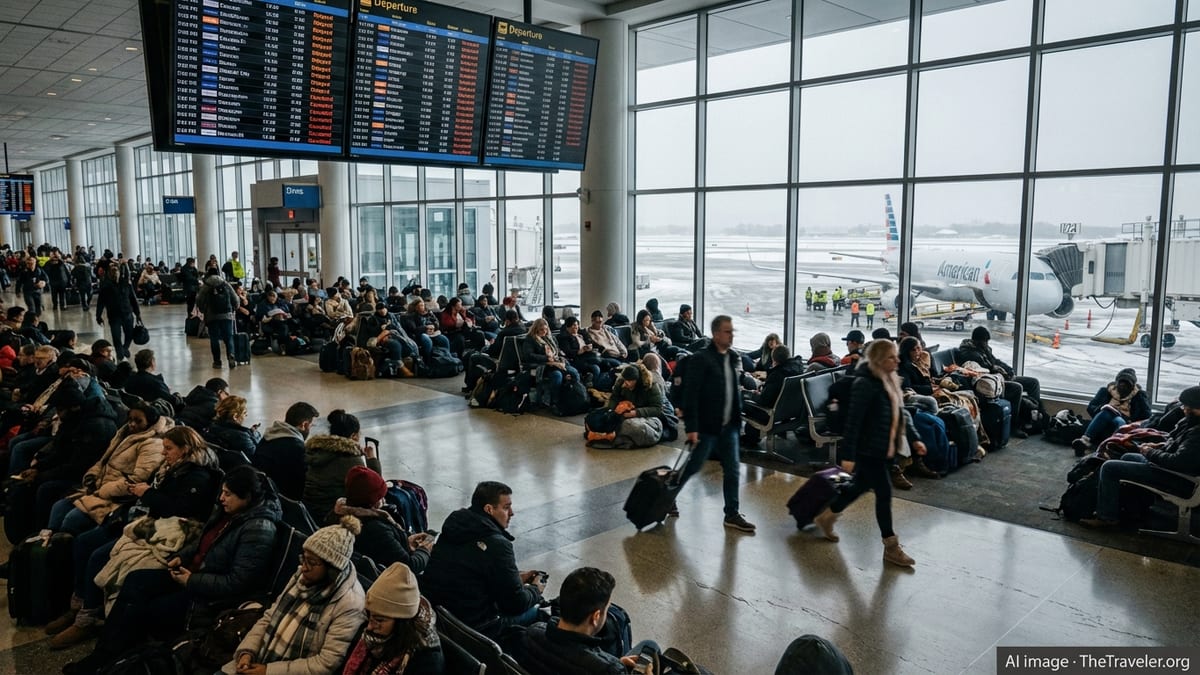
New study underscores scale of American’s DFW hub
The economic impact study, commissioned in connection with planning and capital programs at Dallas Fort Worth International Airport, attributes roughly 71 billion dollars in annual regional activity to American Airlines and its affiliates serving the airport. Publicly available documentation describing the findings indicates that the figure reflects a combination of direct payroll, supplier spending, construction activity, visitor expenditures and related multiplier effects tied to the airline’s DFW hub.
The report’s headline number places American’s economic footprint at DFW well above earlier airport-wide estimates that pegged Dallas Fort Worth International Airport’s total impact in the tens of billions of dollars. The new analysis isolates the contribution of a single carrier at the airport, underscoring how central American’s hub has become to travel and commerce in the Dallas–Fort Worth region.
American Airlines and its American Eagle affiliates account for the vast majority of passenger activity at DFW, making the airport one of the largest single-airline hubs in the world. That concentration amplifies the economic effects of every new route, aircraft assignment and facility expansion decision linked to the carrier’s North Texas operations.
Analysts note that the 71 billion dollar figure reflects conditions in a period when passenger volumes at DFW have continued to recover and expand, and as the airport and airline move ahead with a series of long-term investments, including a major new terminal and associated infrastructure.
Jobs, payroll and visitor spending across North Texas
The economic impact study credits American’s DFW presence with supporting tens of thousands of jobs on and around airport property, along with additional employment spread across North Texas through supplier networks and induced household spending. While only a portion of those roles are direct airline positions, the total includes contractors, concessionaires, ground handling firms, maintenance providers, logistics operators and a wide range of service-sector employers.
Payroll tied to those jobs forms a substantial share of the 71 billion dollar estimate, reflecting the concentration of aviation-related employment in Tarrant and Dallas counties. Public planning documents from the airport show that leadership has identified growing the region’s overall aviation payroll and associated community impact as a strategic priority, with economic output targets rising over the second half of the decade.
The study also highlights the spending power of visitors who arrive on American flights at DFW. Those travelers contribute to hotel occupancy, restaurant business, retail sales and entertainment venues across the metroplex. Tourism and business travel linked to the hub support downtown convention activity in Dallas and Fort Worth, as well as meetings and corporate campuses located in surrounding suburbs.
Beyond tourism, cargo and belly freight services using American’s network help facilitate trade for manufacturers, technology companies and time-sensitive shippers throughout the region. Although these flows represent a smaller portion of the passenger-focused hub’s activity, they add another layer of economic benefit that ripples beyond airport boundaries.
Strategic investments strengthen hub status
The release of the 71 billion dollar impact figure comes as Dallas Fort Worth International Airport and American Airlines advance plans for a major expansion of facilities. The airport’s governing board has previously approved elements of a multibillion-dollar capital program that includes work on a new Terminal F, modernization of existing terminals and upgrades to airfield and roadway infrastructure.
According to publicly available airport planning documents, Terminal F is expected to be developed in phases, with American positioned as the primary tenant. The project will add new gates and support spaces designed around the carrier’s hub-and-spoke operation, enabling additional connecting traffic and new route opportunities in coming years.
American has separately outlined significant investments in gates and operational areas at DFW in conjunction with a long-term use and lease agreement. These commitments are aimed at sustaining the hub’s growth as passenger volumes approach and potentially surpass pre-pandemic records, while also supporting more efficient aircraft turns and improved customer flows.
Airport strategic plans indicate that decision-makers are targeting higher passenger throughput, improved customer satisfaction metrics and continued progress on sustainability objectives. The scale of American’s DFW operation, as quantified by the new impact study, suggests that the airline’s choices on fleet deployment, scheduling and infrastructure use will heavily influence whether those objectives are met.
Regional development and competition in the Metroplex
The study’s findings arrive in a broader context of ongoing aviation competition within the Dallas–Fort Worth metroplex. While Dallas Fort Worth International Airport serves as the region’s primary global gateway, other facilities, including Dallas Love Field and various general aviation airports, also contribute to mobility and economic development.
Historically, policy debates over how to balance activity between the major commercial airports in the region have centered on concerns about preserving DFW’s role as a key economic engine. Supporters of maintaining a strong international hub have stressed that large-scale connecting operations, such as American’s at DFW, support substantial employment and capital investment that can be difficult to replicate elsewhere.
The new 71 billion dollar estimate reinforces that argument by quantifying the scale of economic activity tied specifically to American at DFW. Local business groups and civic leaders are expected to reference the figure in discussions about transportation infrastructure priorities, land-use planning around the airport and efforts to attract corporate relocations that value global air connectivity.
At the same time, growth at DFW has prompted renewed focus on surface transportation links, including highway access and rail service, to ensure that increased passenger and cargo volumes do not outpace the region’s ability to move people and goods efficiently to and from the airport.
Implications for future air service and community planning
The economic impact study suggests that American’s continued investment at DFW will be closely tied to the region’s long-term development trajectory. As Dallas Fort Worth International Airport advances major terminal and airfield projects, local planners are monitoring how expanded gate capacity and improved facilities could support additional long-haul international routes and more frequent domestic service.
For surrounding communities, the 71 billion dollar figure provides a data point to evaluate both the benefits and pressures associated with living near one of the world’s largest airport hubs. Economic gains from job creation and business attraction are balanced against concerns about noise, air quality and infrastructure strain, prompting ongoing discussion about mitigation measures and community investment.
Airport strategy documents show that leadership has linked economic goals with commitments to sustainability, safety and workforce development. The scale of American’s DFW hub means that progress on those fronts will depend heavily on coordinated efforts between the airline, the airport authority, local governments and regional planning agencies.
As the North Texas economy diversifies and the global aviation sector adapts to shifting demand patterns, the newly reported 71 billion dollar impact underscores that American Airlines’ presence at DFW remains a central pillar of the region’s connectivity and financial strength.