


More news on this day
Bradley International Airport experienced a bout of operational turbulence this week, with five flight cancellations and 24 delays affecting services operated by JetBlue, Southwest Airlines, and Aer Lingus, disrupting travel plans for hundreds of passengers across New England and beyond.
Get the latest news straight to your inbox!
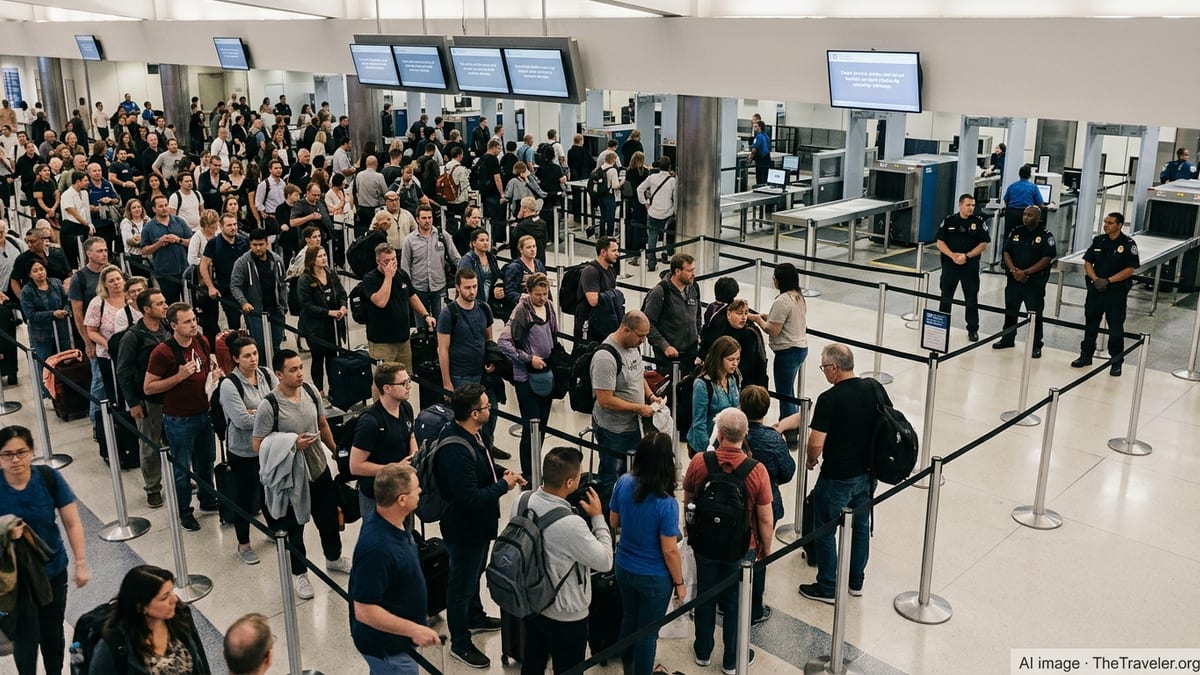
Cluster of Disruptions at Connecticut’s Busiest Airport
Publicly available flight-tracking data and independent travel-industry analysis show that Bradley International Airport faced a concentrated wave of schedule disruptions across a single operating window, impacting a mix of domestic and transatlantic routes. In total, five flights were cancelled and 24 were delayed, primarily on services operated by JetBlue, Southwest, and Aer Lingus, three of the airport’s most prominent carriers.
The disturbance comes at a time when Bradley is handling strong passenger volumes, supported by growing leisure and business demand. Airport traffic reports for 2025 and early 2026 indicate that JetBlue and Southwest rank among the highest-volume domestic operators at Bradley, while Aer Lingus anchors its long-haul connectivity to Dublin. This combination means any operational difficulties at those airlines can be felt widely across the airport’s schedule.
Although the exact mix of causes varied from flight to flight, the pattern aligns with broader pressures in the U.S. aviation system, where summertime thunderstorms, air-traffic-flow programs, and tight aircraft utilization often interact to turn local weather or airspace restrictions into regional disruptions. For travelers using Bradley as a gateway to Florida, the Caribbean, the U.S. Midwest, and Ireland, even a small number of cancellations and delays can translate into missed connections and rebookings across multiple days.
The disruptions were significant enough to alter the day’s operational profile for Bradley, which typically sees a high rate of on-time departures among its mainline and low-cost carriers. With three of its best-known brands affected on the same day, the episode underscored how sensitive regional hubs can be to modest shifts in airline performance.
JetBlue, Southwest, and Aer Lingus Routes Among the Hardest Hit
According to aggregated same-day performance data, JetBlue recorded a combination of delayed departures and at least two cancellations from Bradley, affecting popular leisure and visiting-friends-and-relatives routes. These services often include connections to Caribbean destinations and major hubs that channel travelers onward to Latin America and other U.S. cities, magnifying the impact of a single disrupted leg.
Southwest, a key player in Bradley’s domestic network, also experienced a notable cluster of delays alongside at least one cancellation. The carrier’s point-to-point business model, which relies on swift aircraft turnarounds and tight scheduling, can cause a delay on one early segment to cascade across several subsequent flights. As a result, services to and from cities such as Baltimore, Chicago, and Orlando can face knock-on effects even when conditions at Bradley appear relatively stable.
Aer Lingus, which provides nonstop transatlantic service between Bradley and Dublin, was among the affected airlines, with schedule data showing a disrupted long-haul departure. Because transatlantic flights typically operate at specific times to align with European and U.S. banked connections, a single delay or cancellation can strand passengers far from their final destinations and create complex rebooking challenges across multiple carriers and alliances.
Across all three airlines, the mix of five cancellations and 24 delays marked a clear deviation from Bradley’s usual operating rhythm. For many travelers, this meant overnight stays, rerouted itineraries through larger hubs, or the need to adjust ground transport and hotel plans at short notice.
Regional and Systemwide Factors Behind the Irregular Operations
Travel-industry coverage and operational summaries point to a convergence of regional and national factors behind the disruptions at Bradley. Periods of unsettled summer weather in the Northeast and Mid-Atlantic can trigger air traffic control programs that slow arrivals and departures, even in cases where conditions at a specific airport are not especially severe.
In recent days, severe thunderstorms and associated ground-delay programs at major hubs such as Chicago and other large connecting airports have prompted broad schedule adjustments and rolling delays. When airlines divert aircraft or reschedule crews to handle those hotspots, smaller but strategically important airports like Bradley can see service gaps, late inbound equipment, or aircraft reassigned to other routes with higher passenger loads.
Operational data for U.S. carriers this summer also show that staffing and maintenance buffers remain tight across much of the industry. In practice, this means there is limited spare capacity to absorb unexpected weather systems, airspace constraints, or technical inspections without visible impacts on the timetable. For JetBlue, Southwest, and Aer Lingus, which each operate relatively focused fleets at Bradley, a single out-of-position aircraft or unavailable crew can force a cancellation when no ready substitute is available.
Analysts note that such irregular operations events are not unique to Bradley, but they can be felt more acutely at airports where a handful of carriers account for a large share of daily departures. As the Connecticut Airport Authority continues to court additional airlines and destinations, the balancing act between growth and resilience remains a central challenge for the region’s air-travel infrastructure.
What the Disruptions Mean for Bradley Travelers
For passengers using Bradley as their primary airport, the latest disruptions highlight the importance of preparing for irregular operations during peak travel periods. Industry guidance consistently recommends booking longer connection times, especially when connecting from regional flights onto transatlantic departures or onward domestic legs through busy hubs.
Travel experts also suggest monitoring flight status through both airline and airport channels, as well as enrolling in carrier notifications to receive early notice of schedule changes. During episodes when multiple carriers are seeing delays and cancellations, same-day rebooking options can narrow quickly, making prompt decision-making especially valuable.
In addition, publicly available performance statistics for Bradley’s leading airlines provide some context for planning. Historical data from 2025 and early 2026 show strong passenger growth at the airport, which tends to increase load factors on many routes. High load factors can limit the availability of spare seats on later flights, raising the stakes when a cancellation or lengthy delay occurs.
For those traveling on Aer Lingus’ Dublin service or JetBlue and Southwest routes that connect into major U.S. or Caribbean gateways, opting for earlier departures in the day and allowing extra time for connections can help reduce the risk of being stranded overnight. While the five cancellations and 24 delays at Bradley represent a snapshot rather than a systemic breakdown, they illustrate how quickly a normal travel day can unravel when several key airlines encounter headwinds simultaneously.
Outlook for the Remainder of the Summer Travel Season
Looking ahead, aviation analysts expect intermittent disruption to remain a feature of the U.S. summer travel season, including at medium-sized hubs like Bradley. Forecasts point to continued strong demand, with carriers operating near capacity on many peak-day departures and limited slack in both fleets and staffing.
At the same time, ongoing infrastructure investments at Bradley, along with incremental schedule adjustments by airlines, are designed to improve the passenger experience over the medium term. Enhancements to terminal facilities, gate utilization, and international processing are intended to make the airport more attractive to both carriers and travelers, even as irregular operations remain an unavoidable part of modern air travel.
For now, the recent episode of five cancellations and 24 delays stands as a reminder that even a relatively modest disruption can have outsized effects when it hits multiple airlines and route types at once. As summer continues, travelers using Bradley International Airport may see generally reliable operations punctuated by occasional, concentrated periods of disruption driven by weather patterns, network imbalances, and the broader dynamics of the U.S. aviation system.
In that environment, preparedness and flexibility remain the most practical tools available to passengers, while airports and airlines work behind the scenes to balance growth, efficiency, and resilience across their shared networks.