

More news on this day
A fatal collision between two passenger trains near Bedford in central England has left one driver dead, dozens seriously injured and caused major disruption across one of Britain’s busiest rail corridors, affecting travelers heading into and out of London.
Get the latest news straight to your inbox!
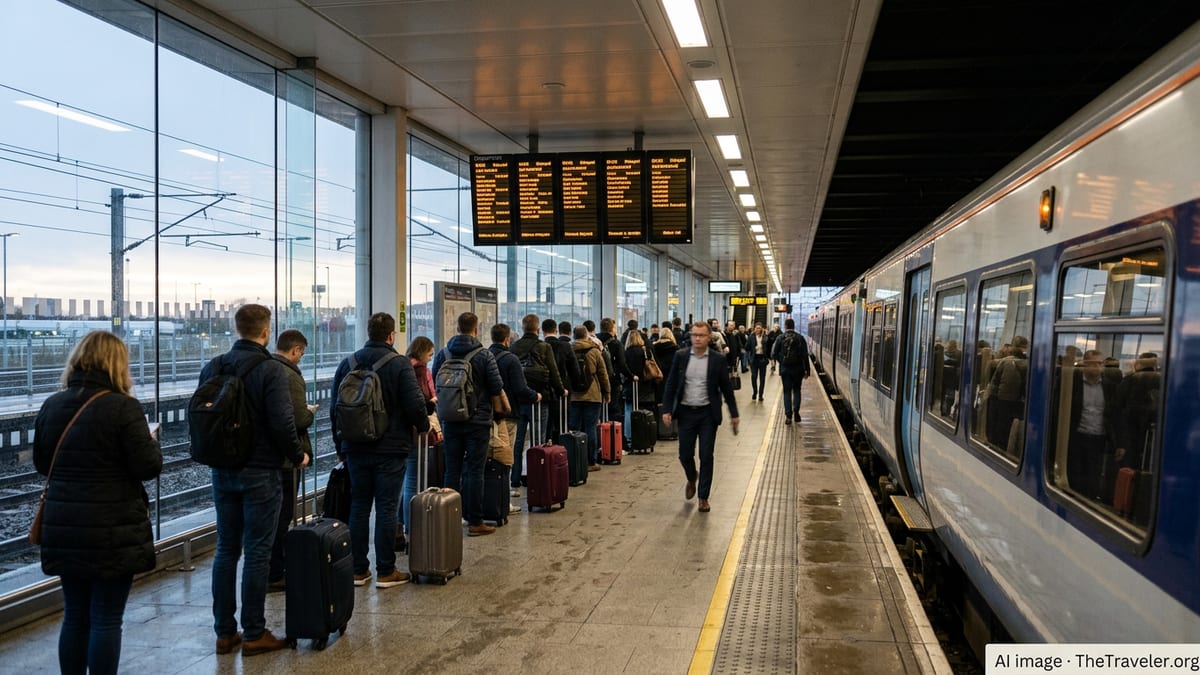
Details of the collision north of London
According to published coverage, the collision occurred on the evening of Friday 19 June 2026 on the Midland Main Line just south of Bedford, a key junction on the route into London St Pancras. Two southbound services, both running toward the capital, were involved. One train was reported to have run into the rear of another that had stopped or slowed ahead, resulting in a violent impact that derailed carriages and caused significant interior damage.
Initial reports indicate that the driver of the rear train was killed in the crash. More than 80 passengers were transported to hospitals in the wider region, with several described in local media as being in critical condition. Images from the scene showed crumpled rolling stock, broken windows and scattered personal belongings along the track, while emergency crews worked through the evening under floodlights.
Travelers on board have described being thrown forward without warning when the trains collided, with some accounts referencing serious injuries including broken limbs and head wounds. Publicly available information suggests that a number of passengers were initially trapped by twisted metal and collapsed seating before being helped out through doors and windows onto the trackside.
Rail investigators and specialist recovery teams remained at the crash site into Saturday 20 June, working to stabilize damaged carriages and secure the area. The incident has been formally classified as a major accident and is now the focus of a detailed technical inquiry into how two modern passenger services came to occupy the same stretch of line.
Impact on rail services and weekend travel
The collision has caused extensive disruption along the busy corridor linking the East Midlands with London. Public travel alerts show that services operated by East Midlands Railway and other franchised operators into St Pancras have been reduced, diverted or canceled while the line near Bedford remains partially blocked. Replacement buses have been put in place between affected stations, but capacity is limited and journey times have lengthened considerably.
The timing of the crash, at the start of a summer weekend, has amplified the effect on leisure travelers, including domestic tourists and international visitors using London as a hub. Passengers heading to and from cities such as Nottingham, Corby and Sheffield face longer and more complex journeys, often involving diversions via alternate routes or connections into other London terminals such as King’s Cross or Euston where capacity allows.
Rail journey planners updated on Saturday advise travelers to check services before departure and to allow additional time for connections, particularly for onward flights and cruise departures. Some services are running on altered timetables that avoid the immediate crash zone, while others terminate short of their normal destination to reduce congestion around Bedford.
The disruption also has knock on effects for local transport around Bedford and nearby towns, where additional road traffic and bus demand are being reported. For visitors using hire cars or taxis to bypass the affected rail section, delays on regional highways are likely, especially at key junctions where rail replacement buses interface with regular bus and coach networks.
What investigators are examining
Publicly available information from national media indicates that the Rail Accident Investigation Branch and associated technical experts are focusing on several areas as they seek to reconstruct the sequence of events. These include signaling performance on the stretch of line south of Bedford, the status of any automatic protection systems fitted to the trains and the way communications were handled in the minutes before impact.
Reports indicate that both trains were modern passenger units operating on a line that typically benefits from layered safety systems designed to prevent rear end collisions. Investigators are expected to review data recorders, control room logs and maintenance records to determine whether any technical failures, human factors or infrastructure issues contributed to the crash.
Industry commentary quoted in news coverage notes that Britain’s rail network has, in recent decades, maintained a strong safety record with very few multi train collisions leading to fatalities. This has heightened public interest in understanding how such a serious incident could occur on a heavily trafficked main line with established safety protocols.
While formal findings are likely to take months, interim recommendations could follow more quickly if investigators identify immediate risks that need to be addressed. These might involve temporary operating restrictions, updated driver briefings or adjustments to the way trains are routed through the affected section north of London.
Context for Britain’s rail safety record
Historical data shows that serious passenger train collisions in Britain have become relatively rare compared with previous decades, thanks to improved signaling, modern rolling stock and rigorous operating procedures. In recent years, most rail incidents involving injuries have been linked to level crossings, infrastructure failures or single train derailments rather than multiple train crashes.
The Bedford incident follows several years in which Britain’s railways were often cited as among the safest in Europe. Nevertheless, high profile collisions, even when infrequent, tend to prompt renewed debate over investment priorities, the pace of signaling upgrades and the balance between service frequency and margins of safety on busy corridors into London and other major cities.
For travelers, the crash is a reminder that while the statistical risk of a serious incident remains low, operational disruptions from accidents, infrastructure issues or extreme weather can significantly affect journeys. Travel organizations commonly advise passengers to build flexibility into itineraries, particularly where critical connections such as flights or long distance ferries are involved.
The Bedford crash is likely to serve as a case study for the rail industry, with lessons potentially influencing future training, technology deployment and contingency planning. Any recommendations emerging from the investigation may feed into broader modernization programs already planned across the British rail network.
Advice for domestic and international travelers
For travelers currently in Britain or planning trips in the coming days, journey planning is essential. National rail information services and train operator updates indicate that disruption around Bedford is expected to continue until investigators have completed site work and engineers have fully inspected and, if necessary, repaired the affected infrastructure.
Tourists heading from northern and central England to London are being encouraged in public guidance to consider alternative routes where practical, including services into other London termini with onward Underground connections. However, travelers should be aware that separate engineering works and unrelated incidents can also affect these alternatives, particularly on peak summer weekends.
Travel specialists recommend that passengers with time sensitive plans, such as scheduled tours, theatre tickets or airport departures, allow additional time and hold flexible tickets where possible. Many rail operators provide options for traveling on earlier services when serious incidents cause disruption, and some travel insurance policies may cover missed connections related to verified transport accidents.
For those planning future trips, the incident underscores the value of monitoring rail updates in the days before departure and on the day of travel itself. While Britain’s railways remain a central and generally reliable part of the tourism experience, events such as the Bedford collision can alter timetables and routings at short notice, making real time information a critical part of any travel plan.