


More news on this day
Bulgaria has begun introducing a new generation of electric passenger trains into regular service, marking a pivotal step in a nationwide railway transformation backed by European Union recovery and cohesion funds.
Get the latest news straight to your inbox!
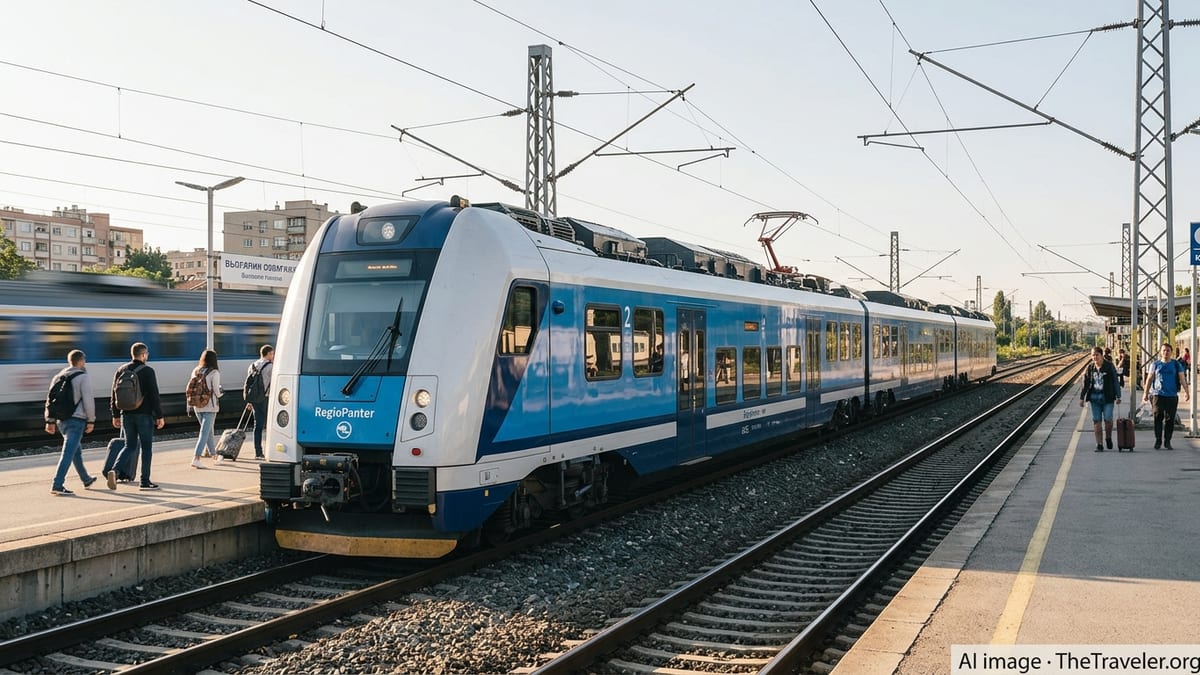
A Landmark Rollout of New Electric Fleets
Publicly available information shows that Bulgaria is now deploying modern electric multiple units (EMUs) across key national routes, replacing some of the country’s oldest passenger rolling stock. The change follows the arrival of new Škoda RegioPanter EMUs, which were presented in Sofia and prepared for entry into service on regional and suburban lines.
According to data published by the Ministry of Transport and Communications, the first two four‑car Škoda trains arrived in early 2026, with additional units scheduled for delivery throughout the year so that all 25 contracted trains are in Bulgaria by the end of August 2026. Reports indicate that these units will be used by BDZ Passenger Services on regular timetabled services before the end of the year, giving passengers their first widespread experience of fully air‑conditioned, low‑floor electric trains on many routes.
In parallel, industry coverage and enthusiast reporting indicate that Alstom Coradia Stream interregional EMUs have also started arriving for tests at the end of May 2026, under a contract for 35 trains signed in April 2025. Together, the Škoda and Alstom fleets represent the largest single injection of new passenger rolling stock into Bulgarian railways in decades and are expected to run at speeds up to 160 km/h on suitably upgraded infrastructure.
These new trains are part of a broader rail rolling‑stock investment of around 422 million euro from the EU Recovery and Resilience Facility, complemented by national co‑financing. The programme covers zero‑emission suburban and interregional EMUs, as well as electric locomotives and shunting units, with the objective of cutting emissions and improving service quality in line with European Green Deal goals.
Strategic Network Upgrades From Sofia to the Borders
The appearance of new EMUs on Bulgarian tracks coincides with a sweeping modernisation of core railway corridors that link Sofia with the Black Sea, the Danube and neighbouring countries. Project documentation from the National Railway Infrastructure Company outlines ongoing upgrades on the Sofia–Elin Pelin and Elin Pelin–Kostenets sections of the Sofia–Plovdiv main line, including double‑tracking, new signalling and track improvements designed to support higher speeds and heavier freight trains.
EU procurement notices and national project pages describe works on the Vidin–Medkovets–Sofia axis, a key north–south freight and passenger corridor that connects the Danube Bridge 2 at Vidin with the capital. Tenders for the Medkovets–Sratsimir section, issued in late 2024, are part of a wider plan to bring the line up to core TEN‑T standards with higher line speeds and increased capacity. These upgrades are intended to unlock the full potential of the new 160 km/h EMUs and shorten journey times on some of Bulgaria’s longest intercity routes.
International links are also benefitting from modernisation programmes in neighbouring states that feed into Bulgaria’s network. EU funding decisions in Greece and Turkey support upgrades on the Alexandroupolis–Svilengrad and Istanbul–Kapıkule railways, both of which connect directly to Bulgarian border stations. Once completed, these schemes are expected to improve cross‑border passenger and freight flows between Bulgaria, the Aegean region and Istanbul, reinforcing the country’s role as a bridge between central Europe and the Eastern Mediterranean.
Together, infrastructure and rolling‑stock investments are designed to deliver an integrated step‑change in service quality. Higher‑performance tracks and modern signalling allow the new EMUs to operate closer to their maximum speed, while electrification and capacity improvements accommodate more frequent services on some of the country’s most heavily used corridors.
EU Recovery Funds Driving a Low‑Carbon Shift
Bulgaria’s recovery and resilience plan, as endorsed by the European Commission, allocates substantial funds to decarbonising transport, with rail at the centre of this strategy. Official EU project summaries highlight a dedicated component for “railways rolling stock” that channels Recovery and Resilience Facility resources into new zero‑emission EMUs and locomotives for conventional lines, coupled with on‑board European Rail Traffic Management System (ERTMS) equipment to support digital signalling.
The plan envisages that state‑owned rolling stock will be made available to operators under public service contracts via an open, non‑discriminatory mechanism, a move intended to encourage competition and improve service quality while keeping assets in public ownership. According to European Commission documentation, passenger operators using the new trains under these contracts are required to meet specified performance and service‑level targets, including reliability, accessibility and energy efficiency benchmarks.
Additional EU support has been mobilised through cohesion policy instruments. Bulgarian media reporting on decisions by the European Commission notes an extra 520 million leva in railway‑sector funding, including resources for new passenger trains and 40 modern track‑maintenance machines for the national infrastructure manager. The combination of RRF and cohesion funds is intended to accelerate the replacement of obsolete rolling stock and tackle long‑standing bottlenecks in maintenance and infrastructure quality.
Policy documents from the European Union Agency for Railways describe Bulgaria’s rail investments as part of a broader European push to shift traffic from road to rail. By modernising core corridors and offering competitive, comfortable and reliable electric trains, the country aims to attract passengers back from private cars and long‑distance buses, cutting both congestion and greenhouse‑gas emissions.
Passenger Experience Set for a Step‑Change
The entry into service of the new Škoda and Alstom EMUs is expected to transform day‑to‑day travel for many Bulgarian rail users. According to manufacturer and project information, the trains feature full air conditioning, low‑floor access for passengers with reduced mobility, modern passenger information systems and dedicated spaces for bicycles and large luggage. This represents a marked departure from the ageing fleets that have dominated the network until now.
Reports from the launch events in Sofia indicate that the Škoda RegioPanter units will primarily serve suburban and regional services around the capital and on busy electrified routes, where frequent stops and high acceleration are essential. The longer‑distance Alstom Coradia Stream EMUs are being prepared for interregional and fast services linking cities such as Sofia, Plovdiv, Bourgas and Varna, once infrastructure upgrades permit sustained higher speeds.
Railway enthusiasts and local media have also highlighted the symbolic significance of the new trains, coming as Bulgaria retires some of its oldest electric multiple units dating back nearly half a century. Commentary accompanying images of the last “Elektrichka” services in summer 2026 frames the change as the end of an era and the visible start of a more modern phase for the national railway.
As testing and driver training are completed and more units are accepted into the fleet, the number of services operated by the new EMUs is expected to expand through late 2026 and beyond. The gradual rollout will allow the operator to phase out the most outdated vehicles, while passengers experience progressively shorter travel times and improved comfort on a growing share of journeys.
Long‑Term Vision for a Modern Rail Backbone
Background studies commissioned by European institutions describe Bulgaria’s rail reforms as part of a long‑term effort to rebalance national transport priorities, after years in which highway construction dominated investment. Recent EU modal‑shift analyses point to plans for opening the passenger rail market to new entrants and using state‑owned rolling stock to support a more competitive, service‑oriented environment.
Within this framework, the new electric trains are seen as a visible anchor of a wider transformation that includes digital signalling, modernised stations and multimodal connections. Project information from the rail infrastructure authority indicates that upgrades on core TEN‑T corridors around Sofia and towards Plovdiv are designed to accommodate 740‑metre freight trains and at least 100 km/h speeds, aligning Bulgaria with European standards and making its network more attractive for international logistics.
Over the coming years, the challenge will be to match hardware investments with reliable operations, integrated timetables and attractive fares. Analysts note that the success of the new fleets will depend on factors such as maintenance capacity, staff training and effective coordination between infrastructure managers and passenger operators. If these elements are delivered, Bulgaria’s new electric trains could become the backbone of a more sustainable national transport system and a key asset for tourism and regional development.
For travellers, the changes under way signal a future in which crossing Bulgaria by rail should become faster, more comfortable and significantly greener than in the past, consolidating the country’s role on Europe’s east‑west and north‑south rail corridors.
Ministry of Transport and Communications: First Škoda trains arrived in Bulgaria
European Commission: Railways rolling stock project in Bulgaria
Economic.bg: Additional EU support for Bulgaria’s railway sector