


More news on this day
France is facing its largest wave of high school protests in years, with hundreds of schools disrupted, more than 250,000 people joining marches nationwide and a rising number of violent incidents involving riot police and small groups of protesters. Travelers with autumn trips booked to Paris and other French cities are now asking whether it is still safe to visit as the demonstrations evolve from campus blockades into broader urban unrest.
Get the latest news straight to your inbox!
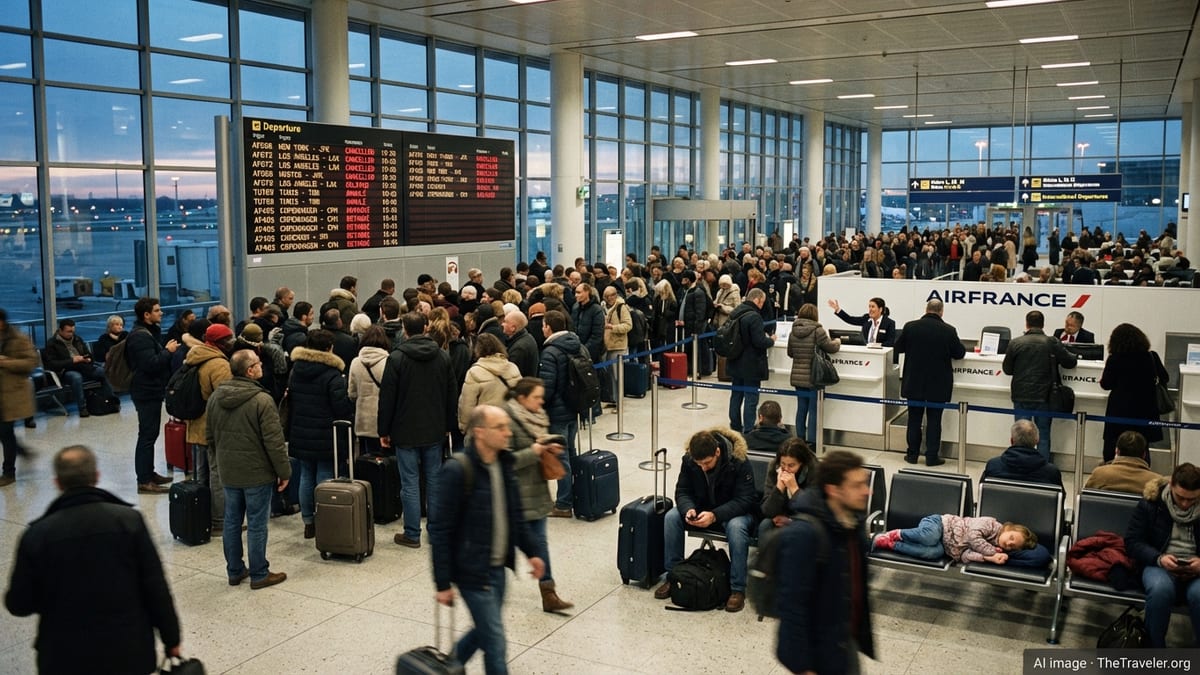
New protests and rising concerns about urban violence
High school walkouts and blockades that began around Paris in mid-September have rapidly expanded into a national protest movement over teacher shortages, overcrowded classrooms and deteriorating school buildings. Published coverage from French and international outlets indicates that hundreds of secondary schools across the country have seen entrances barricaded or classes disrupted as students demand more investment in education.
In recent days the tone of the unrest has shifted. France’s government has publicly described parts of the protest wave as “urban violence,” and data compiled by conflict-monitoring researchers shows more than 1,000 student-led demonstrations nationwide between 28 September and 2 October 2026. This makes the school movement one of the country’s largest episodes of social mobilization since the pension and fuel protests of the early 2020s.
Interior and education ministry figures cited in European and Latin American media report roughly 3,000 high school students detained since the start of the mobilization, with nearly 2,000 arrests recorded on a single day at the beginning of October. Official statistics also point to hundreds of injuries among students, school staff and security forces during clashes around several lycées and in working-class suburbs north of Paris.
Reports from national newspapers detail serious incidents, including a teenager in the northern city of Lens who lost a hand after picking up a police grenade during a confrontation near his school. Images from Paris, Marseille and other urban centers show riot police firing tear gas, protesters throwing projectiles and isolated cases of property damage on the fringes of largely peaceful marches.
What travel advisories and official guidance say
Despite the scale of the protests, France’s overall travel risk rating has not fundamentally changed in the major English-speaking advisory systems as of 7 October 2026. The United States lists France at Level 2, meaning visitors are advised to exercise increased caution for reasons that include the long-standing terrorism threat and the potential for civil unrest. The advisory highlights that demonstrations can occur with little warning and may turn confrontational, particularly in large cities.
The United Kingdom’s foreign travel advice similarly underscores that protests and political gatherings are frequent in France and can lead to transport disruption and a visible security presence. Australian guidance notes that robberies and other street crime sometimes accompany crowded events and reiterates that protests in France occasionally become violent at the edges, even when the main march remains peaceful.
None of these advisories currently warns against travel to France. Instead, they encourage visitors to monitor local news, avoid demonstration areas, and follow any instructions that local security services issue on the ground. Travelers are also advised to register with their consular authorities, where such programs exist, to receive email or SMS updates if the situation in a given region deteriorates or if large new protest actions are announced.
Travel insurance providers and international risk consultancies echo this picture of a country that remains broadly open for tourism but is experiencing an elevated likelihood of localized unrest around schools, government buildings and central squares. Their briefings emphasize that the current protests are politically charged but not directed at foreign visitors or tourism infrastructure.
Impact on Paris, major cities and transport networks
The immediate effects of the school protests are most visible in parts of the Paris region and in large metropolitan areas such as Marseille, Lyon, Lille and Toulouse. In these cities, photographers and correspondents describe impromptu marches of teenagers with banners, burning trash bins at some intersections and occasional confrontations with riot police when authorities move to clear blockades around specific lycées.
Key tourist districts such as central Paris, the historic cores of Lyon and Bordeaux, and coastal resort towns have so far experienced limited direct disruption. Social media posts and on-the-ground travel forums from early October describe visitors continuing to access museums, monuments and restaurants, while sometimes encountering detours around protest hotspots or temporary closures of individual Metro entrances during tense moments.
Transport infrastructure remains largely functional. A national day of education strikes and solidarity marches on 6 October brought hundreds of thousands into the streets, but airline, rail and urban transit unions did not file major strike notices for that date. As a result, high-speed trains, most city metros and scheduled flights operated largely as planned, although some surface tram and bus routes were briefly diverted to avoid large crowds.
Looking ahead to the late-October school holidays, however, separate industrial action could complicate travel even if the student protests calm. Cabin crew and pilot unions have issued strike notices covering several days of the Toussaint vacation period, which may result in flight cancellations or schedule changes. Travelers are therefore advised to monitor airline notifications closely and allow extra time when passing through major airports around those dates.
Practical safety tips for travelers on the ground
For most visitors, the main implication of the school protests is the need for heightened situational awareness in city centers and around educational or administrative districts. Publicly available safety guidance from European governments recommends steering clear of large gatherings, protest marches and police lines, even if the atmosphere initially seems festive. The risk of injury tends to rise when security forces deploy tear gas or crowd-control grenades in confined streets.
Travelers are encouraged to check local news and public transport apps each morning to identify any planned demonstrations that might cross key tourist corridors such as central boulevards, river quays or railway squares. If a protest materializes unexpectedly, a common recommendation is to move away via side streets rather than trying to push through the crowd, and to avoid filming confrontations at close range.
National travel advisories also highlight the importance of guarding against petty crime in crowded conditions. Pickpocketing and bag snatching remain issues on packed trains, near major landmarks and during large rallies. Using money belts or interior pockets, keeping phones out of back pockets and avoiding open bags can reduce the likelihood of theft, especially when attention is drawn to unfolding events.
Accommodation in central districts generally remains secure, but guests may wish to keep identity documents, travel tickets and a small amount of cash in a separate place from larger wallets or handbags. Consular briefings advise carrying a photocopy or digital image of passports and storing the original in a hotel safe when possible, to simplify procedures in case of loss or theft during a disruptive event.
Balancing travel plans with a fluid situation
For travelers with imminent departures to France, the decision to continue or postpone a trip depends largely on personal risk tolerance and itinerary flexibility. On current evidence, the protests are significant but concentrated, with daily life continuing in most neighborhoods. Cafes, cultural venues and shops remain open, and there are no general curfews or broad restrictions on movement linked specifically to the school unrest.
Those planning to visit should review the latest advisory for their nationality on the morning of departure, verify that flights and trains are operating as scheduled, and check whether any major demonstrations are announced for the areas they intend to explore. Adjusting sightseeing routes to avoid known protest hubs, such as certain suburban town halls or ministry districts, can further reduce exposure to disruption.
Travelers already in France can stay informed by following domestic news outlets, public transport operators and city authorities through broadcast media or official apps. Hotels and short-term rental hosts often have practical insights on which streets to avoid at specific times. By combining this local information with general safety practices, most visitors are likely to experience France much as they would at other moments of social tension: a popular destination where protests are part of the political landscape, but where tourism infrastructure is designed to keep functioning around them.