


More news on this day
Travellers heading to and from Belgium at the end of this week are being urged to review their plans, as reports indicate around 140 flights are expected to be cancelled at Brussels Airport due to strike action by ground handling staff.
Get the latest news straight to your inbox!
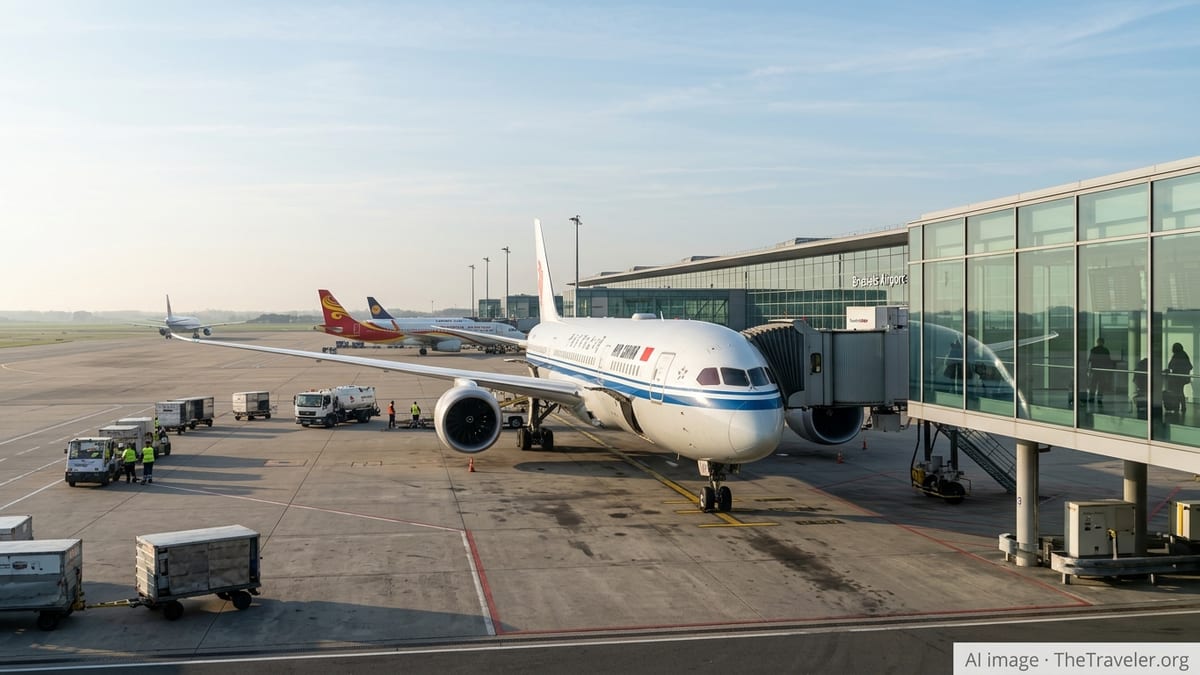
Strike action to disrupt operations at major European hub
According to recent Belgian and international travel coverage, services at Brussels Airport in Zaventem are expected to be heavily disrupted on Friday 9 October 2026, when ground handling employees of service provider Alyzia plan to walk out over a labour dispute. The industrial action is forecast to affect check-in, baggage handling and aircraft turnaround operations, leading airport planners to pre-emptively scale back the flight schedule.
Estimates published in strike-tracking and aviation reports indicate that around 140 flights could be cancelled at Brussels Airport over the course of the day, representing a significant share of the hub’s short-haul European programme. The disruption is expected to affect both arrivals and departures, with knock-on effects possible into the weekend as aircraft and crew are repositioned.
The planned stoppage coincides with a wider national demonstration in Brussels, during which unions have announced action across parts of the public transport network. Previous nationwide protest days this year led to widespread disruption in and around the capital, including large-scale flight cancellations at both Brussels Airport and Brussels South Charleroi Airport.
While the exact list of affected services continues to evolve as airlines adjust their schedules, coverage from European travel outlets notes that the impact will be particularly visible on intra-European routes operated by carriers relying on Alyzia’s ground services.
Which airlines and routes are likely to be affected
Publicly available information from airline schedules and strike summaries suggests that a broad mix of carriers could be hit by the ground handling stoppage. Media reports name several major European airlines with regular operations at Brussels, including low-cost and full-service brands, among those preparing contingency plans for Friday.
Short-haul services between Brussels and major hubs such as London, Paris, Amsterdam, Frankfurt and several regional cities in Germany, Italy and Spain are understood to be at particular risk of cancellation. Reports also indicate that some flights to and from UK airports could be withdrawn from the schedule, affecting leisure and business travellers during a busy autumn travel period.
At the time of writing, airlines are progressively adjusting their timetables, and some have begun notifying passengers of proactive cancellations or changes of departure times. Since schedules may continue to be refined up to the day of the strike, travellers with bookings into or out of Brussels at the end of this week are being advised in news and consumer reports to monitor their airline’s app or booking management tools closely.
Passengers connecting through Brussels as part of longer itineraries may face particular complexity, as a cancelled short-haul leg could break the onward journey, even if long-haul sectors remain scheduled to operate.
Passenger rights, refunds and rebooking options
Consumer travel guidance points out that the legal position on flight compensation in this case is nuanced. Under European passenger protection rules, travellers are often entitled to fixed-sum compensation when flights are cancelled at short notice for reasons within an airline’s control, such as staffing issues or operational decisions.
However, several reports emphasise that a strike by third-party ground handling staff is generally classified as an extraordinary circumstance that lies outside the airline’s direct control. In such situations, statutory cash compensation may not apply, even when flights are cancelled or significantly delayed.
Despite this limitation, airlines operating to and from Brussels are still required under European rules to offer passengers a choice between a refund of the unused portion of their ticket or rerouting to their final destination at the earliest opportunity, subject to available seats. In practice, carriers may propose alternative flights later the same day, over the weekend or from nearby airports, depending on capacity.
Some consumer advocates quoted in recent coverage also encourage passengers to retain receipts for meals, ground transport or accommodation if they incur additional costs while waiting for new flights, as certain expenses may be reimbursable under the airlines’ own policies in cases where travellers are stranded overnight.
Advice for travellers with Brussels flights this week
Travel industry analyses stress the importance of advance preparation for anyone due to travel through Brussels at the end of the week. Passengers are being urged to check their flight status repeatedly in the 24 to 48 hours before departure, as airlines continue to refine their schedules in response to the evolving strike plans.
Those who have flexibility are being encouraged by travel commentators to consider rebooking onto flights on alternative days, or to route via other European hubs that are not affected by the industrial action. For travellers with non-refundable accommodation or tour bookings, it may be useful to confirm cancellation policies now in case onward plans need to be changed at short notice.
On the day of travel, passengers whose flights are still scheduled are advised in airport and airline guidance to allow extra time at the terminal, as remaining services may operate with reduced staffing and longer queues at check-in or baggage drop. Travelling with hand luggage only, where possible, can also reduce the risk of baggage disruption if handling operations are affected.
For those starting long-haul journeys outside Belgium, rail connections into neighbouring hubs such as Paris, Amsterdam or Frankfurt may provide a workaround if Brussels-bound sectors are cancelled but onward intercontinental flights remain available from other airports.
Broader context of European air travel disruption
The anticipated cancellations at Brussels Airport form part of a wider pattern of air travel disruption across Europe this year, driven by a combination of staffing pressures, industrial disputes, high fuel costs and ongoing operational constraints. Network data and aviation analyses for 2026 indicate that flight cancellations and delays have remained elevated at several major hubs compared with pre-pandemic norms.
Reports from European monitoring organisations highlight that labour-related actions, from air traffic control stoppages to airport ground handling strikes, have contributed significantly to the number of disrupted flights in recent months. Weather events and technical issues in air traffic management systems have added further volatility, periodically forcing airlines to thin out schedules or divert aircraft.
In this environment, travel experts continue to recommend that passengers build extra resilience into their plans by considering flexible tickets where possible, allowing longer connection times, and ensuring that they have easy access to digital tools for managing rebookings. The situation at Brussels this week offers another reminder of how quickly localised labour disputes at a single airport can ripple across wider European networks.
With around 140 flights expected to be removed from the schedule at Brussels Airport in a single day, tens of thousands of passengers could see their travel disrupted. Observers note that how smoothly airlines handle rebookings and customer care over the coming days will be closely watched as an indicator of the sector’s ability to cope with renewed operational shocks.