


More news on this day
A prolonged delay on an IndiGo flight from Noida International Airport to Lucknow has left dozens of passengers stranded for hours in the departure area, drawing fresh attention to growing pains at India’s newest aviation hub serving the National Capital Region.
Get the latest news straight to your inbox!
Hours-long delay on Noida–Lucknow route
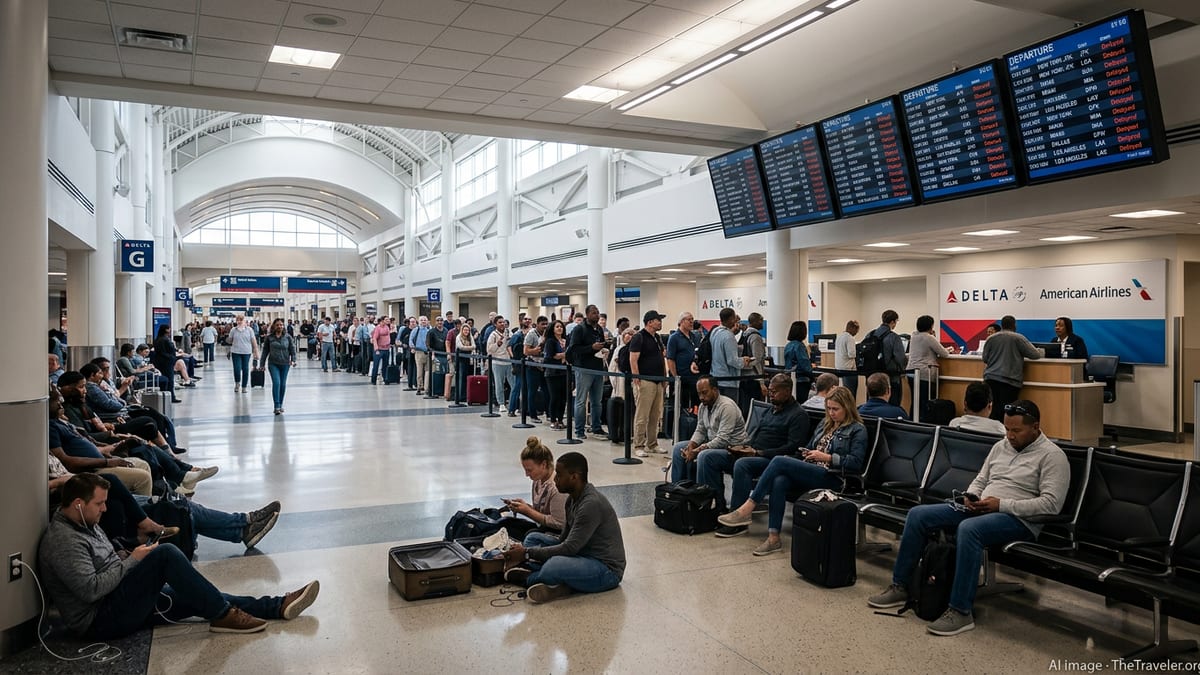
Reports from Hindi-language media on Wednesday indicated that an IndiGo service from Noida International Airport in Jewar to Lucknow was delayed by around four hours, prompting anger among passengers who had already cleared security and were waiting to board. Local coverage described frustrated travelers raising their voices near the departure gate area after repeated changes to the expected departure time.
The affected flight was operating on the busy Noida–Lucknow corridor, one of the initial domestic routes IndiGo launched when Noida International Airport began commercial operations in mid-June 2026. Publicly available schedules show that IndiGo typically runs evening departures from Noida to Lucknow, timed to connect the new airport with the Uttar Pradesh state capital for both business and family travel.
Passengers posting on social media platforms described limited information at the gate and uncertainty over when boarding would begin. While details of the exact cause of the delay had not been confirmed, the disruption added to the sense of strain around operations at the young airport, which is still scaling up flights and ground-handling capacity.
There were no immediate reports of cancellation of the service, and online flight-tracking data suggested that the aircraft eventually departed later in the night. However, for travelers left waiting with little clarity, the experience underscored how a long delay at an outlying hub such as Jewar can quickly complicate onward plans within the wider Delhi region.
A young hub coping with teething troubles
Noida International Airport, located at Jewar in Uttar Pradesh, welcomed its first commercial IndiGo flight from Lucknow on 15 June 2026 after an inauguration earlier in the year. Official information from the airport operator and IndiGo indicates that the carrier is the launch and anchor airline at the new facility, using it to connect key cities such as Lucknow and Bengaluru, and to run a short shuttle service to Delhi’s main Indira Gandhi International Airport.
As a greenfield gateway still in its first months of operations, the airport is in a phase where procedures and staffing are being tested under real-world conditions. Travel forums and local commentary have pointed to a mixed early experience for passengers, praising the compact terminal design and shorter queues compared with Delhi, but noting gaps in wayfinding, ground-transport clarity and consistency of flight information displays during irregular operations.
The recent delay on the Noida–Lucknow service highlights how even a single disrupted rotation can ripple through a constrained schedule at a new hub. With fewer backup aircraft on the ground and a limited number of daily departures, there is less flexibility to swap equipment or rebook passengers onto alternative services when a flight runs into technical or operational problems.
Local discussions about connectivity to Jewar also shape how travelers experience disruptions. While new city buses and app-based cabs now serve the airport, many residents still rely on private taxis for the roughly 60 to 90 minute drive from central Noida or parts of Delhi, making late-night arrivals or unplanned schedule shifts a particular concern for solo travelers and families.
IndiGo’s delay and cancellation rules for stranded flyers
IndiGo’s published customer policy for delays, cancellations and rescheduling sets out what passengers can expect when a flight is significantly disrupted. The airline states that if a subsequent portion of an itinerary is cancelled or heavily delayed while the customer is already in transit, travelers may be offered options such as remaining at the transit station with a partial refund, returning to the point of origin with a refund, obtaining credit for future travel or being rebooked onto an alternative IndiGo service at no additional cost, subject to availability.
For connecting flights affected at a transit point, the policy notes that IndiGo can, at its discretion and depending on seat availability, arrange travel on the next IndiGo flight or, in some cases, on another carrier. Where neither option is feasible, the airline indicates that it may provide hotel accommodation for an overnight stay, ground transport between the hotel and airport, and dinner at the transit point.
The same guidance emphasizes that IndiGo reserves the right to cancel, reschedule or delay the start or continuation of a flight, change the route or aircraft type, or alter stopping points without incurring liability for damages, while still being required to offer refunds or rebooking options under India’s civil aviation regulations. Passengers are advised to ensure that their mobile numbers and email addresses are correctly updated in bookings so that they can receive SMS and email notifications about last-minute schedule changes.
In the case of the Noida disruption, reports did not specify what exact assistance was ultimately extended to affected passengers, such as meal vouchers, alternate routing or complimentary ground transport back toward Delhi or Noida city. The absence of detail reflects a broader pattern in which practical handling of delays can vary by station, time of day and how long the disruption is expected to last.
Background of heightened scrutiny on IndiGo disruptions
The episode at Noida comes against a wider backdrop of regulatory and public scrutiny of IndiGo’s handling of large-scale disruptions. In January 2026, an official summary from India’s Ministry of Civil Aviation detailed findings from a committee that examined a major scheduling crisis between 3 and 5 December 2025, when more than 2,500 IndiGo flights were cancelled and nearly 1,900 were delayed nationwide over three days.
The inquiry concluded that over-optimisation of the airline’s schedule, inadequate preparedness for revised flight duty time limitations, and shortcomings in software support and operational control contributed to the meltdown. The findings led to enforcement action, tighter monitoring of IndiGo’s operations and temporary caps on certain fares while the network was stabilised.
Separate public coverage and timeline summaries of the 2025 crisis have noted that the airline initially pointed to a combination of new safety rules, seasonal schedule adjustments, congestion at key airports and bad weather among the factors affecting punctuality. Since then, flight-data trends discussed in industry reporting suggest a recovery in on-time performance, but also show that domestic carriers across India continue to face pressure from tight schedules and infrastructure bottlenecks during peak hours.
Seen in this context, the Noida–Lucknow delay may appear modest in scale, but each such incident tends to resonate strongly with travelers who have vivid memories of earlier periods of severe disruption. For IndiGo, which has positioned itself as a reliable, on-time operator and is now closely associated with the success of Noida International Airport, maintaining operational resilience at Jewar will be central to reinforcing passenger confidence.
What the disruption means for travelers using Noida airport
For passengers choosing Noida International Airport over Delhi’s main hub, the latest disruption is a reminder to build buffer time into itineraries, particularly when relying on evening departures or late arrivals that require long surface transfers. Travel forums already highlight the need to factor in road congestion between Delhi, Noida and Jewar, especially during periods of heavy rain or VIP movements that can trigger temporary traffic restrictions on key expressways.
Publicly available guidance from IndiGo recommends that passengers monitor their flight status online or through the airline’s mobile app and arrive at the airport well ahead of departure, even on short domestic hops. At a new airport such as Jewar, that advice can be especially relevant, as operational teams and government agencies refine coordination among air traffic control, security, ground handling and terminal services.
For Noida International Airport itself, early experiences with delays and stranded passengers will likely inform adjustments to passenger-information systems, staffing at help desks and contingency planning for irregular operations. Observers note that how quickly and transparently airlines and airport managers respond to such incidents often shapes public perception of a new hub just as much as its architecture or retail offerings.
As IndiGo continues to expand its network from Noida with additional frequencies and destinations in the coming months, the balance between rapid growth and operational robustness will be closely watched by travelers across the National Capital Region. For now, those planning trips via Jewar may want to stay alert to schedule updates and allow extra time on either side of their flights while the airport and its anchor carrier navigate their first season of full-scale operations.