


More news on this day
A powerful magnitude 7.1 earthquake struck Japan’s southern Kumamoto region on Kyushu island on July 28, derailing a freight train, igniting building fires and disrupting transport across one of the country’s key domestic travel corridors.
Get the latest news straight to your inbox!
Quake Strikes Kyushu, Shakes Key Travel Arteries
According to publicly available seismic data, the quake hit in the late afternoon near Kumamoto Prefecture on the island of Kyushu, a region well known to domestic and international travelers for hot springs, castles and coastal scenery. Reports indicate that strong shaking was felt across a wide area, with local media describing collapsed structures, power outages and localized fires.
Broadcaster footage shared in early coverage shows major damage in and around Kumamoto City and neighboring Kashima, including cracked highways, toppled facades and widespread debris. Travel hubs, from railway stations to shopping complexes that often serve as informal transit centers, have been particularly affected, raising concerns about the immediate safety of visitors and workers as well as longer term recovery for the local tourism economy.
Japan’s Meteorological Agency initially issued a tsunami advisory for parts of the Ariake and Yatsushiro seas before later lifting it, but not before images of evacuations and coastal checks circulated widely. While no large tsunami developed, the advisory added to the disruption for communities and travelers already dealing with damaged roads, interrupted rail services and intermittent mobile connectivity.
The quake is the strongest to hit the Kumamoto area since the devastating 2016 sequence that severely damaged Kumamoto Castle and disrupted transport for months. Early assessments suggest that while some key landmarks have once again suffered damage, the full extent to tourism infrastructure, including hotels, onsen towns and transport nodes, will take days to clarify.
Freight Train Derailed as Rail and Air Networks Reel
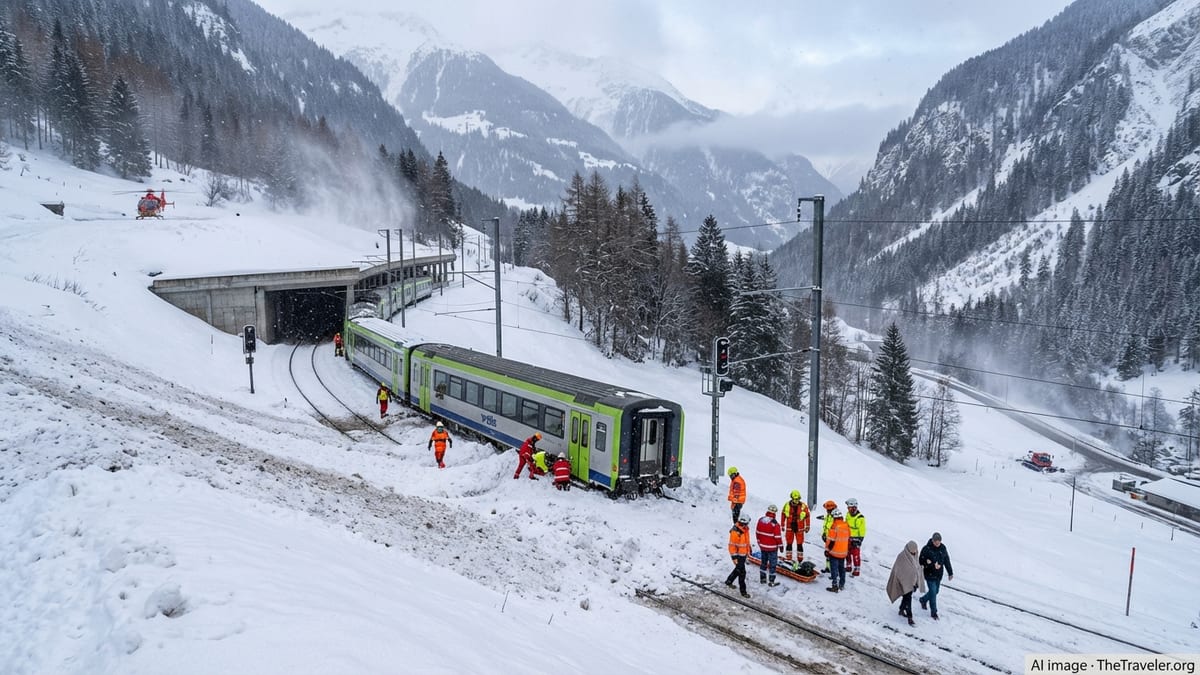
One of the most striking images from the disaster is a derailed freight train lying on its side near Yatsushiro station in Kumamoto Prefecture. Publicly available television footage shows several freight cars off the tracks and canted at sharp angles, with nearby sections of track and embankment visibly distorted.
National broadcasters report that passenger and freight rail operations across parts of Kyushu were suspended as inspections began on tracks, bridges and tunnels. High-speed and limited express services, which connect Kyushu’s cities with the rest of Japan and are heavily used by business travelers and tourists, have been subject to widespread delays and cancellations. Airlines have also reported temporary groundings and diversions at regional airports while runways and terminal structures are checked for damage.
Japan’s transport system is widely recognized for its earthquake preparedness, with automatic shutdowns and slowdowns triggered by seismic sensors. Even so, the derailment underscores the vulnerability of ground transport when a major quake strikes close to key rail corridors. For the coming days, travelers to and within Kyushu are being advised in media reports to expect rolling suspensions and last minute timetable changes as safety checks continue.
Long-distance bus operators and rental car companies are also facing challenges, with expressways and arterial roads showing significant cracking and deformation in some sectors. This is likely to affect overland access to popular destinations such as Mount Aso, coastal onsen resorts and heritage towns that rely heavily on domestic tourism flows.
Mall Explosion, Building Fires and Urban Damage
In addition to transport disruption, a series of building fires has captured national and international attention. Coverage from Japanese broadcasters and international outlets indicates that a major shopping mall in Kashima, Kumamoto Prefecture, suffered an explosion after the quake, with flames and heavy smoke rising from parts of the complex.
Video from the scene shows sections of the mall’s roof and exterior walls collapsed, parked cars mangled by falling debris and emergency crews directing water onto smoldering upper floors. Reports indicate that many people were inside the mall when the quake struck and that a number of employees and shoppers were unaccounted for as search operations continued into the evening.
Elsewhere in the region, cameras have captured smaller but still serious blazes in standalone commercial buildings and factories. Some of these appear to be linked to ruptured gas lines or damaged electrical systems, hazards that often follow strong earthquakes in urbanized areas. Firefighting efforts have been complicated by blocked roads and fallen debris, although initial information suggests that large-scale firestorms of the type seen in historic quakes have been avoided.
Residential districts have not been spared. Television images show rows of traditional wooden houses with collapsed roofs and crumpled exterior walls, alongside newer apartment blocks with shattered windows and scattered interior furnishings. For travelers staying in guesthouses, business hotels or rental apartments, damage assessments and safety inspections are expected to drive evacuations and temporary closures over the coming days.
Tourism Landmarks and Hospitality Sector Assess Impact
The Kyushu region is one of Japan’s most popular domestic travel destinations, and early reports are already focusing on the impact to signature sites. Public broadcasters note damage to stone walls and structures at Kumamoto Castle, a major tourist draw that was still undergoing restoration work from the 2016 earthquakes. Images show new cracks and dislodged masonry, raising concerns about another lengthy period of restricted access.
Elsewhere, onsen towns and rural resorts around Mount Aso and the wider Kumamoto area are beginning to report structural checks and temporary guest evacuations. Some ryokan and hotels appear to have sustained non-structural damage such as fallen ceilings, broken glass and toppled furnishings, while others nearer the epicentral region may have more serious issues that will take longer to repair.
Tourism bodies and local governments are using social media and traditional broadcast channels to signal that assessments are ongoing, with a priority on checking building safety and lifeline services such as water, power and sewage. Until those checks are complete, many properties are declining new reservations or advising guests to delay arrival, even in towns that escaped the worst of the shaking.
Travelers already in Kyushu are being urged via public information channels to follow guidance from accommodation providers, avoid entering visibly damaged structures and stay alert to official advisories about aftershocks. Experience from prior Japanese earthquakes suggests that tourism recovery can be uneven, with some areas reopening quickly while others face prolonged closures due to complex repairs or landslide risks.
Advice for Travelers and Outlook for Recovery
For those planning trips to Japan or already in the country, publicly available travel updates recommend closely monitoring airline and railway announcements as well as local news from Kyushu. Given the derailment, damaged bridges and reports of ongoing fires, itineraries that include Kumamoto, Yatsushiro, Kashima or nearby areas are likely to face significant disruption in the short term.
Travel specialists note that Japan’s broader tourism infrastructure is designed with seismic risk in mind, and many regions outside the immediate impact zone are operating normally. However, the combination of shaken traveler confidence, images of a derailed train and burning buildings, and lingering questions about aftershock activity is expected to weigh on bookings to southern Japan, at least in the near term.
Recovery timelines will depend on engineering inspections of rail lines, highways and key tourism sites, as well as the pace of reconstruction at heavily damaged locations such as the Kashima shopping mall. Based on previous disasters, targeted government support, insurance payouts and strong domestic travel demand could help accelerate reopening efforts once safety is assured.
For now, the derailment and fires following the Kumamoto earthquake are a stark reminder of how swiftly a major tremor can cascade into a multi-layered transport and urban emergency, even in a country regarded as a global benchmark for disaster resilience. As assessment and rescue work continues, travelers and the tourism industry alike are watching for clearer indications of when southern Japan’s vital travel corridors and visitor attractions can safely welcome people back.