


More news on this day
Thunderstorms moving across north Georgia have again disrupted operations at Hartsfield-Jackson Atlanta International Airport, with a second Federal Aviation Administration ground stop halting many flights to the hub and triggering a fresh wave of delays across the national air network.
Get the latest news straight to your inbox!
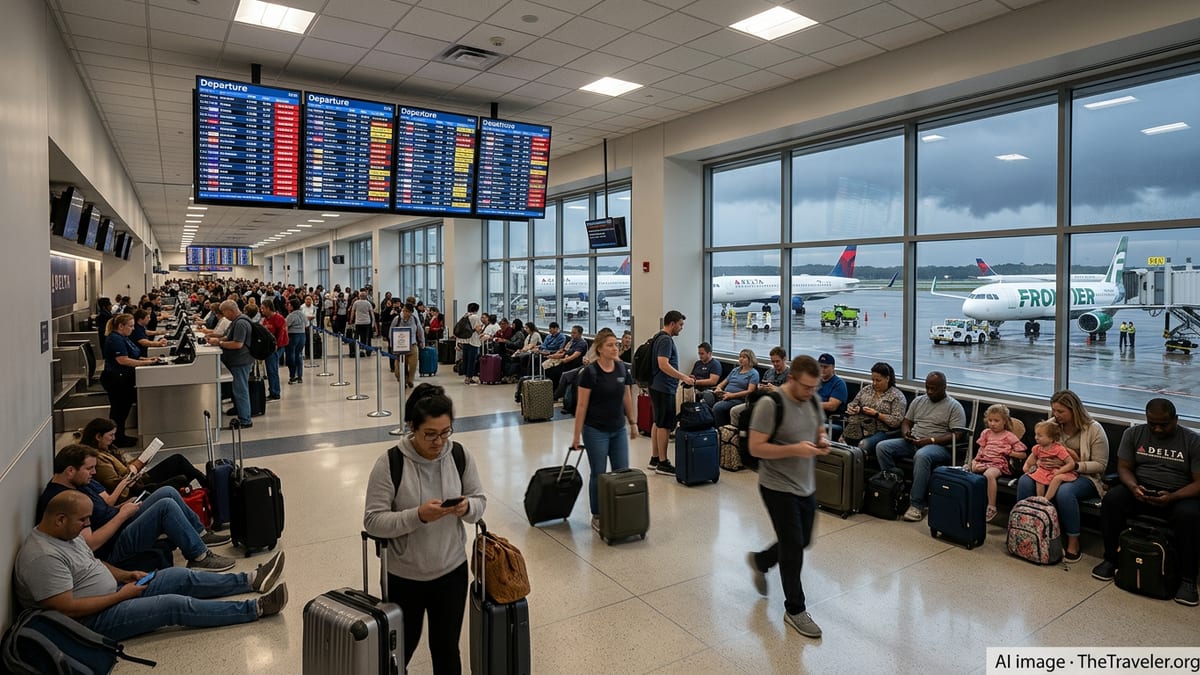
Stormy skies bring renewed disruption at major U.S. hub
Publicly available flight-tracking data and local coverage indicate that a new band of strong storms over the Atlanta metro area has forced the Federal Aviation Administration to order a second ground stop for flights bound for Hartsfield-Jackson Atlanta International Airport. The measure temporarily holds departing aircraft at their origin airports when conditions in Atlanta are deemed unsafe or too constrained for additional arrivals.
The latest ground stop follows an earlier weather-related halt to arrivals that had already slowed traffic into the world’s busiest passenger airport. While the first restriction was lifted after storms briefly moved through the area, new convection and lightning in the vicinity of the airfield have once again pushed the system beyond safe operating thresholds.
According to published airport status information, Hartsfield-Jackson has been experiencing a mix of airborne holding and gate-hold programs as controllers work to meter traffic around fast-changing storm cells. Even short suspensions can quickly cascade into longer delays as aircraft and crews fall out of position.
Local media reports describe intense, slow-moving thunderstorms producing heavy rain, frequent lightning, and low clouds, conditions that often trigger spacing restrictions on arrival streams into large hub airports. When those limits are exceeded, a full ground stop is one of the main tools available to keep the system stable.
Delays and cancellations build across the flight network
Data from global tracking platforms that monitor day-of operations show departure and arrival delays at Atlanta climbing rapidly once the second ground stop went into effect. Earlier weather-related ground stops at Hartsfield-Jackson this summer produced average departure delays of around an hour or more and forced airlines to cancel a number of flights; current trends suggest a similar pattern as thunderstorms persist over key arrival corridors.
Because Atlanta functions as a central connection point for a large share of domestic itineraries, even localized storms can ripple nationwide. Flights from smaller regional airports are particularly vulnerable, as carriers often consolidate lightly booked services when faced with sudden schedule disruptions. Passengers with connections through Atlanta may see missed onward flights and extended layovers as airlines rebuild their route networks throughout the evening.
Historical data compiled by industry analysts show that weather is one of the most common causes of delay at Hartsfield-Jackson, which handles well over 2,000 daily departures in peak seasons. The airport’s role as a megahub means that a single afternoon of storms can affect tens of thousands of travelers, even when individual delays appear modest on paper.
While the current round of thunderstorms is not tied to a tropical system, the pattern echoes previous severe-weather episodes in Georgia that have led to hundreds of delays and dozens of cancellations at the airport. Those events underline how quickly a highly optimized hub schedule can unravel when storms repeatedly force traffic management initiatives.
How FAA ground stops work during severe weather
According to FAA reference materials, a ground stop is a traffic management program that requires certain flights to remain on the ground at their point of origin for a specified period. The tool is most commonly used when thunderstorms or low-visibility conditions sharply reduce the arrival rate an airport can safely accommodate.
In Atlanta’s case, storms aligned with primary arrival paths can compel air traffic managers to slow or temporarily suspend inbound flows. Holding aircraft over nearby waypoints is sometimes possible, but sustained convective weather and concerns about fuel and airspace congestion often make a broader halt to departures the safer option.
The agency’s National Airspace System status displays show ground stops, ground delay programs, arrival and departure delays, and other initiatives in near real time, giving airlines and dispatchers a common reference as they adjust schedules. Dispatch tools built on the same data feed indicate when all monitored airports are operating normally and when storms have tipped individual hubs, such as Atlanta, into formal programs.
Once weather cells weaken or move away from critical approach and departure routes, the FAA can gradually lift a ground stop, sometimes transitioning to lesser restrictions such as miles-in-trail spacing or limited ground delays. However, the backlog of aircraft waiting to depart for a major hub can take hours to work through, particularly late in the day when there is little spare capacity left in the schedule.
What travelers through Atlanta should expect
Guidance published by Hartsfield-Jackson Atlanta International Airport emphasizes that the most accurate source of information on an individual itinerary is the operating airline. During events like the current storms and ground stops, carriers typically update mobile apps and airport displays with revised departure and arrival times as slot allocations change.
Passengers scheduled to connect through Atlanta are often advised to monitor their flights well before leaving for the airport, since ground stops can be extended, replaced by new programs, or reintroduced if additional storm cells develop. Same-day rebooking options may be limited once disruption spreads, especially on popular routes and during busy travel periods.
Travel-planning tools that aggregate delay and cancellation statistics, including services that focus on specific airports, can give a broader view of how hard Atlanta is being hit compared with other hubs. These platforms often highlight the hours of the day when delays historically spike and show whether current conditions are significantly worse than average.
Even once the latest ground stop is lifted, travelers should be prepared for lingering congestion in Atlanta’s terminals and on its ramp areas. Late-arriving aircraft can push back departure banks, and crews may reach duty-time limits, forcing last-minute aircraft swaps or cancellations while airlines attempt to restore normal operations.
Storm season keeps pressure on Atlanta operations
Industry reporting and FAA documentation show that summer and early autumn are typically the most challenging periods for managing air traffic in the southeastern United States, as daily thunderstorms frequently build along frontal boundaries and in moist, unstable air masses. Atlanta’s geographic location places it close to many of these storm tracks, regularly testing the resilience of its operations.
Earlier this year, severe weather in Georgia and neighboring states led to multiple days of elevated delays and cancellations at Hartsfield-Jackson. Those events prompted temporary ground stops and ground delay programs similar to the measures seen during the current episode, underscoring how recurrent convective systems can strain airport capacity.
Longer-term FAA planning documents point to ongoing construction and airfield improvements at major hubs, including Atlanta, as agencies and airports work to accommodate growth while maintaining safety margins during peak demand and adverse weather. Even with these upgrades, however, rapidly intensifying thunderstorms remain a constraint that cannot be fully engineered away.
As storms continue to influence operations over Atlanta, travelers and airlines alike are watching real-time FAA updates closely for signs of easing restrictions. Another lift of the ground stop will mark only the beginning of a broader recovery effort, as one of the country’s key aviation gateways works to get passengers and aircraft moving again.
CBS News Atlanta: Ground stop and delays at Hartsfield-Jackson
Atlanta News First weather coverage and airport impacts