


YYC Calgary International Airport is the main gateway to southern Alberta and the Canadian Rockies, handling nearly 19 million passengers a year and serving as a hub for WestJet and a key base for Air Canada. Whether you are flying to Vancouver, connecting to Europe, or landing before driving to Banff, understanding the terminal layout and ground transportation options at YYC will make your journey noticeably smoother. This guide walks you through the current terminal setup, check in and security, connections, and how to get between the airport, downtown Calgary, and the mountains.
Get the latest updates straight to your inbox!
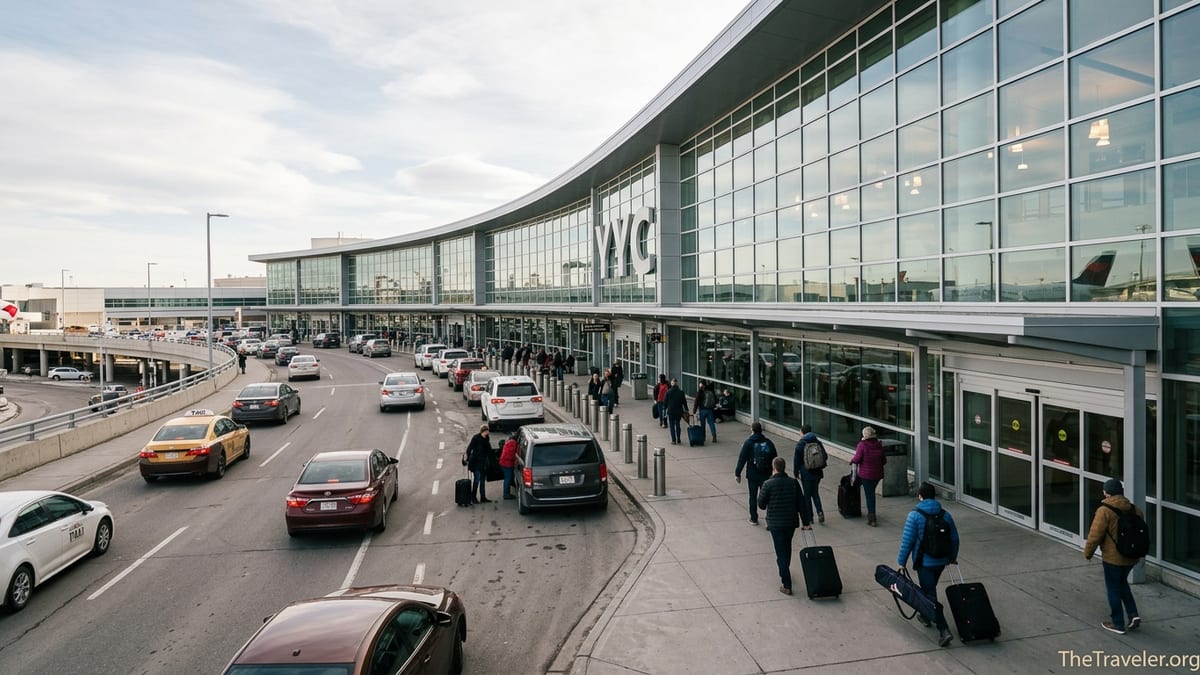
Understanding YYC’s Terminal Layout and Concourses
YYC operates as a single integrated passenger terminal that is organized into five concourses: A, B and C for domestic flights within Canada, Concourse D for most international flights outside the United States, and Concourse E for flights to and from the United States. All concourses are linked airside, so you do not need to exit security to change between domestic, US and other international gates on a single ticket. In practical terms this means that a traveler flying Edmonton to Calgary to London will arrive in Concourse A or C, then follow the signs for international connections to reach Concourse D without re clearing security.
The terminal layout reflects YYC’s role as a Western Canada hub. WestJet uses much of Concourses A and parts of B for domestic routes to cities like Vancouver, Toronto and Regina, while Air Canada focuses its domestic operations in Concourse C and many of its international departures in Concourse D. Smaller Canadian carriers and regional operators also use the A and B concourses for intra Alberta and regional services. Concourse E is dedicated to US bound flights and incorporates a US Customs and Border Protection preclearance facility, which allows passengers to arrive in the United States as if on a domestic flight.
Passengers should pay attention to the concourse letter on their boarding pass. For example, a WestJet flight to Vancouver might depart from gate A18, while an Air Canada flight to Montreal could use gate C52, and a United Airlines flight to Denver might depart from E6. Check in areas in the public departures hall are grouped by airline rather than by concourse, but once you pass security you will move into the concourse that matches your gate letter. Electronic signage throughout the building highlights approximate walking times, so you can see at a glance if it will take five or fifteen minutes to reach your gate.
The older domestic section and the newer international wing are joined by a 620 meter airside corridor. Travelers who prefer to walk can follow clearly marked paths and moving walkways, while those with tight connections or mobility concerns can use the YYC LINK Passenger Shuttle that runs along this corridor. On an average day, a fit traveler can walk from a mid range gate in Concourse A to a central gate in Concourse D in roughly 10 to 12 minutes, while the shuttle can shorten this transfer, especially if you are traveling with children or carry on bags only.
Check In, Security and US Preclearance
Check in at YYC is laid out in long islands aligned with major airline groups. WestJet and Air Canada each have large dedicated zones with self service kiosks and staffed counters for baggage drop, plus separate priority lines for business class and elite members. Most other carriers, including US airlines such as Delta, United and American, share common use check in counters closer to the international departures side. Many travelers now check in online and proceed directly to bag drop, but if you are flying during peak winter ski season or around holidays, arriving at least two hours before a domestic flight and three hours before an international departure is sensible.
Security screening is split between domestic, US and international flows. For example, if you are flying Calgary to Toronto, you will use the domestic security checkpoint that feeds into Concourses A, B and C. Travelers to European destinations such as London, Frankfurt or Amsterdam use the international security lanes that feed into Concourse D. US bound passengers pass through a dedicated security area before entering the US preclearance zone for Concourse E. Trusted traveler programs and premium lanes are available on a limited basis, but they are not as extensive as in some larger US hubs, so planning extra time is wise during the busy morning and late afternoon waves.
One of YYC’s biggest advantages for US bound travelers is the in airport US Customs and Border Protection preclearance facility. After clearing Canadian exit formalities, you will complete US immigration and customs at YYC before boarding. On arrival in the United States you are treated as a domestic passenger and can often connect more quickly. For example, someone flying Calgary to Denver or Dallas can land and walk straight to a connecting gate or baggage claim without further lines. This is particularly useful on tight evening connections or during winter weather disruptions in US hubs.
Families and first time international travelers benefit from the clear wayfinding and staff presence in the preclearance area. Large displays show approximate wait times, and roving staff often direct passengers toward shorter lines or help with kiosk questions. As with all preclearance facilities, lines can build sharply when several large departures cluster together, such as multiple morning flights to US hubs. If you are on one of these prime flights, such as early morning departures to Chicago or Los Angeles, consider arriving toward the earlier end of the recommended check in window to avoid last minute stress.
Making Connections: Domestic, US and International
YYC is designed to facilitate connections within Western Canada, across the country, and between North America and overseas destinations. Typical minimum connection times on a single ticket can be around 50 to 60 minutes for domestic to domestic transfers and slightly longer for domestic to international or US bound flights, but many travelers feel more comfortable with at least 75 to 90 minutes, especially in winter when delays are more common. Airlines such as WestJet and Air Canada schedule their connecting banks so that flights from smaller cities like Saskatoon, Kelowna or Grande Prairie arrive in time for onward departures to Toronto, Montreal, London or Amsterdam.
Domestic to domestic connections are usually straightforward. If you arrive from Vancouver in Concourse C and continue to Winnipeg from Concourse B, you remain in the secure area and simply follow the overhead signs. Moving walkways in the main domestic spine help shorten walking times. In good conditions a traveler with light luggage can cover most domestic to domestic transfers in under 15 minutes, but gate changes or late inbound flights can lengthen this. Airport staff and airline agents are visible at major crossroads to help direct tight connections, and the YYC LINK shuttles are especially helpful when moving between more distant gate clusters.
International connections require slightly more planning. A passenger arriving from Europe into Concourse D with a same day domestic connection to Edmonton or Saskatoon must clear Canadian immigration and customs, collect checked baggage, and then drop it again before proceeding to domestic security. Signage and connection counters make this process reasonably efficient, but it is realistic to expect at least 60 to 90 minutes. During busy ski season, when many travelers land in Calgary before heading to Banff or Lake Louise, queues at border control can be longer, so allowing a comfortable buffer is wise.
US bound connections vary depending on direction. If you are arriving from a Canadian city and connecting to a US flight, you will move from the domestic concourses through a dedicated connection corridor into the US preclearance area, then on to Concourse E. On the return, a traveler landing from a US city into Concourse E will deplane into the Canadian border control area, clear immigration and customs, and then proceed to either the public arrivals hall or back through security if they have a same day onward flight. Signs indicating “Connecting Flights” and airline staff at podiums just beyond customs help steer passengers through the correct path.
Ground Transportation to Calgary, Banff and Beyond
Calgary International Airport sits about 17 kilometers northeast of downtown, and the drive into the city core typically takes 20 to 30 minutes in light traffic. Taxis are available in clearly signed ranks outside the arrivals level. Fares to central downtown hotels often fall in the range of roughly 45 to 60 Canadian dollars, depending on time of day and traffic conditions, with rush hour congestion potentially adding around 10 to 15 dollars. Rideshare services such as Uber and Lyft also operate at YYC, with designated pickup zones; prices vary with demand, but in off peak times trips downtown can be noticeably cheaper than a traditional taxi for solo travelers.
Budget conscious travelers can use the city operated bus service that connects YYC with the CTrain light rail network. The most commonly used option is a frequent bus route that links the airport to a nearby CTrain station, where you can transfer to trains toward downtown or other parts of the city. This combination often costs less than 15 Canadian dollars per person, though it is slower than a taxi and less convenient with heavy luggage or late night arrivals. It suits solo travelers or those staying near CTrain corridors, such as hotels around Calgary’s downtown core or the Beltline.
Several private shuttle operators serve popular destinations in the Canadian Rockies, including Banff, Canmore and Lake Louise. Prices change with season and operator, but as a general example, shared shuttles to Banff can fall in a range of roughly 60 to 80 Canadian dollars per adult one way, with family discounts or return trip savings available. Travel times to Banff typically run 90 minutes to two hours, depending on traffic and winter road conditions. Private transfers or charter vans cost more, often several hundred dollars per vehicle, but can be cost effective and flexible for groups or families with ski equipment.
Car rental desks are clustered on the arrivals level of the terminal, with short covered walks to the parking structures where vehicles are stored. All major brands operate at YYC, and rates fluctuate widely with season. In summer and during peak ski weeks, renting a compact car for a week can cost several hundred dollars, while off peak autumn or spring rentals are often significantly cheaper. Road conditions on the main highways between Calgary and Banff are generally good, but winter visitors should be prepared for snow and ice and may want to choose vehicles with winter tires or all wheel drive, especially if continuing beyond Banff toward Lake Louise or Jasper.
Parking, Pick Up, Drop Off and Cell Phone Waiting
YYC offers a mix of short term and long term parking in multi level garages close to the terminal as well as a more economical surface lot a short walk away. The two main parkades, often referred to as P1 and P2, are directly across from the terminal buildings and are connected to both domestic and international departures by enclosed walkways. Short term parking in these garages is structured in small increments, with a limited free grace period often around 20 minutes and then rising in blocks of 20 minutes before hitting a daily maximum that is broadly in the range of 40 Canadian dollars. This arrangement is practical for quick pick ups and drop offs when you want to greet or see off someone at the curb but avoid the time pressure of the active loading zones.
For longer stays, the same garages usually offer lower daily and weekly caps on upper levels, with typical posted daily rates around the low 30 dollar mark and first week caps of about 200 dollars. The separate Economy lot, located a short walk from the domestic terminal area, offers significantly lower daily and weekly rates, roughly half the cost of premium garage parking. For example, travelers leaving their car for a week’s holiday might pay in the region of 80 dollars in the Economy area compared with more than 200 dollars in a premium indoor location. Shuttle options and well signed pedestrian routes link the Economy lot to the terminal.
Pick up and drop off areas are on the roadway directly in front of the terminal, with separate levels for departures and arrivals. Vehicles are expected to keep moving, and active enforcement is increasingly visible, especially during busy periods. To avoid circling the terminal while waiting for a passenger to clear customs or collect luggage, many locals use the designated cell phone waiting lot located just off the main airport access road. This free lot allows drivers to park, check flight status on their phone and wait for a text message or call before pulling into the terminal area for a quick curbside pickup.
Travelers comparing the cost of parking against taxis or rideshare should factor in both duration and timing. For instance, a couple who lives in central Calgary and is taking a four day trip might find that two taxi or rideshare trips to and from the airport total around 100 to 120 dollars, while four days of Economy parking could be similar or slightly less. For a two week international holiday, however, the cumulative parking cost can easily exceed several hundred dollars, making an airport shuttle, taxi, rideshare or even a hotel park and fly package a more economical choice.
Services, Dining and Lounges in the Terminal
Calgary International Airport offers a broad range of dining and retail options that reflect both mainstream North American brands and local Alberta flavors. In the domestic concourses, travelers will find familiar coffee chains, fast casual sandwich outlets and sit down restaurants serving burgers, salads and pub style fare. Local touches include outlets highlighting Alberta beef or craft beer, where travelers might enjoy a steak sandwich or sample a local pale ale while watching aircraft movements through large floor to ceiling windows. These spaces are popular with business travelers on evening flights to Toronto or Vancouver who want a proper meal before boarding.
In the international and US concourses, options are broadly similar, although there is often a slightly higher concentration of full service restaurants and wine bars catering to longer haul passengers. Travelers heading to Europe might find themselves lingering over a glass of Canadian wine and a shared flatbread near a Concourse D gate, while families on US bound flights from Concourse E may rely on grab and go salads, wraps and kid friendly snacks. Prices are broadly in line with other large Canadian airports, so a coffee and pastry might cost around 8 to 10 dollars, while a sit down main course in a casual restaurant will often fall in the 20 to 30 dollar range.
Several airline and independent lounges operate at YYC, providing quieter spaces with comfortable seating, snacks, drinks and work areas. WestJet and Air Canada each offer branded lounges in the domestic and international areas for their premium cabin passengers and frequent flyers, while international carriers may have arrangements with alliance partner lounges. Access for economy passengers is sometimes available via day passes or credit card programs, and prices typically run in the range of 50 to 75 dollars per person for a three hour stay, including basic food and drinks. For travelers with long layovers, especially before overnight flights to Europe, lounge access can be a worthwhile splurge.
Other services important to travelers include currency exchange desks, ATMs, baggage wrapping, pharmacy items, and duty free shops in the international wing. Families will find children’s play areas and baby care rooms in selected concourses, while travelers with accessibility needs can request wheelchair assistance through their airline or use elevators and ramps that are widely available throughout the building. Free Wi Fi is offered in most areas of the terminal, and charging ports are increasingly built into seating clusters, though they can be in high demand at peak times, so carrying a compact power strip or extra battery can be helpful.
Tips for First Time Visitors and Winter Travelers
For many international visitors, YYC is the first introduction to Canada’s prairies and mountains. First time travelers should allow extra time to get oriented, especially if they are connecting to another flight or picking up a rental car. Reading gate signs carefully, following color coded wayfinding, and verifying baggage tag codes at check in all reduce the risk of misdirected luggage or missed connections. If your itinerary involves a tight transfer, such as a 60 minute domestic to international connection in winter, consider packing a small change of clothes and essentials in your carry on in case your checked bag is delayed by weather.
Winter is one of the busiest and most weather sensitive periods at YYC, with many travelers heading for ski resorts across Alberta and British Columbia. The airport is well equipped for snow and cold temperatures, with deicing pads and snow removal equipment that keep runways operational much of the time, but ground delays and longer deicing times can still occur. Travelers should keep an eye on airline apps for real time gate and departure updates and dress in warm layers that can handle the short but sometimes bitterly cold walks between the terminal and aircraft doors on regional operations.
Those driving from the airport in winter should be prepared for quickly changing road conditions. A sunny afternoon arrival can give way to icy overnight roads, especially on the highway to Banff and Lake Louise. Renting vehicles with winter or all season tires suitable for mountain driving and carrying extra warm clothing, snacks and water in the vehicle is good practice. If a major snowstorm is forecast, monitoring local news or weather apps and being flexible with departure times can reduce stress. In some cases, staying an extra night at an airport or downtown hotel and traveling to the mountains the next morning is safer than driving late at night in blowing snow.
Finally, visitors unfamiliar with Canadian customs regulations should review what they can bring across the border, especially regarding food, alcohol, and duty free purchases. On arrival, officers routinely ask about agricultural products, large amounts of cash, and high value electronics or camera gear. Being prepared with clear answers, organized documentation and accessible receipts if you are carrying expensive equipment, such as ski gear, cameras or laptops, can speed the process. For most tourist itineraries, the experience is straightforward, and many travelers emerging into the arrivals hall are on their way to hotel shuttles or rental cars within an hour of landing.
The Takeaway
Calgary International Airport is a modern, well organized hub that efficiently connects Western Canada with the rest of the country, the United States and overseas destinations. Its integrated terminal with five concourses can seem large at first glance, but intuitive signage, moving walkways and the YYC LINK shuttle make it manageable even for first time visitors. Built in preclearance facilities for US flights, a broad selection of food and retail options, and multiple lounges all contribute to a smoother journey.
For ground transportation, travelers can choose among taxis, rideshare, public transit, airport shuttles and rental cars, each suiting different budgets and travel styles. Parking options range from premium garages steps from the terminal to more economical surface lots, while a free cell phone waiting area makes pick ups easier. With realistic expectations about walking distances, connection times and winter weather, along with a basic understanding of how YYC is laid out, most travelers will find that moving through Calgary’s airport is a straightforward and even pleasant part of their trip to the city, the prairies or the nearby Rocky Mountains.
FAQ
Q1. How early should I arrive at Calgary International Airport before my flight?
For most domestic flights within Canada, arriving about two hours before departure is usually sufficient, while three hours is recommended for international or US bound flights, especially during peak holiday or ski seasons.
Q2. Which concourse will my flight use at YYC?
In general, domestic flights within Canada use Concourses A, B and C, international flights outside the United States use Concourse D, and US bound flights use Concourse E with US preclearance, but you should always verify the letter and gate number shown on your boarding pass and on airport displays.
Q3. How long does it take to walk between the domestic and international areas?
Walking between a central domestic gate and a typical international gate via the indoor corridor and moving walkways usually takes around 10 to 15 minutes for most travelers, with the YYC LINK shuttle available to shorten that transfer if needed.
Q4. Is there public transportation from YYC to downtown Calgary?
Yes, the airport is connected to Calgary’s public transit network through a city bus route that links YYC to a nearby CTrain light rail station, allowing connections to downtown and other areas at a cost that is typically under 15 Canadian dollars per person.
Q5. How much does a taxi or rideshare from the airport to downtown typically cost?
A metered taxi from YYC to central downtown areas often falls in the range of about 45 to 60 Canadian dollars depending on traffic, while rideshare services such as Uber can be similar or somewhat cheaper in off peak periods.
Q6. What are the parking options at Calgary International Airport?
YYC offers short term and long term parking in two large garages directly across from the terminal with higher convenience based rates, as well as a more affordable Economy surface lot a short walk away that is better value for longer trips.
Q7. Is there a cell phone waiting lot for picking up passengers?
Yes, a free cell phone waiting lot just off the main airport access road allows drivers to park and wait until the arriving passenger calls or texts that they are ready, which helps avoid circling the terminal or lingering in active loading zones.
Q8. Does YYC have US customs preclearance?
Yes, Calgary International Airport has a US Customs and Border Protection preclearance facility in the area serving Concourse E, so passengers complete US entry formalities at YYC and arrive in the United States as domestic passengers.
Q9. Are there lounges I can use if I am not flying business class?
Several airline and independent lounges at YYC sell day passes or provide access through certain credit cards and lounge programs, so economy passengers may be able to enter for a fee even without a premium class ticket.
Q10. How do I get from YYC to Banff or the Rocky Mountains without renting a car?
Multiple private shuttle companies operate scheduled services from the airport to Banff, Canmore and other mountain destinations, with one way adult fares commonly in the approximate range of 60 to 80 Canadian dollars and travel times of about 90 minutes to two hours depending on destination and road conditions.