


Calgary International Airport, branded as YYC Calgary Airport, is the main gateway to southern Alberta and the Canadian Rockies. Whether you are flying in for a weekend meeting downtown, a ski holiday in Banff, or a long summer road trip, how you get to and from the airport can add real cost and stress to your journey. This guide breaks down YYC parking, car rental and transfer options with current, real-world examples so you can decide what works best for your schedule and budget.
Get the latest updates straight to your inbox!
Understanding the Layout of Calgary International Airport
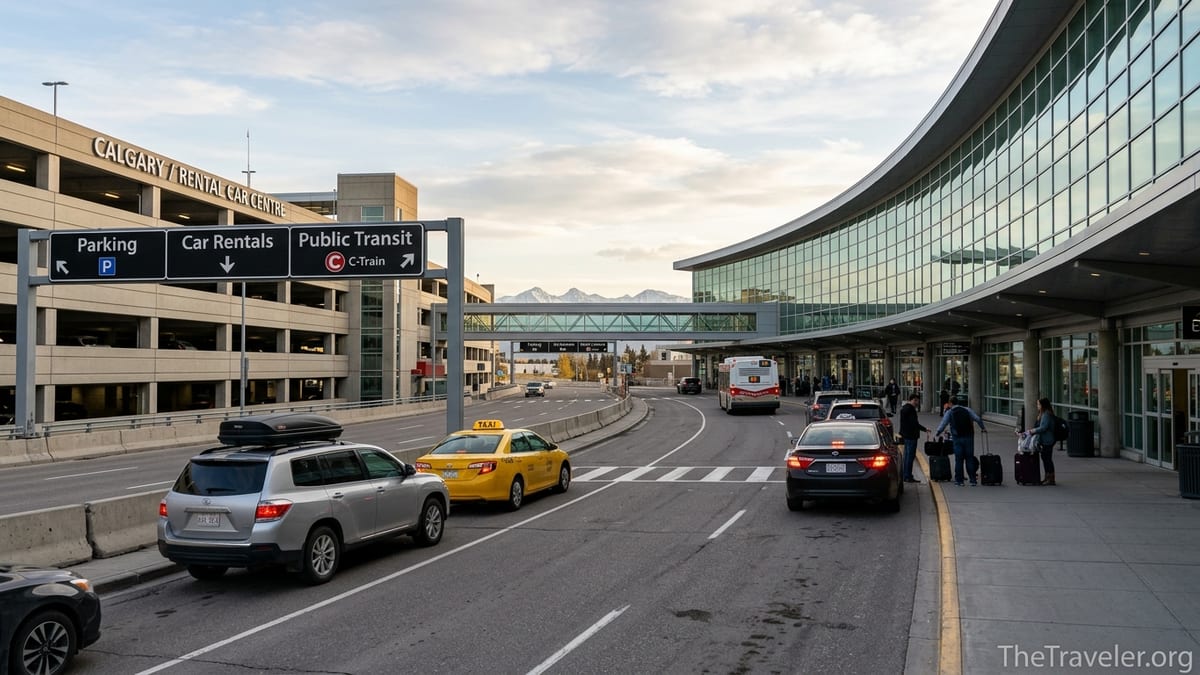
YYC is a single large airport split into domestic and international terminals, but for drivers and renters it functions as one integrated campus. Two multi-storey parkades, an open-air economy lot, and a dedicated Rental Car Centre sit directly across from the terminal buildings, connected by covered walkways and elevators. For most travellers this means you can step off your flight and be at your vehicle within a few minutes, regardless of whether you parked or rented.
The main parkades, often referred to as Parkade 1 and Parkade 2, are closest to the terminal doors. Parkade 1 tends to be most convenient for domestic flights within Canada, while Parkade 2 usually lines up better with international departures and arrivals. The Rental Car Centre is built into this same complex on the Departures level, so returning a rental and walking into check in is straightforward even in winter weather.
All on-airport parking, including the economy lot, is signed from Airport Road, the loop that circles the terminal. Drivers coming from downtown Calgary will usually follow Deerfoot Trail or the ring road to Airport Trail, then turn onto Airport Road where signs separate lanes for departures, arrivals, parkades and economy parking. For visitors unfamiliar with the city, this relatively simple road layout makes it easier to focus on choosing the right parking product rather than worrying about getting lost.
Because YYC is the main launch point for trips into Banff National Park and the Rockies, rental car counters and pick-up rows are designed to handle high demand during holiday periods. In peak summer and ski seasons, it is common to see lineups at the Rental Car Centre and heavier traffic in the parkades, which makes it even more important to understand your options before you arrive.
On-Airport Parking Options and Typical Costs
Calgary International Airport offers several tiers of official parking. The core options are the two covered parkades directly opposite the terminal and an outdoor economy lot a short walk further away. According to recent public rate information, the parkades typically charge a higher hourly and daily rate in exchange for proximity and covered spaces, while the economy lot offers lower prices for travellers willing to walk a little farther with their luggage.
As an example, one commonly cited structure for the parkades is an hourly rate around 10 Canadian dollars, a daily maximum around 30 dollars, and a weekly cap in the region of 150 dollars. By contrast, the economy lot is often advertised at a flat daily rate near 16 dollars with a weekly maximum around 80 dollars. Exact prices can change, especially around peak periods or when the airport authority updates its tariffs, but these ballpark figures illustrate the cost gap between premium and economy products.
In practice, this means that a four-day work trip where you need to park close to the terminal might cost about 120 dollars in a parkade, while the same stay in the economy lot could be roughly 64 dollars. For a two-week family holiday, the difference becomes more pronounced. Two weeks in a parkade at a typical weekly maximum might approach 300 dollars, while two weeks in the economy lot could be closer to 160 dollars, making the walk from the lot an attractive trade-off for many travellers.
The airport also provides overheight parking for taller vehicles that cannot fit into the parkades, such as campervans, large pickup trucks with roof boxes, or small motorhomes. Rates here are generally similar to or slightly above standard long-term parking, and spaces are limited, so anyone driving a taller vehicle should plan ahead and arrive with extra time in case they need to hunt for a suitable spot.
Short Trip, Long Trip or Pickup: Which Parking Option Fits?
Choosing between parkades and the economy lot comes down to how long you will be away and how much you value convenience. For very short stops, such as picking up arriving family or dropping off a colleague, the main parkades usually make the most sense. They allow you to park close to the arrivals doors, walk inside, check the arrivals board and meet your passenger without worrying about shuttles or long walks, and the hourly pricing can be reasonable for an hour or two.
For long weekends or trips under a week, the decision is more finely balanced. A Friday to Monday ski break in Banff, for example, might involve three nights away. At a daily maximum near 30 dollars in a parkade, that could total just under 100 dollars, while the economy lot’s flat daily rate around 16 dollars would be closer to 50 to 60 dollars. If you are carrying ski bags or traveling with young children in the middle of winter, many travellers feel the extra 40 to 50 dollars for covered, closer parking is worth it for an easier departure and return.
Once your trip stretches beyond a week, the math usually favours the economy lot. Consider a 10-day summer road trip looping from Calgary through Jasper and back. Filling up your gas tank and leaving the car in the economy lot for 10 days at roughly 16 dollars per day might cost around 160 dollars, while the parkade pricing could be approaching or exceeding 240 dollars. Over multiple similar trips in a year, that difference adds up to several hundred dollars in savings, money that can instead go toward national park passes, hotel upgrades or meals in the mountains.
There is also an environmental and practical dimension. The economy lot’s outdoor layout typically offers many standard spaces, which can be appealing for drivers of electric vehicles who prefer not to park long-term right beside high-traffic entrances. As of recent anecdotal reports, sections of long-term parking at YYC include basic electrical plugs for block heaters and some Level 2 charging, although capacity can be limited and travellers are encouraged to move vehicles once charged rather than occupying chargers for an entire week.
Off-Airport Parking and Park & Ride Alternatives
Along the routes leading into YYC, several private off-airport parking providers operate fenced surface lots with shuttle buses to the terminal. These businesses generally compete by offering lower daily and weekly rates than the official airport parkades, and sometimes even undercut the economy lot, especially if you book online in advance or use loyalty discounts. While the exact brands and promotions change, a common pattern is daily rates in the low teens and weekly packages undercutting official rates by 10 to 30 percent.
Using an off-airport lot typically adds a step to your journey. You drive to the lot, park, check in at a small office or kiosk, then board a shuttle van or mini bus that runs every 10 to 20 minutes. In light traffic, the ride to the terminal might be under 10 minutes. During snowy conditions or peak departure times on Monday mornings, it can take longer. For many business travellers, the savings are worth the trade-off only if they have flexible schedules. Families with lots of luggage sometimes prefer to pay a bit more to avoid loading and unloading bags multiple times.
Another cost-conscious strategy used by some local residents is to combine a city park and ride with public transit rather than driving directly to the airport. For example, a Calgarian might drive to a CTrain station with free or low-cost park and ride facilities, leave their car there for the day, and then take the CTrain and a connecting bus to the airport. While this can save on parking, it is best suited to short trips or same-day returns because many park and ride facilities have time limits or are not intended for multi-day stays.
Travellers arriving from nearby communities such as Airdrie or Cochrane sometimes find that commuter buses into Calgary, combined with an airport bus, can cost less than driving and paying for parking at YYC for several days. However, this usually makes sense only for solo travellers with light luggage and flexible time, as families of four may find that the combined transit fares quickly approach the cost of leaving one car in the airport’s economy lot.
Car Rentals at YYC: On-Terminal vs Off-Terminal
Car rental is one of the most popular choices at Calgary International Airport, especially for visitors heading to Banff, Lake Louise or other parts of the Rockies. YYC operates a purpose-built Rental Car Centre on the Departures level across the road from the terminal, with a covered pedestrian connection and elevators. Major brands with counters here typically include Avis, Budget, Dollar, Thrifty, Enterprise, Hertz, National and Alamo, among others, though the exact mix can change over time.
On-terminal rentals are usually the most convenient option. After you exit customs or domestic arrivals, you follow signs to the Rental Car Centre, complete your paperwork at the counter or at a self-service kiosk, then take an elevator up to the parking decks where the rental vehicles are lined up by brand and category. Returning the car is similarly simple: you follow Rental Car Return signs back to the same elevated structure, hand over the keys, and cross back into the terminal. For travellers landing late at night in winter, this ability to move from plane to car under cover, without long outdoor walks, is a clear advantage.
Off-terminal rental companies, or the same brands operating remote locations in the city, can sometimes offer noticeably lower daily rates and fewer airport surcharges. A traveller might, for example, compare rates and find a compact car for around 50 to 70 dollars per day from an on-site desk, while an off-airport city location of the same brand advertises 35 to 55 dollars per day for similar dates. Some cost-conscious visitors choose to take a rideshare or taxi from the airport to a city branch the next morning, picking up the car there and saving on both the airport surcharge and one or two days of car rental if they plan to stay downtown first.
Of course, the trade-off is time and convenience. If your flight lands at 11:30 p.m. and you plan to drive straight to Canmore, a 45-minute highway run west of Calgary, the last thing most travellers want is to navigate an unfamiliar city to reach an off-airport rental office or wait for a limited-hours courtesy shuttle. In those cases, paying more for an on-terminal rental is usually worthwhile. By contrast, someone spending three nights at a hotel on Calgary’s Stephen Avenue before heading to Lake Louise might be better off using transit or rideshare during the city stay and collecting a cheaper, off-terminal rental car just before leaving town.
Comparing Ground Transfer Options: Bus, Rideshare, Taxi and Shuttle
For travellers who do not plan to drive themselves, Calgary offers several ways to get between YYC and the city or nearby destinations. There is currently no direct rail line from the airport to downtown, so the main public transit option is Calgary Transit’s bus network, particularly Route 300, a bus rapid transit service linking the airport to downtown and other key stops along Centre Street and City Hall. A single adult fare is typically in the mid-three dollar range and includes 90 minutes of transfer time, although Route 300 from the airport has sometimes required a special airport boarding pass charged at a higher rate. Because fare structures can change, it is wise to check Calgary Transit’s latest information before you travel.
Route 300 is popular with budget travellers and solo visitors without heavy luggage. In normal traffic, the trip from the airport to downtown can take 30 to 45 minutes. For example, a backpacker arriving at midday might exit arrivals, follow signs to the airport bus bay, pay around 3 to 11 dollars depending on the current product, and ride into the city centre, where they can walk or transfer to the CTrain light rail system at stations such as City Hall or Centre Street. Another option, Route 100, connects the airport to the McKnight-Westwinds CTrain station, letting passengers then continue into downtown on the Northeast CTrain line using the same fare product.
Rideshare services such as Uber and similar providers are widely used at YYC. Recent real-world examples suggest that a typical rideshare fare from the airport to downtown Calgary often falls in the range of 20 to 35 dollars in normal conditions, with higher prices during peak periods or bad weather. Pickup zones are clearly signed outside the terminal. For a couple travelling together, this can be competitive with two airport bus fares, especially late at night when bus frequencies are lower. For a family of four with luggage, a rideshare or taxi often becomes the best value once you factor in convenience.
Traditional taxis and flat-rate shuttles remain common. Metered taxi rides from YYC to downtown frequently total around 40 to 55 dollars, depending on traffic and the exact drop-off point. Hotels near the airport often provide complimentary or low-cost shuttle vans running every 20 to 30 minutes between the terminal and their lobbies, making it easy for late arrivals to overnight near the airport before heading into the Rockies the next day. There are also dedicated coach services to destinations such as Banff and Canmore, where a one-way fare in the range of 60 to 80 dollars per adult is typical. These scheduled shuttles are popular with international visitors who are uncomfortable driving in winter conditions.
Real-World Scenarios: What Makes Sense for Different Travellers
To see how these choices work in practice, consider a business traveller from Toronto flying into Calgary on a Tuesday morning for a two-day conference downtown. They land at 9 a.m., need to be at a meeting by 11 a.m., and fly back Thursday afternoon. In this scenario, renting a car could be more hassle than it is worth, as downtown parking is expensive and traffic is manageable by transit or taxi. A practical approach might be to take a rideshare from the airport to their downtown hotel for around 30 dollars, then use the CTrain within the downtown free-fare zone for meetings. The return rideshare on Thursday would bring their total ground costs to under 70 dollars, probably less than two days of car rental plus hotel parking.
Now think about a family of four from the United States flying into Calgary for a 10-day summer loop through Banff, Jasper and back to Calgary. They arrive on a Saturday afternoon with two large suitcases and camping gear. For this group, renting an SUV or minivan at the on-terminal Rental Car Centre is usually the most efficient option. Even if the daily rate is 120 dollars for a mid-size SUV, spread over 10 days that becomes 1,200 dollars, comparable to what they might spend on a combination of shuttle buses and tours for four people. Parking their private vehicle back home and collecting the rental at YYC also avoids wear and tear on their own car over thousands of kilometres of mountain driving.
A third scenario might involve a local Calgarian couple heading to Europe for a 14-day vacation. They live in a northwest suburb within a 25-minute drive of the airport. In this case, leaving their own car in the airport’s economy lot might cost in the region of 160 to 200 dollars, depending on exact rates and length of stay. The alternative is ordering a rideshare both ways for around 25 to 40 dollars per trip, a total of perhaps 80 dollars. If they are comfortable relying on a rideshare early in the morning for their departure, this door-to-door option can cut their ground transport cost in half compared with long-term parking.
Finally, a solo backpacker on a tight budget arriving in autumn could choose public transit end-to-end. Suppose they land at 3 p.m. and are heading to a hostel in the Beltline neighbourhood just south of downtown. They could leave the airport, buy the appropriate Calgary Transit ticket or airport pass from the vending machine, ride Route 300 into downtown in 40 minutes, then transfer to a short CTrain ride or a local bus for the final few blocks. Their total ground cost might be under 10 dollars, at the expense of carrying their backpack through a bus and train instead of placing it in a taxi trunk.
Practical Tips for Saving Money and Avoiding Hassles
Regardless of which option you choose at YYC, a few practical strategies can save money and reduce stress. For parking, booking online in advance through the airport’s official channels or reputable third-party providers often unlocks discounted daily or weekly rates, especially for the economy lot and off-airport lots. Travellers who know their exact dates can sometimes save 10 to 30 percent compared with drive-up prices just by reserving ahead of time.
Timing also matters. Early morning departures and late night arrivals are when parking areas and rental counters can feel most crowded, particularly during school holidays and major events in the Rockies. Arriving at least 30 to 45 minutes earlier than you normally would gives you a buffer to navigate potential queues at rental counters or to find a space in busy lots. Renting a car with a clear fuel policy and checking for any kilometre limits before you sign the agreement is especially important if you plan to drive from Calgary to distant destinations such as Jasper or Waterton Lakes National Park.
On the transfer side, checking Calgary Transit schedules and route maps before you fly will help you confidently choose between Route 300, Route 100 and the CTrain. Weekends and late evenings can see less frequent service, which might tilt you towards rideshare or taxi if you are in a hurry. Conversely, mid-day on a weekday can be an ideal time to use the bus, with reasonable travel times and fewer passengers. Many visitors find that buying a day pass or using contactless payment, where available, simplifies the process of making multiple trips in a single day.
For rideshares and taxis, building in a small buffer for peak traffic periods is wise. The 17 kilometres between YYC and downtown can take 20 minutes in light traffic but stretch to 40 minutes or more during rush hours or snowstorms. In winter, booking a slightly earlier pickup and allowing extra time for road conditions is a simple way to avoid a stressful sprint through security.
The Takeaway
Calgary International Airport offers a broad mix of parking, car rental and ground transportation options, each suited to different travel styles and budgets. On-terminal parkades and rental cars maximise convenience, especially during winter or late-night arrivals, while the economy lot and off-airport parking help longer-stay travellers keep costs under control. Public transit provides a low-cost lifeline into downtown for solo travellers and light packers, while rideshares, taxis and scheduled shuttles bridge the gap between convenience and price for couples and families.
By thinking through your itinerary before you book your flight, you can match your ground transport to the trip you are actually taking. A short business visit, a family road trip into the Rockies, a long-haul holiday or a backpacking stopover all point to different optimal choices. With a clear understanding of real-world prices, travel times and trade-offs at YYC, you can step off the plane confident that your journey into Calgary or beyond will start smoothly and cost what you expect.
FAQ
Q1. How much does it typically cost to park at Calgary Airport for a week?
A1. Official guidance and recent examples suggest that a week in the on-site parkades often falls around the mid-100 dollar range, while the economy lot tends to be closer to about half that, although exact prices vary and should be confirmed before you travel.
Q2. Is the economy parking lot at YYC within walking distance of the terminal?
A2. Yes. The economy lot sits across Airport Road from the terminal area, and most travellers can walk from their car to check-in in roughly 5 to 10 minutes, though this can feel longer in winter with heavy luggage.
Q3. Are there car rental companies located directly at the Calgary Airport terminal?
A3. Yes. Major brands such as Avis, Budget, Enterprise, Hertz, National, Alamo, Dollar and Thrifty typically operate counters in the Rental Car Centre across from the terminal, with vehicles parked in the adjacent parkade.
Q4. Is it cheaper to rent a car on-site at YYC or at an off-airport location?
A4. On-site rentals are usually more convenient but can be more expensive due to airport fees. Off-airport city branches often advertise lower daily rates, so travellers staying downtown first may save money by picking up a car away from the airport.
Q5. What is the cheapest way to get from Calgary Airport to downtown?
A5. Calgary Transit’s Route 300 bus or a combination of Route 100 and the CTrain usually offers the lowest cash cost, with fares typically in the single-digit dollar range, making it attractive for solo travellers without heavy bags.
Q6. How much does a taxi or rideshare from YYC to downtown Calgary cost?
A6. Recent examples show rideshares often in the 20 to 35 dollar range in normal conditions, while metered taxis typically cost about 40 to 55 dollars depending on traffic and exact destination.
Q7. Is there a direct train from Calgary Airport to the city centre?
A7. No. There is currently no direct rail line from YYC to downtown. Travellers using public transit connect via bus, mainly Route 300 or Route 100, and may transfer to the CTrain for onward travel.
Q8. Are there airport shuttles from YYC to Banff and the Rockies?
A8. Yes. Several coach and shuttle operators run scheduled services from Calgary Airport to Banff, Canmore and other mountain towns, with typical one-way adult fares often in the 60 to 80 dollar range depending on operator and season.
Q9. Do YYC parking areas have electric vehicle charging?
A9. YYC has gradually added some Level 2 charging and basic electrical plugs in long-term parking, but capacity is limited. EV drivers should check the latest airport information and avoid occupying chargers longer than needed.
Q10. Should I book parking and car rentals at Calgary Airport in advance?
A10. Booking ahead is strongly recommended, especially in peak summer and winter seasons. Advance reservations often secure better rates for parking and ensure vehicle availability at the Rental Car Centre.