


More news on this day
Canada has updated its travel advisory for France, warning Canadian travellers to be prepared for large nationwide demonstrations, heightened security measures and possible curfews as a rolling wave of protests continues into early November.
Get the latest news straight to your inbox!
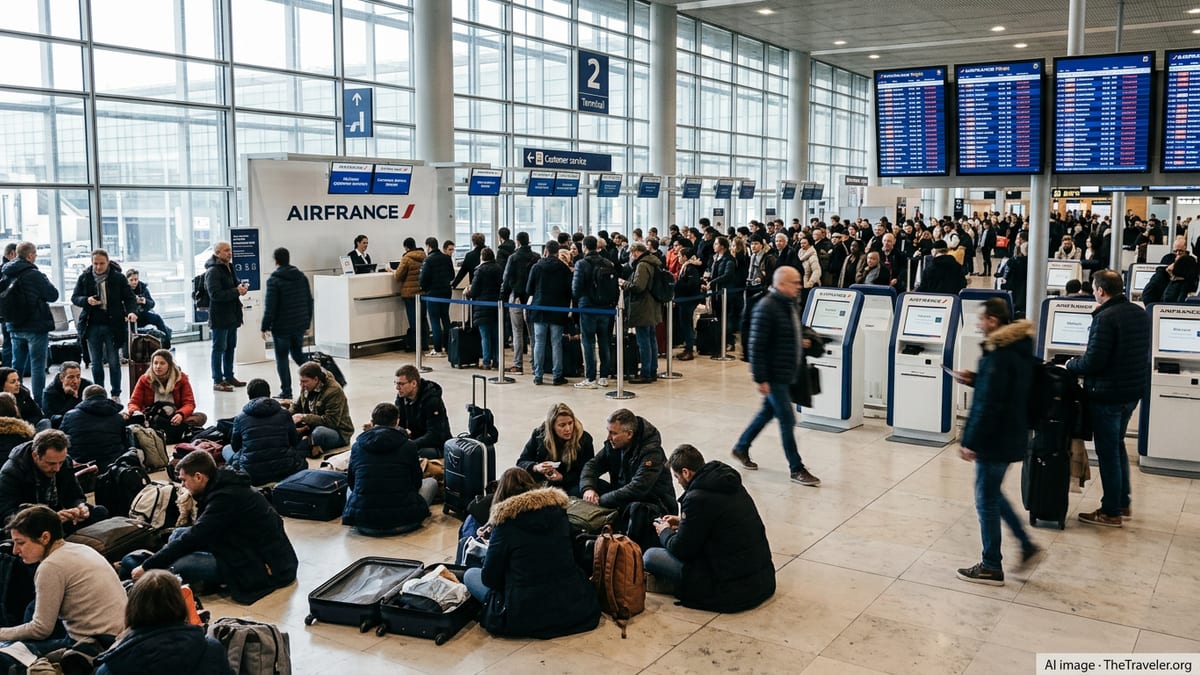
Advisory Updated As Protests Spread Across France
According to the Government of Canada’s official travel advice, updated on October 28, 2026, large scale demonstrations have taken place across France since late September. The advisory notes that further coordinated protests are planned in several cities on October 31 and November 5, and cautions that additional gatherings may be announced at short notice.
The advisory keeps France at the “exercise a high degree of caution” level, but adds more detailed safety language focused on civil unrest. Publicly available information highlights risks linked to vandalism, clashes between some protesters and police and the use of tear gas in certain urban areas. Reports indicate that unrest has been more intense in major cities, including Paris, Marseille and Lyon, though smaller towns have also seen marches and road blockages.
Canadian guidance mirrors a broader tightening of international travel advice on France. The United States, the United Kingdom, Ireland and Australia have all recently reminded travellers that demonstrations and strikes are frequent and can quickly disrupt normal life, with some advisories specifically referencing the October and early November protest dates.
The Canadian notice stresses that participation in demonstrations should be avoided, even when gatherings appear peaceful, because localized conditions can change quickly. Travellers are urged to monitor local media and follow any instructions issued by municipal authorities once on the ground.
Nationwide Demonstrations Tied To Cost Of Living And Public Services
The latest warning is linked to a broad protest movement that has built over several weeks. Coverage by French and international outlets indicates that discontent first surged in mid September over rising fuel prices and the cost of living, quickly drawing support from trade unions, student groups and the Yellow Vests movement.
Background reporting on the 2026 French fuel and cost of living protests notes that the demonstrations have gradually widened to include concerns about public services, education funding and social inequality. A major nationwide mobilisation on October 17 drew large crowds in Paris and other cities, followed by further marches and sporadic rioting in subsequent days.
Recent analysis in French media suggests the government now expects a prolonged season of unrest, with coordination groups calling for repeated “national days” of action. A large mobilisation is announced for October 31, with another nationwide day of demonstrations signalled for November 5. While exact crowd sizes are difficult to predict, the pattern has typically involved organized afternoon marches in city centres, with the highest risk of clashes arising in the evening when some groups remain in the streets.
Local authorities in some cities have responded by restricting demonstrations, introducing temporary protest bans in specific districts or limiting gatherings near sensitive sites. Publicly available decrees also show that curfews have been established in certain municipalities following night time violence or looting, although these measures vary by location and may change rapidly.
Disruption Expected For Transport, Attractions And Public Services
The Canadian advisory warns that travellers in France should anticipate significant disruptions in connection with the upcoming nationwide protest dates. Large marches commonly lead to road closures along main boulevards, diversions of bus routes and temporary shutdowns of tram or metro stations located near demonstration routes.
International travel reporting over the past week notes that French rail services have already faced delays and cancellations on key protest days, especially in and out of major hubs such as Paris, Lyon and Marseille. Urban transport in Paris has also been affected at times, with some metro lines operating reduced frequencies or bypassing central stations when large crowds are expected.
Travellers should also be prepared for occasional closures of major cultural sites. Recent media coverage has highlighted precautionary shutdowns of museums and monuments on demonstration days in Paris and other large cities, both to protect staff and visitors and to prevent buildings becoming focal points for unrest. Notices are often posted the same day, so visitors are advised to verify opening hours on official channels each morning.
The updated Canadian guidance therefore recommends building flexibility into itineraries on and around October 31 and November 5. Travellers are encouraged to allow additional time for airport transfers, train connections and long distance drives, and to consider scheduling key museum visits or time sensitive activities on days when no large scale protests are announced.
Practical Safety Advice For Canadian Travellers In France
Publicly available Canadian government information emphasises that most visits to France are trouble free but urges visitors to take extra precautions until tensions ease. Travellers are advised to remain vigilant in busy public places, keep a low profile near large gatherings and leave any area where crowds appear to be forming, even if there is no visible violence.
The advisory suggests staying away from demonstration routes, which are often centred on main squares, government buildings and symbolic avenues in major cities. Travellers can use local news, city transport apps and hotel front desk information to identify any announced marches near their accommodation or planned sightseeing areas.
Security notices published by several governments stress the importance of carrying identification, keeping mobile phones charged and maintaining access to emergency contact numbers for consular assistance. Travellers are encouraged to register their presence abroad using voluntary registration tools where available and to share itineraries with family or friends at home.
Canadian visitors who encounter a demonstration are advised to move to a side street as soon as possible, avoid photographing confrontations between protesters and police and never attempt to cross police lines. In situations where tear gas or crowd control measures are deployed, travellers should seek an indoor location away from the main streets until the situation calms.
What The Advisory Means For Upcoming Trips
Despite the new warning language, the Canadian government has not asked travellers to cancel trips to France. The overall advisory level has not been raised to recommend avoiding non essential travel, and the wording instead focuses on situational awareness and careful planning around the announced demonstration dates.
Travel industry outlets in Canada report that major airlines and tour operators are currently operating normal schedules to French destinations. However, companies are monitoring the situation closely and may adjust services on short notice if local security restrictions intensify or if transport hubs are significantly affected by protests.
For travellers departing in the coming days, experts cited in industry coverage suggest reviewing booking conditions for flights, rail passes and accommodation, with particular attention to change and cancellation policies that could prove useful if a planned activity becomes impossible due to road closures or local orders. Travel insurance providers in Canada are also reminding policyholders to check how civil unrest is treated under their coverage before departure.
With more nationwide demonstrations already signalled into early November, Canadian travellers heading to France are being urged to keep a close eye on updates to the official advisory in the days before departure and during their stay. Staying informed, avoiding protest areas and allowing flexibility in daily plans are being presented as the most practical ways to continue visiting France while the current wave of demonstrations unfolds.