


More news on this day
Canada has updated its official travel advice for France, highlighting large-scale demonstrations, localized curfews and an ongoing terrorism threat, as the country remains a popular destination for Canadian visitors heading into late 2026.
Get the latest news straight to your inbox!
What Has Changed in Canada’s Advice on France
Publicly available information from the Government of Canada shows that its travel advice for France was updated on October 28, 2026, with new details in the safety and security section related to demonstrations. The overall risk level for France remains at “exercise a high degree of caution,” but the latest update emphasizes the impact of protests and potential disruption for travelers.
The advisory notes that large-scale demonstrations have been taking place across France since late September 2026, with further protests announced in several cities in the days ahead. The change brings the Canadian position broadly in line with other international advisories that currently urge visitors to be more vigilant in France because of both unrest and the terrorism risk.
The core message for Canadians planning trips to France is not to cancel travel outright, but to prepare for a more unpredictable environment. Travelers are encouraged to monitor local information sources closely before and during their stay, build flexibility into itineraries and be ready for last-minute changes to transport and public services.
Demonstrations, Curfews and Disruption Risks
The updated Canadian advisory states that large demonstrations are occurring nationwide and that further events are planned, potentially affecting major cities such as Paris, Lyon and Marseille. It also warns that security measures, including partial or localized curfews, may be introduced at short notice in response to unrest.
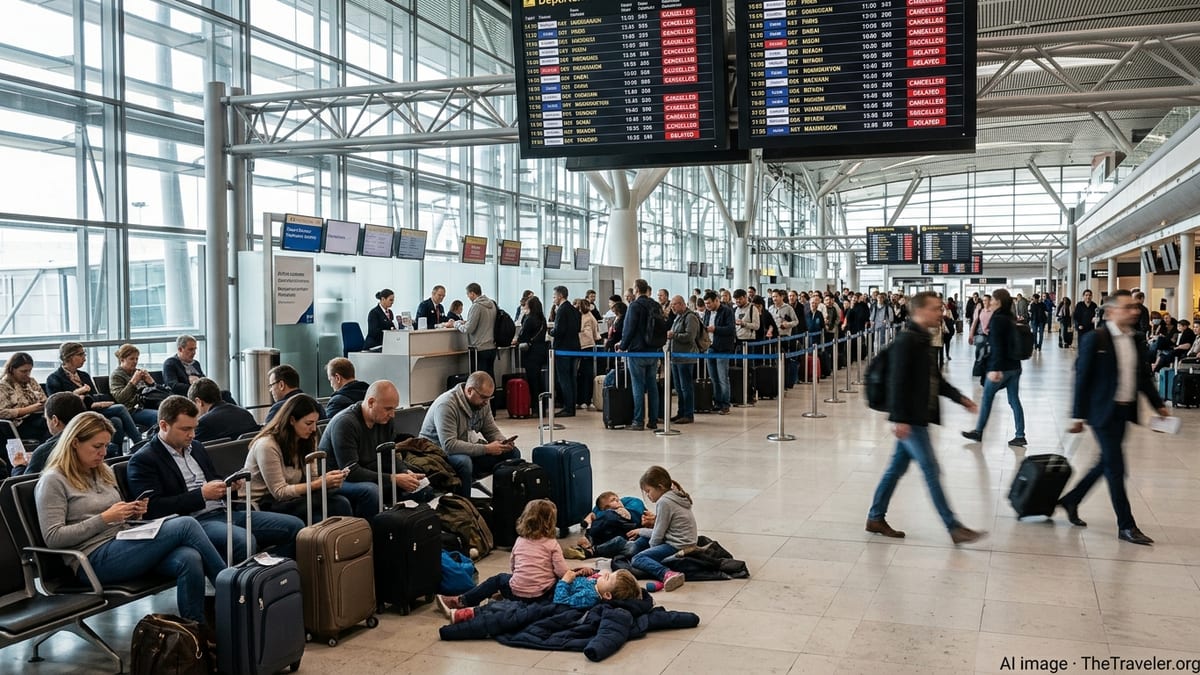
Reports indicate that demonstrations in France can disrupt public services and transportation not only during the events themselves but also in the surrounding hours and days. Urban transit, intercity rail services and access to airports can all be affected, with some routes reduced or temporarily halted. Travelers transiting through key hubs are advised to allow additional time, confirm schedules frequently and consider backup options.
The Canadian government’s advice highlights that even peaceful demonstrations can turn confrontational. Past events in France have involved confrontations between small groups of radical activists and police, with the use of projectiles and crowd-control measures such as tear gas. Visitors are urged to avoid protest areas entirely, stay away from large gatherings and remain alert to significant police deployments, which may signal nearby unrest.
Travel-focused coverage of the update underscores practical steps for visitors, including identifying their accommodation’s location relative to usual protest routes, checking whether major sights or shopping districts are affected, and keeping important documents and medications accessible in case movement is temporarily restricted.
Heightened Terrorism Alert and Security Measures
In addition to unrest, Canada’s advisory continues to underline the terrorism threat in France and across Europe. The guidance recalls that attacks have previously taken place in French cities and that further incidents are considered possible. Potential targets cited in public advisories include government buildings, places of worship, transport hubs, cultural venues and busy areas popular with tourists, especially in Paris.
The French security posture remains defined by the Vigipirate alert system, which uses three levels to respond to terrorism and security risks. Current information indicates that the level is set at “vigilance renforcée,” or enhanced vigilance, which allows authorities to maintain reinforced checks at transport hubs, tourist sites and large events, as well as a visible presence of armed patrols.
Operation Sentinelle, which deploys police, gendarmes and military personnel in potential target areas, also continues. Travelers can therefore expect a regular armed security presence around train stations, major monuments, shopping centers and large public squares. The Canadian advisory notes that such measures are precautionary and not necessarily an indication of an immediate incident.
Canadian visitors are advised to remain aware of their surroundings, pay attention to security announcements and be particularly cautious at major public events, religious holidays and political gatherings. The guidance stresses that crowded locations such as restaurants, terraces, markets and entertainment venues warrant extra attentiveness.
Practical Advice for Canadian Travelers Heading to France
Alongside the updated warning, the Government of Canada sets out a series of practical recommendations. Travelers are encouraged to avoid areas where demonstrations are taking place, monitor local media and official channels for information on planned protests and transport disruptions, and follow any curfew or movement restrictions that may be announced locally.
The advisory recommends that visitors be prepared to adjust travel plans if services are interrupted. That may involve allowing more time to reach airports or major train stations, keeping tickets and reservations accessible on paper or offline formats, and staying in touch with airlines or rail operators for schedule changes. Where possible, travelers may wish to schedule key journeys outside times when protests are expected.
Canadians are also urged to safeguard documents and valuables, particularly in crowded settings that can accompany both demonstrations and routine tourism. The advisory highlights the prevalence of petty crime such as pickpocketing in large cities and busy transport hubs, advising visitors to keep passports secure, limit the amount of cash carried and remain watchful when using bank machines or mobile phones in public.
Travel media coverage notes that travelers should store copies of important documents separately from originals, ensure their mobile devices can receive local alerts and keep the contact details of Canadian consular services handy. Travelers are also reminded that conditions can evolve quickly and that the official advisory for France may be updated again if the situation changes.
How Canada’s Stance Compares Internationally
The revised Canadian advisory aligns with a broader pattern of caution among partner countries. The United States currently lists France at a “Level 2: Exercise increased caution” on its own advisory scale, citing both unrest and terrorism as reasons for the rating. Other governments, including those of European and Asia-Pacific states, describe a similar mix of protest-related disruption and enduring security concerns in their public guidance.
Despite this cautious tone, France remains open to visitors, and international travel to Paris and other major destinations is continuing. Airlines and rail operators are still running regular services, though schedules may be adjusted around days of major protest or strike action. For many travelers, the practical impact comes less from blanket restrictions and more from localized delays, closures and heightened screening.
For Canadian visitors, the key takeaway in the latest advisory is to treat France as a destination where extra vigilance and flexibility are required rather than as a place to avoid entirely. Official information emphasizes advance planning, situational awareness and respect for local security measures as the best way to manage the current conditions while still making the most of a trip.