


More news on this day
From glass-domed carriages rolling past glacier-fed lakes to slow trains pushing into polar-bear country, Canada’s scenic rail routes remain one of the most striking ways to reach national parks, alpine towns and remote wilderness in 2026.
Get the latest news straight to your inbox!
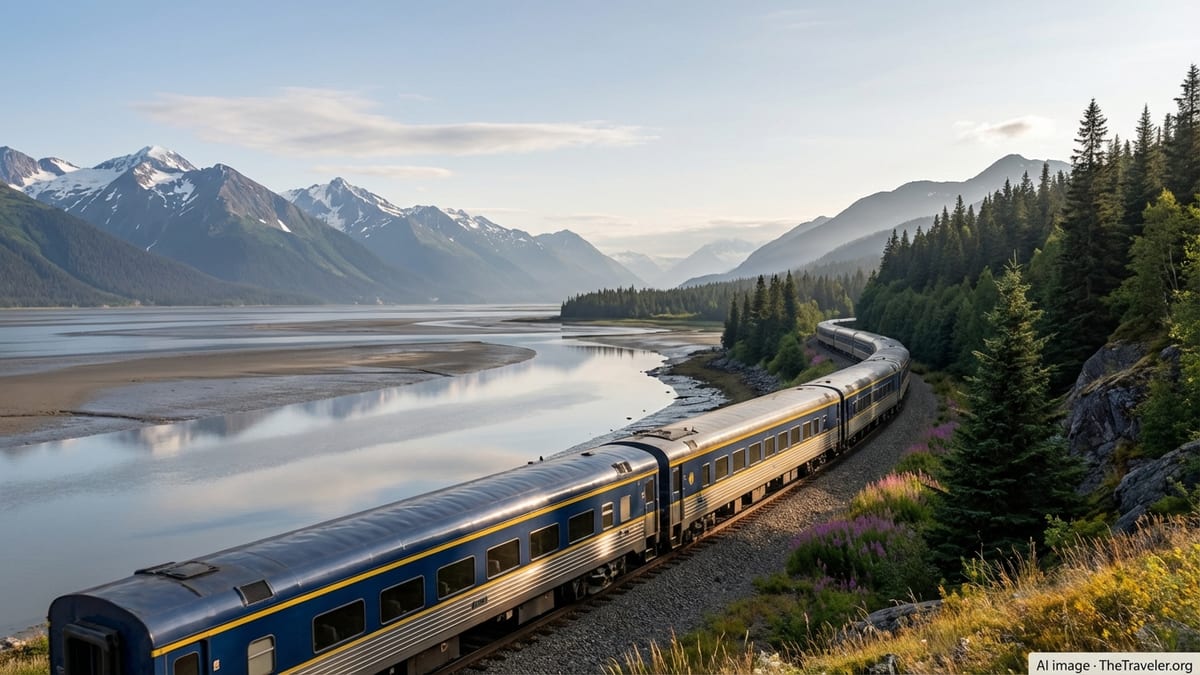
The Transcontinental Epic: VIA Rail’s The Canadian
VIA Rail’s flagship service, The Canadian, continues to anchor long-distance rail travel across the country, running between Toronto and Vancouver on a four-night journey that covers more than 4,400 kilometres. Publicly available timetable and route information show that the train weaves from the Great Lakes region through the Canadian Shield, across the Prairies and into the heart of the Rockies, offering a rolling cross-section of the country’s geography.
Travellers report that the early stages out of Toronto showcase lakes, granite outcrops and thick forest before the landscape opens into Manitoba and Saskatchewan’s prairie skies. West of Edmonton, the line threads into the mountains, where snow-dusted peaks and deep river valleys dominate the final approach to Jasper and onward to coastal British Columbia.
According to recent travel guidance and trip reports, the train typically takes around 93 to 97 hours from end to end, depending on the season and freight traffic. Sleeper and prestige class passengers have access to dome cars that are prized for sunrise views over the Prairies and sunset light on the Rockies, making this route a preferred choice for travellers seeking one continuous, multi-day scenic experience.
Because The Canadian serves both major cities and intermediate communities, it is also used as a practical transport link. That dual role means schedules can be affected by freight priority, and experts advise building flexibility into onward plans. For visitors who want to add national parks, Jasper is a key gateway, with connections to hiking, wildlife watching and road trips deeper into the Rockies.
Rocky Mountaineer: Glass Domes and Daylight in the Canadian Rockies
For travellers focused specifically on mountain scenery, luxury operator Rocky Mountaineer continues to run several daylight-only routes between Vancouver and the Rockies. Company fact sheets and 2026 product guides show that three Canadian itineraries connect the Pacific Coast with Banff, Lake Louise, Jasper, Kamloops, Whistler and Quesnel, with all travel scheduled in daylight to maximise viewing time.
One of the most sought-after options is First Passage to the West, which links Vancouver with Banff via Kamloops. Route descriptions highlight historic engineering features such as the Spiral Tunnels and crossings of the Continental Divide, alongside canyon sections carved by the Fraser and Thompson rivers. Rainforest to Gold Rush and Journey Through the Clouds extend the network to Jasper via Whistler or Kamloops, passing landmarks such as Mount Robson, Pyramid Falls and the forested slopes of interior British Columbia.
Travel specialists note that Rocky Mountaineer trains do not operate overnight and do not function as point-to-point public transport. Instead, packages pair daytime rail segments with hotel stays in destinations such as Kamloops or mountain resorts in the national parks. This design appeals to visitors who prioritise comfort, uninterrupted window time and curated commentary on geology, history and wildlife.
With the operator promoting ongoing seasons through at least 2026, these routes remain a high-profile way to access Banff and Jasper national parks by rail in combination with road transfers. Recent comparisons between VIA Rail and Rocky Mountaineer suggest that the latter is generally positioned as a premium sightseeing experience, while VIA Rail emphasises broader connectivity and a mix of price points.
Into the North: Winnipeg to Churchill and the Edge of the Arctic
For travellers seeking remote wilderness and northern wildlife, VIA Rail’s Winnipeg to Churchill service offers a markedly different kind of scenic journey. Public information on the route shows that the train runs roughly twice a week between Manitoba’s capital and the subarctic community of Churchill on Hudson Bay, a town widely known as a viewing base for polar bears and beluga whales.
The line leaves Winnipeg’s farmland and passes through boreal forest, muskeg and tundra over the course of a two-day trip. Reports from recent seasons describe long stretches with no road access, an aspect that underscores the train’s role as a vital supply and passenger lifeline for isolated communities along the Hudson Bay Railway.
From a landscape perspective, the shift into treeline and open tundra provides a stark contrast to southern routes. In summer, travellers can see expansive wetlands and northern lakes; in autumn, the region becomes a focal point for wildlife tourism as visitors combine rail travel with local tours in search of polar bears along the coast.
Because infrastructure in the region has historically been vulnerable to extreme weather and permafrost-related damage, travel advisories recommend checking current operating conditions and schedules before planning a rail-based trip to Churchill. When the line is fully operational, however, it offers one of Canada’s most distinctive ways to reach the edge of the Arctic without flying.
Hidden Gems: Jasper–Prince Rupert and Other Scenic Regional Routes
Beyond the flagship and luxury services, several regional routes have been drawing increased attention from rail enthusiasts and travellers looking for quieter options. One of the most discussed is the Jasper to Prince Rupert line, which links the Rockies to the Pacific via northern British Columbia. Information from tourism boards and rail-focused publications indicates that the journey typically runs over two days with an overnight stop in Prince George.
The first segment traces river valleys and forested foothills west of Jasper, while the second day approaches the coast through a landscape of fjord-like inlets, mountains and small communities. Observers have described this line as one of the country’s most underrated scenic trips, in part because it receives less commercial promotion than services in the southern Rockies.
Elsewhere, seasonal trains such as Ontario’s Agawa Canyon excursion have been highlighted in domestic travel coverage for autumn foliage and rocky canyon scenery. Although these shorter routes do not connect major national parks on the same scale as western services, they demonstrate how regional operators and VIA Rail continue to use historic rail corridors to showcase local landscapes.
Collectively, these routes underline the diversity of Canada’s rail network for visitors who are prepared to travel beyond the busiest corridors. Whether crossing an entire continent, gliding through protected mountain parks or edging into subarctic tundra, the country’s scenic trains remain a powerful way to connect urban hubs with some of North America’s most dramatic and hard-to-reach wilderness.