


More news on this day
Across Canada, a new wave of short rail itineraries is turning weekend getaways into low‑stress, climate‑conscious escapes, as travellers swap congested highways for scenic trains linking cities, resorts and remote wilderness towns.
Get the latest news straight to your inbox!
Short-Haul Rail Gains Ground With Urban Travellers
In Canada’s most densely travelled corridor between Windsor, Toronto, Ottawa and Montreal, passenger rail is positioning itself as a practical alternative to long weekend drives. Publicly available information from VIA Rail shows frequent intercity departures on this route, with promotional one-way fares as low as about $42 between Montreal and Ottawa and around $55 between Toronto and Windsor on selected August 2026 dates, targeting leisure travellers planning quick breaks from major cities.
Travel coverage tracking Canadian rail trends notes that these short segments are increasingly marketed as standalone weekend trips rather than just links within longer cross-country journeys. Riders can spend two or three days exploring walkable downtowns in cities such as Kingston, Ottawa or Quebec City, then return by train without needing a car in busy cores where parking is costly and traffic is heavy.
Advocacy for lower-carbon travel is also helping shift sentiment toward rail. VIA Rail reports ongoing growth in demand for environmentally responsible travel products, including seasonal passes that encourage multi-stop train itineraries, suggesting that more Canadians are willing to trade personal vehicles for rail when convenient schedules and competitive prices are available.
Online trip-planning discussions echo this shift, with travellers weighing the cost of rental cars, fuel and highway fatigue against the ability to read, work or rest while the train covers several hundred kilometres in a single afternoon. For many, the value proposition improves over a long weekend, when avoiding multi-hour traffic queues at either end of a trip can preserve precious vacation time.
Scenic Weekend Routes Showcase Slow Travel
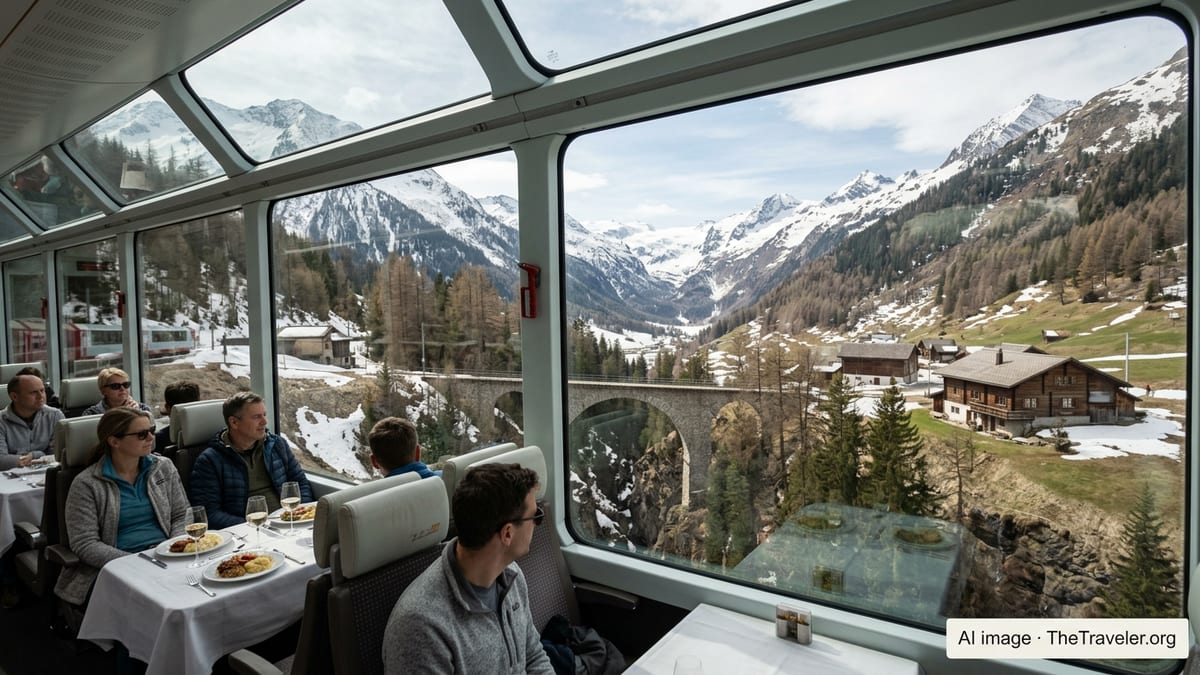
Beyond the main intercity corridor, a number of regional and tourist-oriented lines are redefining how travellers approach short rail getaways. In Quebec, the Train de Charlevoix operates along the north shore of the St. Lawrence River between Quebec City and La Malbaie, with schedules that support day trips and weekend stays in Baie-Saint-Paul and other resort towns. According to Destination Canada, the 125‑kilometre line hugs cliffs and shoreline, offering what it describes as one of eastern Canada’s most scenic slow‑travel experiences.
The Train de Charlevoix’s timetable for the 2026 season includes frequent round trips between Quebec City and Baie-Saint-Paul during summer and early fall, making it realistic to leave the city in the morning, spend a full day in the Charlevoix region, and return in the evening or on the following day. The operator promotes discovery circuits and digital guides that help passengers link station stops with nearby trails, restaurants and riverside walks, further supporting car‑free weekend planning.
National and international travel publications increasingly single out such itineraries as examples of rail‑based “slow travel” in Canada, contrasting them with fly‑in, fly‑out city breaks or hurried road itineraries. Coverage often highlights the ability to step directly from the station into compact historic districts, particularly in Quebec City and smaller Charlevoix villages, where accommodations, galleries and bistros cluster within walking distance.
Similar experiences are promoted in Atlantic Canada and the Rockies, where tour operators package overnight rail segments with short stays in gateway towns. While some of these products are positioned at the luxury end of the market, they share a common message with shorter regional lines: for travellers focused on scenery and local culture rather than distance covered, a few hours by train can replace many hours of driving.
Northern Ontario Lines Turn Remote Regions Into Weekend Destinations
In Northern Ontario, the Ontario Northland Railway’s Polar Bear Express between Cochrane and Moosonee offers a very different style of short getaway, connecting road-accessible Cochrane with the tidewater of James Bay. Ontario Northland describes the service as essential for local residents while also emphasizing its appeal for visitors seeking fishing, camping and other tourism activities in the region. The roughly five‑hour trip runs through boreal forest and muskeg landscapes that are otherwise difficult to reach without a long drive.
Current schedules published by Ontario Northland indicate multiple round trips most weeks, with a daytime northbound departure from Cochrane and a same‑day return from Moosonee, allowing flexible options for two‑ or three‑night stays. Service updates for 2026 show that additional departures are periodically added around major regional events, signalling that the line is increasingly considered part of the visitor infrastructure as well as a community lifeline.
Destination Ontario, the provincial tourism agency, now promotes the Polar Bear Express as a way to view Northern Ontario scenery and, in the right conditions, even the northern lights from the train. This kind of positioning effectively reframes what was once seen primarily as a utility route into a rail‑based experience that can anchor a long‑weekend trip built around paddling, Indigenous culture tours or wildlife viewing.
For travellers from southern cities, the combination of a highway or corridor‑train leg to Cochrane and then a rail journey to Moosonee can significantly reduce time spent driving on two‑lane northern roads. It also offers a more predictable timetable than long-distance highway travel subject to weather or construction delays, which is a key factor for those fitting remote adventures into a standard three‑day weekend.
Cost, Time and Carbon Tilt Some Trips Toward Rail
As Canadians reconsider how they travel on weekends, rail is increasingly being judged not just on romance or nostalgia but on practical metrics such as total trip cost, time efficiency and environmental impact. VIA Rail’s own information shows discounted advance fares on key city pairs that can undercut or closely match the combined fuel, toll, parking and rental costs of driving for two people, especially over popular holiday weekends when prices for rental vehicles and urban parking peak.
On the environmental side, publicly available comparisons from transport agencies and research bodies consistently show intercity trains generating substantially lower greenhouse gas emissions per passenger‑kilometre than private cars, particularly when trains operate near capacity. This aligns with campaigns from national and provincial tourism organizations that now frame rail‑based itineraries as part of a broader shift toward more sustainable travel in Canada.
Time is another factor working in rail’s favour for certain routes. On dense highway corridors where congestion on Friday evenings and holiday Mondays can add hours to a trip, fixed-schedule trains provide a more reliable arrival window. Travellers who work remotely can also treat part of the journey as productive time, with many modern Canadian services offering Wi‑Fi and device charging, making it easier to leave after a workday and start a weekend break without taking extra vacation hours.
However, experts and traveller reports still note constraints, including capacity limits on peak departures, relatively sparse service in some regions, and the need to plan around fixed timetables. These limitations mean that for now, Canadian rail is best positioned as a smarter alternative on specific weekend corridors and niche scenic routes rather than a universal substitute for the car.
Rail’s Growing Role in Canada’s Weekend Travel Mix
Industry reporting indicates that Canadian rail operators and tourism boards are responding to this momentum by refining products for short leisure trips. VIA Rail continues to promote flexible passes and targeted discounts in its busiest regions, while regional and tourist lines such as Train de Charlevoix emphasize themed departures, discovery routes and integrated local experiences that resonate with weekend travellers.
At the same time, more destinations are structuring visitor itineraries around stations rather than parking lots. City and regional tourism portals now showcase “car‑free” weekend templates that begin and end at rail platforms, pairing train arrival times with museum hours, restaurant reservations and hotel check‑in windows. This kind of planning helps offset one of rail’s perceived drawbacks, the lack of door‑to‑door flexibility that comes with a car.
As Canada looks toward broader climate goals and continued population growth in its urban corridors, transportation analysts increasingly view intercity and regional rail as an important tool for absorbing leisure demand that might otherwise add to highway congestion. For travellers, the outcome is tangible in the form of emerging weekend itineraries that feel less like scaled‑down versions of cross‑country rail odysseys and more like convenient, scalable alternatives to driving.
From the coastal rails of Charlevoix to the boreal stretches of Northern Ontario, these short, scenic routes are quietly reshaping how many Canadians think about getting away for a few days. Instead of resigning themselves to packed highways and road‑trip fatigue, a growing share of weekend travellers are finding that the smarter move can be to leave the car behind and let the train set the pace.
https://www.viarail.ca/en/offers/getaways
https://traindecharlevoix.com/en/round-trip-train-quebec-baie-saint-paul/
https://www.ontarionorthland.ca/en/travel/polar-bear-express-passenger-train
https://travel.destinationcanada.com/en-ca/things-to-do/how-to-experience-slow-travel-in-canada