


More news on this day
Andorra is taking a new step in its long-running effort to overcome its lack of a national airport, advancing plans for a Paris connection and expanding existing routes from the Andorra–La Seu d’Urgell facility in Spain as it seeks to lock in future tourism growth.
Get the latest news straight to your inbox!
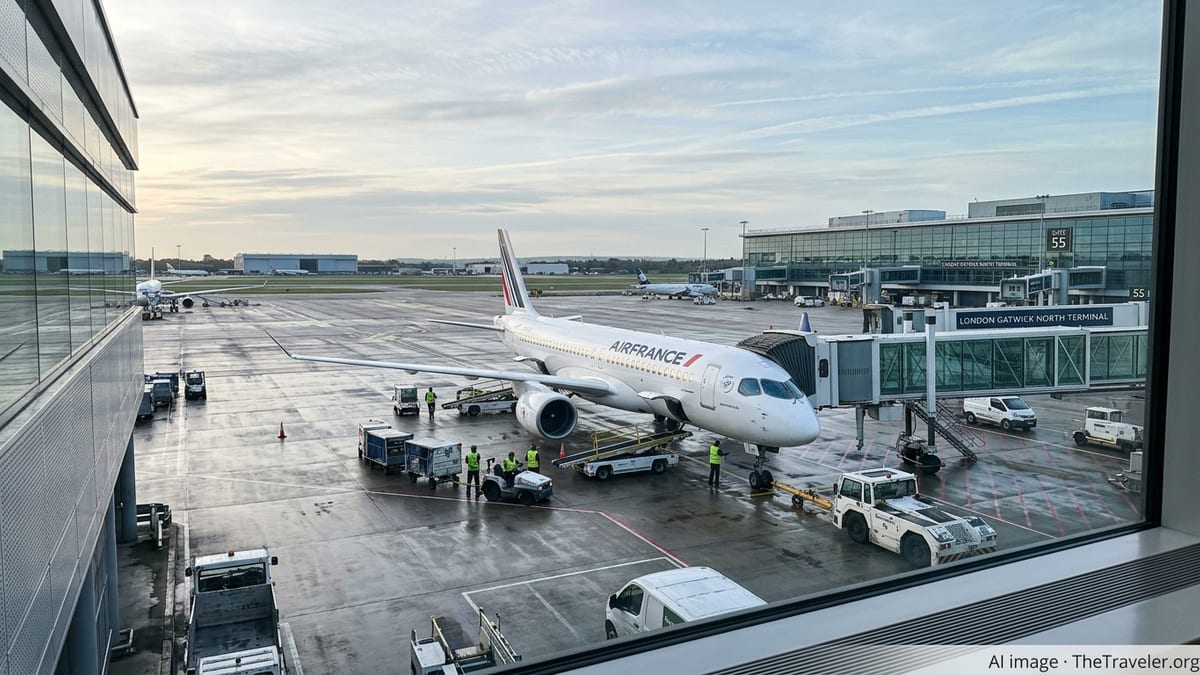
New tender adds Paris to Andorra’s air map
Publicly available information from the Andorran government shows that new tender rules have been approved to consolidate and extend regular air services from Andorra–La Seu d’Urgell airport, the closest airport to the principality and a joint project with Catalonia. The revised framework, due to take effect from January 1, 2027, is designed to replace the current subsidy scheme and run for four years, with the possibility of a two-year extension.
Coverage from local media indicates that, for the first time, a direct connection with Paris has been written into the tender as a strategic objective. The planned link would complement existing subsidized services to Madrid and Palma de Mallorca, and is presented as a way to reinforce ties with France, which is already one of Andorra’s principal tourism and economic partners.
Reports describe the inclusion of Paris as part of a broader push to strengthen connectivity with France, aligning Andorra more closely with the French market after years of cooperation focused largely on roads, border management and winter tourism. The new route is expected to improve access for French visitors who currently depend on long road journeys from Toulouse or Barcelona-area airports.
While the final route structure will depend on airline interest and the outcome of the competitive process, the move signals that Andorra is looking beyond Iberian gateways and positioning its mountain economy within a wider European air network, with Paris as a flagship destination.
Existing links to Madrid and Palma show steady growth
The Andorra–La Seu airport, located just across the border in Spain, has gradually built up a small network of scheduled services that act as de facto air links for the landlocked principality. Airport timetable data shows regular flights to Madrid and Palma de Mallorca operated by Air Nostrum, marketed through the Iberia network and timed to enable onward connections.
According to government statistics for the 2025–2026 winter season, the Palma route alone carried more than 6,600 passengers between December and April, representing a double-digit percentage increase compared with the previous winter. The route typically offers two weekly rotations, adjusted by day of operation between winter and summer, and is described in official reports as an important complement to the Madrid service.
Separate figures cited in local coverage indicate that Andorra–La Seu handled close to 20,000 users over the most recent full year, underlining the role of scheduled flights, charters and general aviation in feeding both the Andorran and Catalan Pyrenees. Passenger numbers have been rising quickly from a low base, with the airport recording in just nine months of 2025 almost as many passengers as in the whole of 2024.
These trends support Andorra’s argument that improving air access can help smooth seasonality, diversify source markets and attract higher-value visitors who might previously have bypassed the enclave in favor of better-connected Alpine resorts.
Alignment with France within a wider connectivity strategy
France is already central to Andorra’s tourism profile, with French visitors consistently ranking among the top nationalities traveling to the principality for shopping, winter sports and mountain breaks. Historical cooperation agreements between Andorra, France and Spain have long focused on mobility, including road upgrades on French routes leading to the border.
Recent parliamentary and media documents in France point to growing interest in improving cross-border connectivity to Andorra, emphasizing the economic and tourism significance of the relationship. The proposed Paris link from Andorra–La Seu fits into this context, giving Andorra a direct air bridge to a major European hub used heavily by French domestic and international travelers.
Economic assessments, including external reviews of Andorra’s growth prospects, note that tourism continues to underpin national output and that authorities are investing in better connectivity as part of a broader modernization drive. Within this, closer alignment with French transport networks is seen as a way to attract more short-break visitors and to diversify away from an almost exclusive reliance on road access through Spain and France.
Plans to upgrade Andorra–La Seu’s status, including discussions about making it a designated Schengen border control point, are presented in local coverage as another component of this strategy. Such a change would ultimately make it easier to receive flights from beyond the Schengen Area, potentially expanding Andorra’s reach beyond its immediate neighbors.
Infrastructure upgrades and cross-border cooperation to 2030
Andorran and Catalan authorities have repeatedly framed Andorra–La Seu as a shared infrastructure project serving both the principality and the wider Pyrenean region. Joint announcements point to commitments to improve the airport’s operational hours, upgrade equipment and explore its designation as an international entry point, all within broader transport plans running toward 2030.
Regional media describe these commitments as part of a coordinated roadmap that also includes rail feasibility work and improved bus links, aimed at making it easier for tourists to combine Barcelona, the Catalan Pyrenees and Andorra within a single trip. The airport is positioned as the aerial “gateway to the Pyrenees,” with Andorra as one of several mountain destinations that benefit.
At the same time, European Union cross-border cooperation programs have directed funding to projects involving Spain, France and Andorra, some of which focus on mobility and tourism in the high mountain corridor. While Andorra is not an EU member, it participates in these initiatives, which are designed to strengthen economic ties and improve access in sparsely populated border regions.
The expansion of air links around Andorra aligns with these wider objectives, combining national tourism priorities with regional development goals shared across three countries that see potential in a more connected Pyrenees.
Implications for Andorra’s tourism economy
Andorra’s tourism sector, built historically on duty-free shopping and winter sports, is in the midst of a gradual repositioning toward higher-quality, year-round experiences. Improved air access through Andorra–La Seu is frequently highlighted in official and multilateral reports as one of the levers for this shift, alongside investment in infrastructure, digital services and new visitor products.
Direct or conveniently connected flights from Madrid, Palma and eventually Paris are expected to make it easier for short-stay visitors and long-haul travelers to include Andorra in multi-country itineraries. Travel forums already show increasing interest in combining Barcelona, the French or Catalan Pyrenees and Andorra in single trips, a trend that could accelerate as air links mature.
However, the small scale of the airport and the complexity of operating in a high-mountain environment mean that growth is likely to remain measured. The tender for new routes explicitly aims at consolidating existing services while cautiously adding capacity, including the planned Paris link, rather than pursuing rapid expansion.
For Andorra, the strategic significance of these developments lies less in passenger volume than in connectivity. By aligning more closely with France and reinforcing ties with Spain, the principality is seeking to secure its place on Europe’s tourism map, using carefully targeted air links to complement the road access that has long defined travel to this high-altitude microstate.
Government of Andorra – New tender for routes from Andorra–La Seu
Andorra–La Seu Airport – Current flight schedules