


More news on this day
Thick smoke from Canadian wildfires is drifting deep into the United States, grounding flights, disrupting FIFA World Cup activities, and pushing unhealthy fine particulate pollution into the air breathed by an estimated 100 million Americans across the Midwest, Mid-Atlantic, and Northeast.
Get the latest news straight to your inbox!
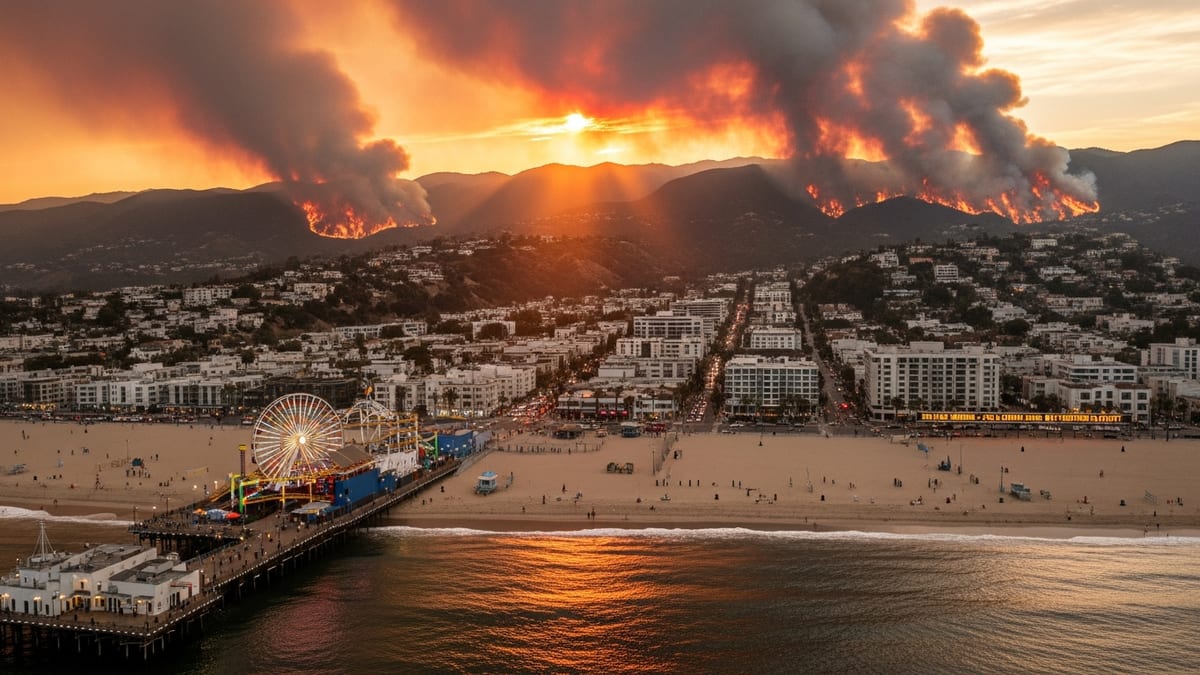
Smoke Plume Spreads Across Major U.S. Population Centers
Satellite analyses and federal monitoring data show a broad plume of wildfire smoke sweeping southeast from fires in Ontario and other Canadian provinces between July 14 and July 18, 2026, repeatedly pushing fine particulate concentrations above federal air quality standards in dozens of U.S. states. Publicly available information from NASA and the U.S. Environmental Protection Agency indicates that the dense smoke has stretched from Minnesota and the Great Lakes through Pennsylvania and New York to New Jersey and Washington, D.C., periodically shrouding city skylines in a gray-orange haze.
Air quality alerts have been issued for large portions of the Midwest and Northeast, with many locations registering “unhealthy” or “very unhealthy” levels on the Air Quality Index. In several major metropolitan areas, PM2.5 readings climbed well above 100 micrograms per cubic meter at peak hours, according to regional air quality dashboards. That level is many times higher than the annual guideline recommended by the World Health Organization and has prompted renewed health warnings for sensitive groups such as children, older adults, and people with heart or lung disease.
Public health agencies and weather services report that shifting winds are likely to move the thickest smoke offshore in the coming days, but they also caution that continued burning in Canada could send additional smoke south, prolonging intermittent episodes of poor air quality through the remainder of July.
Flights Delayed and Grounded as Visibility Drops
The heavy smoke has created significant disruptions in air travel across the affected corridor. Airport status reports from cities including New York, Philadelphia, and other East Coast hubs show delays and temporary ground stops tied to reduced visibility and low cloud ceilings associated with the smoke layer. In Philadelphia, local coverage notes that the hazy conditions limited visibility enough on July 16 to slow operations at Philadelphia International Airport, contributing to ripple effects for flights throughout the region.
At New York area airports, the combination of dense haze and strong demand related to the FIFA World Cup has strained schedules. Publicly available flight tracking data shows clusters of delayed arrivals and departures during the worst smoke hours on July 16 and July 17, when visibility dropped and air traffic managers briefly restricted operations. Aviation advisories circulated by federal agencies have urged airlines and pilots to be prepared for rapidly changing conditions in smoke-affected airspace, including possible diversions and holding patterns.
While most delays have been measured in hours rather than days, the timing is especially sensitive as tens of thousands of soccer fans travel into the region ahead of Sunday’s World Cup final at MetLife Stadium in New Jersey. Travel analysts note that even modest disruptions at one or two major hubs can cascade, complicating itineraries for spectators and team delegations alike.
FIFA Fan Events Canceled as Air Quality Worsens
As the smoke intensified, organizers of outdoor sports and entertainment events began canceling or scaling back activities, including several FIFA-related gatherings. Local announcements in Canadian and U.S. host cities report that fan festivals and viewing parties have been called off or moved indoors when AQI readings pushed above thresholds considered safe for strenuous outdoor activity.
In Toronto, social media posts and public notices shared this week indicate that a World Cup fan fest scheduled along the waterfront was canceled as organizers cited deteriorating air quality and forecasts for even thicker smoke. In the northeastern United States, municipalities have likewise curtailed outdoor concerts, fitness programs, and youth sporting events, reflecting concern that extended exposure to elevated PM2.5 could pose health risks, particularly for participants engaged in vigorous activity.
Environmental health guidance referenced by sports medicine experts suggests that many endurance events and amateur competitions should be postponed once AQI readings exceed levels classified as unhealthy. The current smoke episode has pushed multiple cities into that range, adding pressure on organizers of both large-scale and neighborhood events to adjust plans with little notice.
World Cup Final Proceeds Under a Smoky Cloud
The 2026 FIFA World Cup final between Spain and Argentina, scheduled for July 19 at MetLife Stadium, has emerged as a focal point of concern as smoke from Canada settled over New York and northern New Jersey in the days leading up to the match. Coverage from international and U.S. outlets describes hazy training sessions, masked pedestrians, and muted skylines as air monitors in the region registered unhealthy levels of particulate pollution on July 16 and July 17.
FIFA and government representatives have stated publicly that they are monitoring conditions closely, with meteorological briefings suggesting that a shift in winds and the passage of a weather system could improve air quality by kickoff. Nonetheless, contingency discussions have been widely reported, including the possibility of schedule adjustments if smoke were to worsen unexpectedly. Sports scientists have pointed to recent research highlighting the strain that fine particulate pollution can place on elite athletes, particularly during high-intensity games lasting 90 minutes or more.
Guidance published earlier this year on environmental risks for the 2026 tournament highlighted wildfire smoke as a growing threat in North America, noting that PM2.5 levels from distant fires can remain elevated for days and affect multiple host cities simultaneously. The current episode appears to validate those concerns, underscoring the challenge for tournament organizers in balancing the global spotlight and tight broadcast windows with evolving health and safety considerations.
Health Concerns Mount as PM2.5 Hits Tens of Millions
Publicly available data from federal and state monitoring networks indicates that more than 100 million people in the United States have experienced periods of degraded air quality linked to the latest Canadian wildfires. The key pollutant, fine particulate matter smaller than 2.5 micrometers, can penetrate deep into the lungs and enter the bloodstream, with studies associating short-term spikes with increased emergency room visits for asthma, heart problems, and other respiratory issues.
Environmental agencies and medical organizations have reiterated standard smoke precautions, encouraging residents in affected regions to stay indoors when air quality reaches unhealthy levels, run high-efficiency air filters where possible, and wear well-fitted particulate respirators if outdoor activity is unavoidable. Communities with fewer resources and older housing stock have been identified as particularly vulnerable, since residents there may have less access to air conditioning and filtration that can reduce indoor smoke levels.
Researchers tracking wildfire smoke trends note that multi-day episodes of hazardous PM2.5 are becoming less unusual as warming temperatures extend fire seasons and dry out northern forests. Early assessments of the 2026 Canadian fires suggest that, although total burned area so far is below the record years of 2023 and 2025, the prevailing winds have been especially effective at channeling smoke toward heavily populated U.S. corridors, amplifying the public health and economic impacts.
As the fires continue to burn, forecasters warn that additional waves of smoke are possible, and that even short-lived improvements in air quality may be followed by renewed haze if fire activity intensifies. For travelers, sports organizers, and residents from the Great Lakes to the Atlantic seaboard, the latest episode is a stark reminder that events hundreds of miles away can rapidly alter daily life, from flight schedules and fan festivals to the simple act of spending time outdoors.