


More news on this day
Two people were injured on Friday, July 17, when a Houston METRORail train collided with a Houston Fire Department vehicle near the Texas Medical Center, derailing part of the light rail and disrupting service in one of the city’s busiest transit corridors.
Get the latest news straight to your inbox!
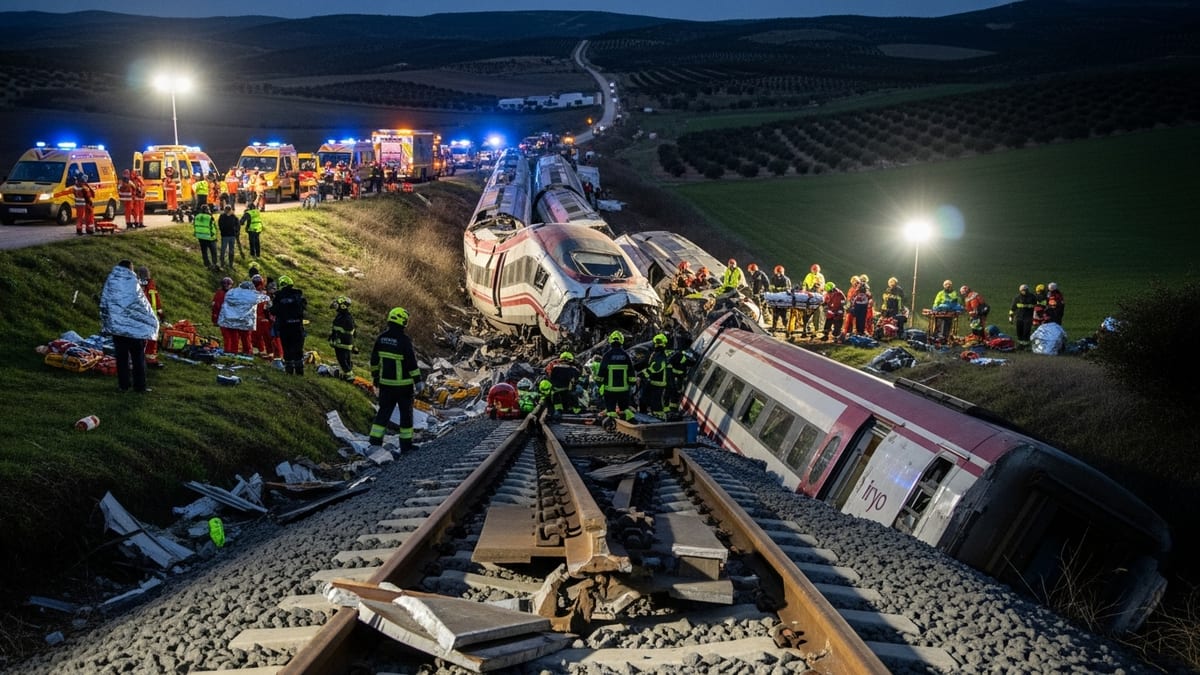
Crash Near Texas Medical Center Sends Two to Hospital
Published coverage indicates that the collision happened in the afternoon near Fannin Street and San Jacinto Street, an area where light rail tracks, hospital traffic, and emergency vehicles frequently intersect. A southbound METRORail train was traveling through the corridor when it came into contact with a Houston Fire Department vehicle responding in the area.
Reports indicate that two people were transported to nearby hospitals with injuries described as non-life-threatening. Early accounts suggest that those hurt were on board the train, while personnel in the fire department vehicle were evaluated at the scene.
Publicly available information shows that at least one rail car left the tracks, prompting a shutdown of service in both directions while crews stabilized the train and inspected the overhead electrical system. Photographs shared by local outlets showed the light rail car skewed at an angle, with emergency responders surrounding both the train and the damaged fire vehicle.
Transit agency updates described significant delays for riders who rely on the Red Line to reach the Texas Medical Center’s hospitals and clinics. Shuttle buses were deployed to move passengers around the closure while rail operations teams assessed the track and vehicle damage.
Second Collision This Month Involving METRORail and Fire Vehicle
The incident caps a troubling month for Houston’s light rail network and emergency responders. Earlier in July, coverage from local television outlets described a similar collision north of downtown Houston in the Near Northside neighborhood, where a METRORail train and a Houston Fire Department engine collided and the train derailed.
In that earlier crash, one person was taken to a hospital and rail service was suspended while the damaged train and fire engine were removed. Transit police noted at the time that preliminary information pointed to the rail vehicle being struck by the fire truck, a pattern that appears to mirror initial descriptions of Friday’s collision.
The latest crash near the Texas Medical Center has drawn attention because of its location on one of Houston’s most heavily used stretches of track, serving thousands of commuters, hospital staff, and patients each day. The fact that it is the second collision between a METRORail train and a Houston Fire Department vehicle in the same month has raised questions about how emergency responses intersect with fixed rail operations in busy urban corridors.
Publicly available statements from both agencies in past incidents emphasize cooperation between transit police and fire department leadership after crashes, with a focus on reviewing procedures and data from on-board systems to determine how these events unfolded.
Investigation Focuses on Signals, Right-of-Way and Response Protocols
According to published coverage, METRO Police have taken the lead on the rail side of the investigation, working alongside Houston Fire Department internal review teams and other city investigators. While no official findings have been released, analysis is expected to center on signal timing, right-of-way rules at the intersection, and the movement of the fire department vehicle as it approached the tracks.
Light rail crossings in central Houston typically rely on a combination of traffic signals, crossing arms, signage, and operator training to prevent conflicts with road traffic. When an emergency vehicle responds with lights and sirens, that predictable pattern can be disrupted, placing additional weight on driver judgment, line-of-sight visibility, and communication between dispatch centers.
Transportation safety guidance from federal rail and transit agencies underscores that any collision involving a derailment and injuries usually triggers a detailed review of operator actions, vehicle speed, camera footage, and signaling records. Investigators often also examine roadway design, sightlines, and whether road users had clear warning that a train was entering the intersection.
In past rail-vehicle crashes nationwide, publicly available reports have sometimes pointed to driver error, misunderstood signals, or efforts to proceed quickly through intersections during emergency responses. The Houston investigation is expected to consider whether existing training and protocols for both train operators and emergency drivers remain adequate for rapidly growing traffic volumes around the rail corridor.
Disruption for Riders and Nearby Medical Facilities
The derailment near the Texas Medical Center created ripple effects for travelers across Houston’s core. The affected section sits at the heart of a medical district that draws employees, patients, and visitors from across the region, many of whom rely on light rail to avoid congested surface streets and limited parking.
Service alerts posted shortly after the crash directed passengers to use shuttle buses bridging the gap between operating segments of the Red Line. Riders were warned to expect extended travel times while railcars and tracks were inspected for structural damage, especially around the points where the train left the rails.
For hospitals and clinics in the district, the interruption added another layer of complexity to daily operations. Staff and patients who typically step off the train near their facilities instead had to navigate temporary bus transfers or seek alternate routes at short notice.
Recent coverage of other incidents in Houston involving transit vehicles and heavy traffic has highlighted the broader challenge of maintaining reliable service within dense urban corridors that must also accommodate emergency responses, deliveries, and construction activity.
Safety Record and Calls for Coordination After Recent Incidents
Houston’s METRORail system has generally promoted its safety and reliability record compared with automobile travel, yet recent crashes have drawn renewed scrutiny. Alongside the Near Northside derailment earlier this month, local reporting has noted other high-profile collisions in Texas and across the United States in which light rail or commuter trains were struck by road vehicles at intersections.
National transportation data cited in public reports show that while serious rail-vehicle collisions remain relatively rare compared with roadway crashes overall, low-speed impacts at grade crossings can still result in injuries and costly damage. Each collision also tends to shake rider confidence, especially when passengers see images of derailed railcars or damaged emergency vehicles.
Transit safety advocates quoted in prior studies have often called for stronger coordination between transit agencies and emergency services, including joint training exercises, shared simulation tools, and regular reviews of high-risk intersections. In corridors like Houston’s Red Line through downtown and the Texas Medical Center, these efforts can also include signal priority systems that more clearly define which vehicle has right-of-way when seconds matter.
As investigators examine the details of Friday’s collision, observers are watching to see whether the sequence of two similar crashes in July prompts updates to training, technology, or street design around METRORail tracks. For riders and residents, the hope is that lessons drawn from these incidents will help prevent future conflicts between trains and emergency vehicles in Houston’s fast-growing urban core.