


More news on this day
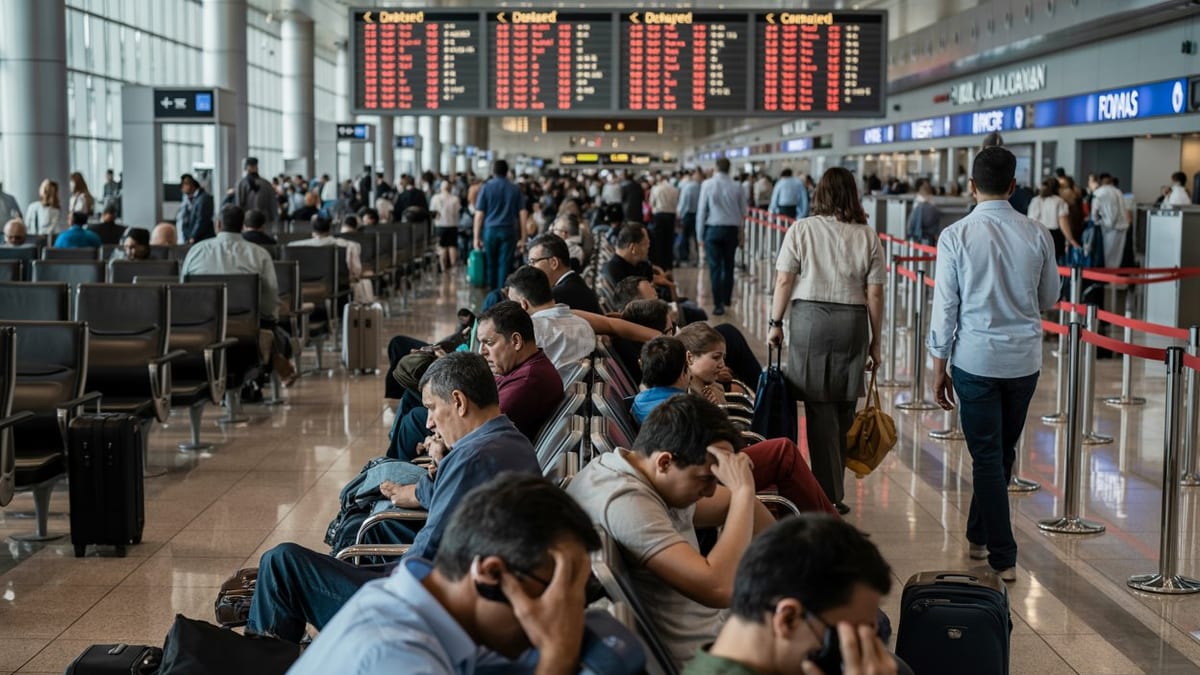
Hundreds of travellers were left sleeping in terminals and scrambling to rebook journeys in Colombia as clusters of flight cancellations and extended delays affected services operated by Avianca, Air Canada, LATAM Colombia, Clic Air and other carriers through Bogotá and Cali on June 8 and 9.
Get the latest news straight to your inbox!
Wave of Disruptions Hits Bogotá and Cali Hubs
Publicly available airport data and traveller reports indicate that disruptions intensified over the weekend into Monday around Bogotá’s El Dorado International Airport and Cali’s Alfonso Bonilla Aragón International Airport. Routes between the two cities, as well as connections to other Colombian destinations, saw repeated schedule changes, cancellations and rolling delays affecting several major and regional airlines.
Monitoring tools that track live arrivals and departures at Bogotá show a pattern of delayed operations and schedule adjustments across multiple carriers, including Avianca, LATAM and Clic Air, on June 8 and 9. A mix of domestic flights to and from Cali, Medellín, Bucaramanga, Neiva and Pereira, among others, displayed late departures, extended holding and revised estimated times, while selected services were listed as cancelled or removed from display.
On the Cali to Bogotá corridor, which is normally served by Avianca, LATAM, Clic Air, Wingo and JetSMART, schedule overviews updated for June 9 highlight reduced frequencies and time changes compared with earlier timetables. Passengers attempting to move between the two cities reported being offered later flights or connections via other Colombian hubs, stretching journeys that typically take around one hour in the air into full-day odysseys.
Although precise totals continue to shift as airlines re-accommodate passengers, local media summaries and social media posts from stranded travellers suggest that more than a dozen flights were cancelled or severely delayed over the two days, leaving hundreds of passengers queueing at service desks or attempting to rebook online.
Multiple Airlines Affected, from Flag Carriers to Regional Operators
The disruptions did not remain confined to a single airline. Avianca, Colombia’s largest carrier and a dominant operator on routes through Bogotá and Cali, appeared prominently in lists of delayed services, with several domestic routes reported arriving significantly behind schedule. These included flights linking Bogotá with regional cities such as Pereira and Medellín, where some services landed several hours later than their scheduled arrival times.
LATAM Colombia, which also operates a dense domestic network and connects Cali and Bogotá with other South American destinations, faced its own operational challenges, including delayed departures and adjusted itineraries. Some flights marketed by foreign partner airlines but operated by LATAM, particularly on regional routes that use Colombian hubs as connection points, also showed irregular operations during the same period.
Regional carrier Clic Air, which bases aircraft in both Bogotá and Cali, experienced delays on several of its short-haul links to secondary airports. Real-time boards from El Dorado indicated that particular Clic Air flights to smaller cities were rescheduled or delayed by more than an hour, adding to congestion at already crowded departure gates.
Air Canada passengers were also caught in the ripple effects. The airline sells codeshare services that rely on Avianca and LATAM metal for onward connections from Colombia to other destinations. When Colombian domestic segments were delayed or cancelled, some Air Canada customers reported missed connections and unexpected overnights, even when their long-haul flights were operating close to schedule.
Travellers Report Long Queues, Confusion and Limited Information
Accounts shared on social platforms and travel forums describe scenes of uncertainty inside terminals, with long queues forming at airline counters in both Bogotá and Cali as passengers tried to secure new itineraries or accommodation. Photos and first-hand narratives from travellers referenced crowded waiting areas and families sleeping on the floor near departure gates after late-night cancellations.
Several passengers attempting to reach connecting flights in other countries reported difficulty obtaining clear guidance on rebooking options or hotel vouchers. They described automated messages, overloaded call centres and chatbots that directed them to digital channels already struggling to keep up with the volume of change and refund requests.
Some travellers referenced previous experiences with Colombian carriers where last-minute schedule changes and limited customer service channels had already eroded confidence. The latest wave of cancellations and delays appeared to reinforce this perception for affected passengers, particularly those with tight onward connections in North America and Europe.
Consumer advocacy discussions that had been circulating earlier in 2026 about refund practices and change policies at airlines serving Colombia were revived as stranded travellers compared notes on compensation rules, travel insurance coverage and local passenger-rights regulations.
Operational Pressures and Weather Among Likely Factors
The precise causes of the latest disruption cluster have not been attributed to a single incident. However, analysts following regional aviation point to a combination of factors that often converge during periods of instability, including local weather, airspace congestion around Bogotá, aircraft availability and crew scheduling constraints.
El Dorado, one of Latin America’s busiest airports, regularly handles dense morning and evening banks of arrivals and departures. When low visibility, storms or runway constraints affect operations, knock-on delays can quickly cascade across domestic networks, especially for airlines operating tight turnarounds with narrow-body aircraft connecting multiple cities in a single day.
Fleet and maintenance pressures have also been in focus for carriers in the region over the past year. Global supply chain challenges in the aviation sector, together with technical inspections and retrofit programs affecting certain Airbus narrow-body models, have reduced operational flexibility at some airlines. That has made it more difficult to recover quickly from disruptions and can translate into sudden cancellations when spare aircraft are not available.
Industry observers additionally note that strong demand for air travel in Colombia in 2026 has kept load factors high on key routes into and out of Bogotá and Cali. When disruptions occur in such conditions, options for same-day rebooking can be limited, meaning that even a relatively small number of cancelled flights can leave large groups of passengers without immediate alternatives.
What Stranded Passengers Are Being Told to Do
Publicly available travel notices and airline policy documents suggest a familiar playbook for travellers affected by cancellations and severe delays across Colombia. Passengers holding tickets on itineraries involving Avianca, LATAM, Clic Air or partner carriers are being advised to monitor their bookings frequently, use official mobile apps where possible, and keep boarding passes and receipts for any out-of-pocket expenses that may be reimbursable later.
Change and refund rules vary by airline, fare class and whether a delay or cancellation is attributed to operational reasons or extraordinary circumstances. Policy overviews released in recent months highlight that some carriers may allow same-day changes without additional fees on select routes, while others provide credit vouchers or partial refunds instead of cash, particularly when the disruption is not linked to safety concerns.
For international travellers whose trips begin or end in Canada, the United States or the European Union, additional passenger-protection frameworks may apply. Consumer advisors often encourage passengers in these situations to document communications with airlines, file written claims where appropriate and consult national aviation regulators for guidance on potential compensation or enforcement options.
As airlines work to restore regular operations through Bogotá and Cali, travellers scheduled to fly in the coming days are being urged to arrive early at airports, check their flight status repeatedly and consider building longer connection times into itineraries that rely on Colombian hubs, in case further rolling delays emerge.