


More news on this day
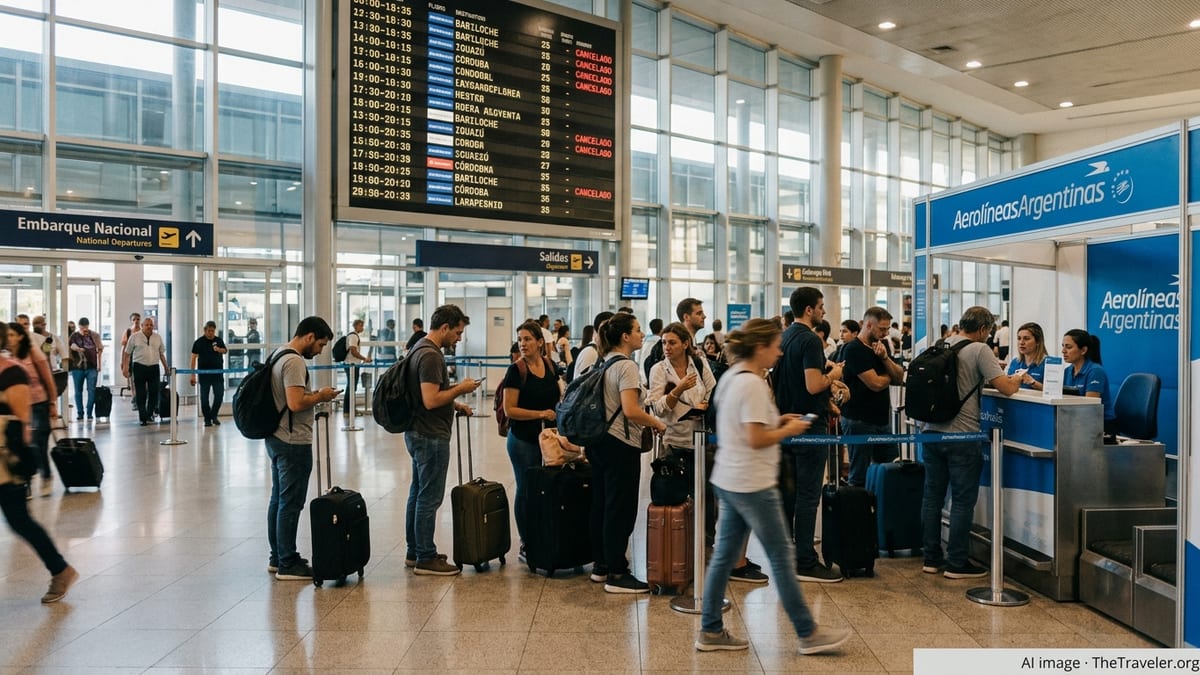
Travel across Argentina is being disrupted as a wave of cancellations and delays involving Aerolíneas Argentinas and other carriers ripples across key domestic and international routes, limiting connectivity between Buenos Aires, Córdoba and regional hubs and long-haul destinations such as New York.
Get the latest news straight to your inbox!
Domestic Network Strained by Fresh Wave of Cancellations
Recent operational data and local media coverage indicate that Aerolíneas Argentinas has experienced a fresh round of cancellations across its busy domestic network, affecting links between Buenos Aires and major cities including Córdoba, Rosario, Bariloche and Iguazú. These routes are critical for both business and leisure travel, and disruptions are creating knock-on effects throughout the country’s aviation system.
The pattern of disruption includes day-of-travel cancellations and late schedule adjustments, which are especially challenging for passengers relying on tight connections through Buenos Aires’ Aeroparque Jorge Newbery and Ezeiza International Airport. Travelers are reporting last-minute changes and the need to reroute via alternative cities or even different airlines to complete their journeys.
Publicly available flight-tracking information shows that cancellations have not been limited to a single corridor. Instead, they are scattered across multiple domestic sectors, reducing capacity at short notice and placing added pressure on remaining services operated by Aerolíneas Argentinas and competitor carriers.
The situation comes at a time when Argentina’s aviation market is already under strain from earlier episodes of disruption, including labor-related uncertainty and previous timetable overhauls, leaving airlines with limited flexibility when irregular operations arise.
International Links to New York and Other Gateways Affected
The disruption is also being felt on long-haul and regional international services that connect Argentina with North America and neighboring countries. Monitoring of transcontinental schedules shows at least one New York to Buenos Aires service listed as canceled around May 10 and 11, with passengers advised to seek rebooking or alternative routings.
These interruptions come on top of recent network changes that have reshaped Argentina’s long-haul connectivity. In late April, specialist aviation schedule data showed Aerolíneas Argentinas shelving plans to resume its Córdoba to Miami route in June, signaling a more cautious approach to secondary long-haul gateways and concentrating international traffic through Buenos Aires.
The combined effect of ad hoc cancellations and structural cuts is a more fragile international network. Travelers bound for Argentina from North America and Europe face fewer nonstop options and must rely more heavily on connections through regional hubs, raising the risk of missed onward flights when domestic operations are disrupted.
Travel industry analysts note that while individual cancellations on long-haul routes are not unusual, their impact in Argentina is magnified by the country’s limited number of alternative nonstop services on many intercontinental city pairs.
Low-Cost and Regional Carriers Add to a Patchwork of Reliability
The national carrier is not alone in facing operational headwinds. Reports from travelers and recent coverage in regional aviation outlets highlight persistent reliability issues at some of Argentina’s low-cost and regional airlines. These smaller carriers play a crucial role in linking secondary cities to Buenos Aires and popular destinations such as Patagonia, yet they have periodically recorded high rates of last-minute cancellations.
In online travel communities, passengers have described abrupt cancellations on certain budget airlines, sometimes involving multiple flights over a short period and forcing costly last-minute rebookings with other operators. Although such accounts are anecdotal, they underscore the variability of service quality across the market.
This patchwork of reliability complicates planning for both domestic and international visitors. Travelers attempting to reach or depart from hubs like Córdoba, Mendoza or Ushuaia may find themselves relying on carriers with very different performance records, increasing the importance of flexible itineraries and robust travel insurance.
The strain on budget airlines also feeds back into the national carrier’s operation, as some displaced passengers seek seats on Aerolíneas Argentinas services that are already operating near capacity during peak periods.
Travelers Confront Missed Connections and Extended Layovers
The most immediate impact of the current wave of disruptions is being felt by travelers on the ground. Missed connections in Buenos Aires are a recurring theme, particularly for those attempting same-day transfers between domestic arrivals at Aeroparque and international departures from Ezeiza, or vice versa.
With limited spare capacity, a single cancellation on a feeder route can strand passengers far from their intended gateway, forcing overnight stays or lengthy surface journeys to alternative airports. Reports indicate that travelers bound for key tourist regions, including Patagonia and the northwest, are facing rebookings that push itineraries back by a day or more when flights are scrubbed at short notice.
Extended layovers are also becoming more common as airlines attempt to re-accommodate disrupted passengers on the next available services. In some cases, this means multi-stop routings that add significant travel time and reduce the effective number of days at destination for short trips.
These complications are particularly acute for international visitors who may be unfamiliar with Argentina’s dual-airport system in Buenos Aires and who have planned tight connections based on historical schedule reliability rather than the current period of elevated disruption.
What Airlines and Passengers Are Doing to Cope
According to published information from airlines and booking platforms, carriers are responding through a mix of schedule adjustments, targeted cancellations and voluntary change policies. When operational disruptions are anticipated, some airlines have opted to cancel selected services in advance rather than risk large-scale same-day delays, allowing passengers more time to rearrange plans.
Publicly available statements from airlines and travel agents emphasize the importance of checking flight status frequently, especially within 24 hours of departure, and using digital tools and mobile apps to monitor gate changes or rebooking options. Some carriers serving Argentina are also promoting flexible fare products and waivers that make it easier to alter travel dates when irregular operations occur.
For travelers, recent experiences in Argentina suggest several practical strategies: leaving wider buffers between domestic and international flights, considering overnight stays in Buenos Aires before long-haul departures, and favoring itineraries with fewer connections where possible. Travel advisors also highlight the value of comprehensive insurance that covers missed connections and additional accommodation costs.
While the current pattern of cancellations and delays may ease as schedules are trimmed and operations stabilize, the latest disruptions underscore how quickly air connectivity across Argentina and to key cities such as New York can be affected, and how essential contingency planning has become for those flying in and out of the country.