


More news on this day
Luxembourg is turning a dense cluster of climate funds and innovation programs worth around €440 million into a testbed for low‑carbon transport, energy and urban design, creating a new kind of European city break for travelers who value sustainability as much as scenery.
Get the latest news straight to your inbox!
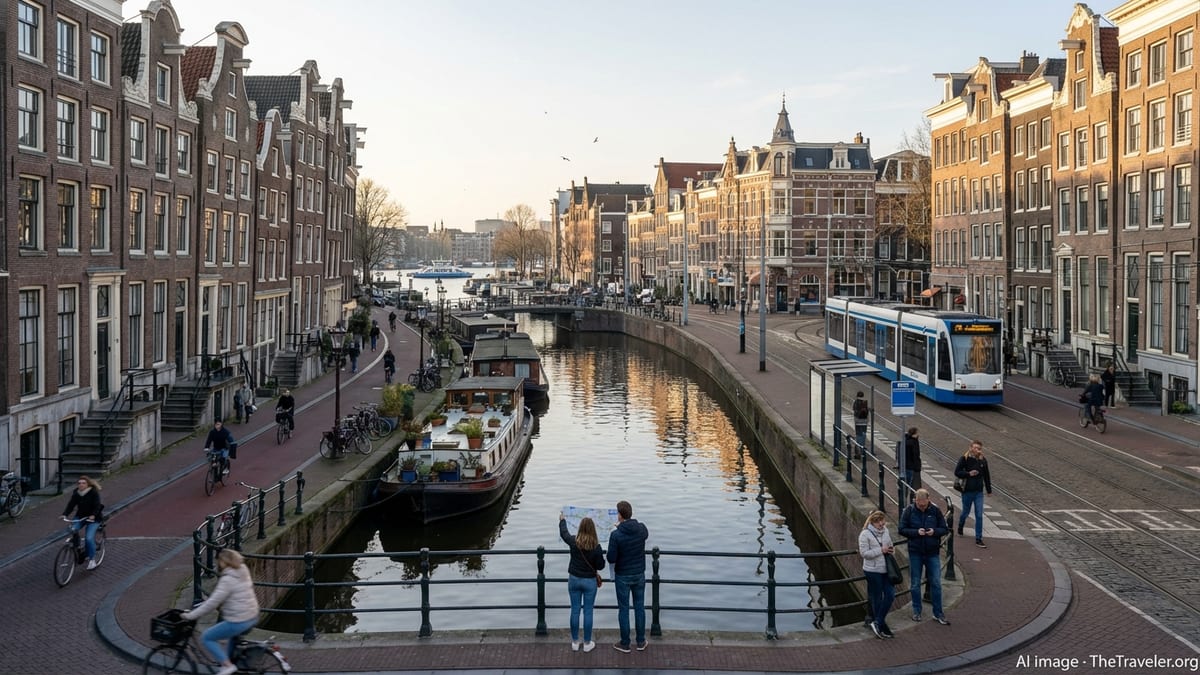
A Compact Country With Outsized Green Ambitions
Publicly available European climate policy reports show that Luxembourg has committed a growing share of its national and EU‑backed recovery money to green objectives, lifting climate‑related spending well above earlier plans. Recent recovery and resilience funding, domestic climate and energy allocations, and targeted innovation budgets together amount to several hundred million euros, positioning the country among the more climate‑oriented investors in the bloc relative to its size.
Separate documentation on Luxembourg’s role in European and blended‑finance vehicles highlights an additional layer of investment. Contributions to climate finance platforms, equity funds focused on clean infrastructure and nature‑based solutions, and participation in the EU Innovation Fund push the total value of capital associated with Luxembourg‑linked green initiatives toward the €440 million mark over the current programming period.
While much of this money flows through financial channels rather than bricks and mortar, the cumulative effect is increasingly visible on the ground. From upgraded public transport and energy‑efficient public buildings to pilot districts experimenting with low‑carbon construction and smart mobility, Luxembourg is using its role as a financial hub to accelerate decarbonisation at home.
For travelers, that means a destination where sustainability is not limited to a few eco‑labels but is built into how the city and country function, from the way they arrive to how they move around and experience local culture.
Free Public Transport Meets Next‑Generation Mobility
Luxembourg gained international attention when it introduced nationwide free public transport, a policy that has since been reinforced by continued infrastructure investment. Medium‑term budget plans and EU‑supported recovery measures earmark significant sums for rail corridors, multimodal hubs and station upgrades, aiming to shift more commuters and visitors out of cars and onto trains, trams and buses.
These transport projects sit alongside EU‑level innovation calls that target cleaner mobility, such as support for electric vehicle charging networks and low‑emission fleet pilots. Luxembourg’s participation in such programs, combined with national co‑financing, channels a sizeable share of that €440 million envelope into mobility solutions designed to cut congestion and emissions.
Visitors arriving in the capital now encounter a transport network that feels more like an integrated urban service than a patchwork of operators. Rail links connect the airport and neighboring countries to the city, a modern tram line threads through central districts, and buses cover even small towns at no cost to ticket holders. The result is a city trip where travelers can realistically plan to avoid renting a car and still reach cultural sites, conference venues and countryside trails.
As new infrastructure funded under current investment cycles comes online, connections to cross‑border cycling routes, park‑and‑ride facilities and emerging regional rail upgrades are expected to make Luxembourg an attractive base for low‑impact multi‑country itineraries in the heart of Europe.
Innovation Hubs Turning Climate Tech Into Visitor Experiences
Government reports on the national innovation agency show an accelerating pipeline of projects in climate technology, circular economy and smart buildings. Support schemes help startups and established companies pilot green solutions in real urban settings, from intelligent energy management systems to materials that reduce the carbon footprint of construction.
Luxembourg’s involvement in EU innovation competitions and funding calls focused on net‑zero technologies gives these initiatives additional scale. The country’s institutions act as intermediaries, helping local actors tap European Innovation Fund opportunities in fields such as energy storage, renewable integration and cleaner transport, which form a significant share of the broader €440 million green finance landscape.
For travelers, these innovation efforts translate into concrete touchpoints across the city and beyond. Business visitors encounter energy‑efficient office districts and conference venues designed to meet stringent performance standards. Leisure travelers stay in hotels experimenting with smart energy systems and circular‑economy approaches to waste and water. Public buildings that host exhibitions or events double as showcases for advanced insulation, rooftop solar and low‑carbon heating.
In some districts, local tourism boards are beginning to highlight green architecture, renewable energy features and urban greening projects as part of guided walks and self‑guided itineraries, turning climate innovation into an additional layer of storytelling for visitors.
Nature‑Based Solutions Reshaping Urban and Rural Landscapes
Recent announcements about Luxembourg’s climate investment programs describe growing commitments to nature‑based solutions, including funds dedicated to forest conservation, river restoration and climate resilience in partner regions. Although a share of this money is deployed abroad through international climate finance, it is mirrored by domestic initiatives that seek to make the country’s own landscapes more resilient.
National and municipal plans increasingly prioritize green corridors, restored waterways and urban cooling projects. These efforts draw on the same pool of green finance and technical expertise that underpins Luxembourg‑backed climate platforms, aligning local projects with global environmental goals.
Travelers exploring Luxembourg City and its surroundings encounter this shift in subtle but tangible ways. Riverbanks once dominated by traffic are being redesigned to include promenades and planted areas. Hillsides overlooking the city integrate new walking paths and protected green zones. In rural regions, vineyards, forests and traditional villages benefit from erosion control and biodiversity measures that also enhance scenic value.
These landscape projects support the country’s positioning as a destination for hiking, wine tourism and short nature escapes. As climate investment continues to prioritize resilience and ecosystem services, the trails, viewpoints and outdoor experiences marketed to visitors are likely to become both more attractive and better able to withstand heatwaves and heavy rainfall.
What Luxembourg’s Green Investment Wave Means for Travelers
Read across official climate factsheets, innovation reports and investment announcements, Luxembourg’s roughly €440 million in green‑oriented funding is less a single program than an ecosystem. It spans domestic budget lines, EU‑backed innovation funds and international climate finance where Luxembourg plays a catalytic role, with effects that converge in the lived experience of residents and visitors.
For travelers choosing destinations in a more climate‑conscious era, this ecosystem offers practical advantages. It supports reliable low‑emission transport, comfortable and efficient public buildings, and urban environments that feel greener and more human‑scale despite ongoing growth. It also underpins a tourism narrative that goes beyond heritage and gastronomy to include forward‑looking climate action.
Industry observers note that smaller capitals often have an edge when turning policy into visible change, and Luxembourg is using its compact geography and financial clout to move quickly. As new projects funded under current climate and innovation frameworks are delivered over the next few years, visitors can expect more car‑free itineraries, climate‑adapted cultural venues and curated experiences that highlight how a small European state is using green investment to reinvent itself.
For now, the country offers an emerging case study in how targeted climate finance, even at the scale of a few hundred million euros, can make a measurable difference to what it feels like to arrive, stay and move through the heart of Europe.