


More news on this day
Passengers traveling through St. John’s International Airport faced significant disruption today as at least six flights operated by Air Canada Rouge, PAL Airlines and WestJet were grounded amid a wave of delays affecting connections to Deer Lake, Montreal, Toronto, Gander and other key destinations across Eastern Canada.
Get the latest news straight to your inbox!
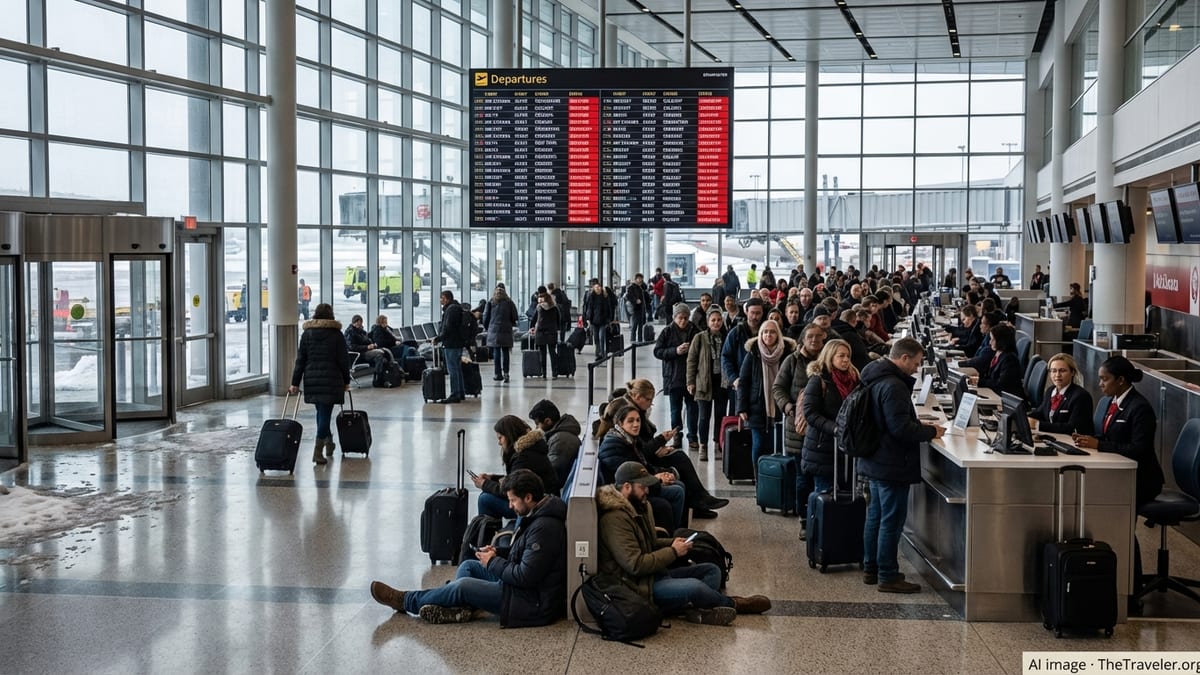
Grounded Departures Strand Passengers Across Key Regional Routes
Publicly available flight-tracking boards for St. John’s International Airport on Wednesday indicate a cluster of cancellations and extended delays across morning and afternoon departures, with a total of six flights removed from the schedule or listed as unable to depart. The disruptions affect a mix of domestic and regional services operated by Air Canada Rouge, PAL Airlines and WestJet, all of which are prominent carriers at the Newfoundland and Labrador hub.
Routes to major Canadian cities appear among those most heavily impacted, including service to Montreal and Toronto, along with key intra-provincial links to Deer Lake and Gander that are frequently used by both residents and visitors to reach smaller communities. The combination of grounded aircraft and rolling delays has rippled through the day’s operations, leaving travelers facing missed connections, rebookings and extended airport waits.
While the precise causes of each individual cancellation vary by flight and carrier, the overall pattern has created a notably constrained schedule at St. John’s compared with typical midweek operations at this time of year. Travelers checking departure and arrival information throughout the day encountered a higher-than-normal concentration of “cancelled” and “delayed” designations on flights operated by the three airlines.
The timing of the disruptions is particularly challenging for passengers relying on same-day connections to and from Newfoundland and Labrador, where long-haul links to central Canada and Europe often hinge on a relatively small number of daily departures.
Air Canada Rouge and PAL Airlines Face Montreal and Regional Disruptions
Air Canada Rouge, the leisure-focused subsidiary of Air Canada, is among the carriers with grounded services listed at St. John’s. Flight information indicates that at least one Rouge-operated departure and a corresponding arrival linked to Montreal have been cancelled, reducing options for passengers traveling between Newfoundland and Quebec on a day when domestic capacity is already constrained.
PAL Airlines, a key regional carrier based in Atlantic Canada, is also experiencing operational strain. Schedules show disruptions on flights connecting St. John’s with communities such as Deer Lake and Gander, routes that serve as vital air bridges within Newfoundland and Labrador. On a typical weekday, these flights support business travel, medical appointments and tourism-related movements across the island.
Reports indicate that at least one recent PAL Airlines service between St. John’s and Montreal has been affected by irregular operations, including diversions and delays. Against this backdrop, the latest round of cancellations and schedule changes has added further uncertainty for passengers planning itineraries involving both regional and transcontinental legs.
For travelers, the combined effect is a narrowing of options when disruptions occur. With fewer alternative departures on the same day, missed flights can translate into overnight stays or complex rerouting through other Atlantic Canadian hubs, increasing both costs and travel times.
WestJet Cancellations Compound Pressure on Toronto and Beyond
WestJet, which has expanded its presence in St. John’s with domestic and transatlantic services, is also listed among the airlines with cancelled flights at the airport today. Departure boards show WestJet cancellations involving routes that feed into major hubs such as Toronto, a key gateway for onward connections across North America and Europe.
The grounding of multiple WestJet flights on a single day places additional pressure on remaining services, as passengers seek seats on later departures or alternative routings. In some cases, travelers are being rebooked through other Canadian airports, with connections via Halifax, Montreal or Toronto replacing what would otherwise have been more direct journeys.
The airline has recently been operating within a wider environment of capacity adjustments and schedule changes across its network, as carriers respond to higher fuel costs, shifting demand patterns and operational constraints. Today’s cancellations at St. John’s appear to reflect those broader pressures, translated into very local impacts for travelers attempting to move on and off the island.
With constrained capacity already noted during peak periods, the removal of multiple WestJet departures in a short window makes it more difficult for passengers to secure same-day alternatives, particularly for those holding non-flexible tickets or traveling during busy midweek bank periods.
Knock-On Effects for Connections in Deer Lake, Gander and Atlantic Region
The cancellations and delays at St. John’s have had immediate knock-on effects for travelers relying on onward connections at regional airports. Deer Lake and Gander, both important gateways for tourism and local communities, are among the destinations where passengers are reporting itinerary disruptions linked to the grounded flights at the provincial capital.
Because many itineraries in Newfoundland and Labrador involve at least one connection through St. John’s, interruptions at the largest airport can quickly propagate along the network. Visitors heading to popular coastal and national park areas via Deer Lake, or to central and northeastern communities via Gander, may now face rebookings into later days or rerouting through other Atlantic Canadian cities.
In addition to missed leisure trips, schedule disruptions can affect time-sensitive travel such as medical appointments or work-related obligations. When intra-provincial flights are cancelled with limited notice, travelers often must weigh the cost of last-minute hotel stays and ground transport against the uncertainty of securing seats on subsequent departures.
Regional stakeholders have previously emphasized the importance of reliable air links for the province’s tourism and business sectors, particularly during the spring and summer travel seasons. Today’s wave of cancellations and delays underlines how sensitive those sectors remain to operational shocks in a relatively small and interconnected route network.
What Travelers Can Expect in the Short Term
Publicly available guidance from consumer advocates and airline policy documents suggests that travelers affected by cancellations and lengthy delays should monitor airline apps and airport information displays closely, as same-day rebooking options can open and close quickly when carriers adjust their schedules. Some passengers may be offered alternate routings, travel credits or hotel accommodation depending on the nature of the disruption and fare conditions.
Given the combination of Air Canada Rouge, PAL Airlines and WestJet services affected today, passengers traveling through St. John’s are likely to encounter longer lines at service desks and call centers as they seek assistance. People with imminent departures in the next 24 hours are being advised in public forums to check their flight status frequently and to arrive at the airport with additional time in case of last-minute gate or schedule changes.
Industry observers note that operational challenges such as aircraft availability, crew scheduling issues and broader cost pressures, including elevated jet fuel prices, have all contributed to a more fragile air travel environment across Canada in recent months. When disruptions occur at a hub with limited daily frequencies, the consequences for individual travelers can be particularly acute.
As operations stabilize over the coming days, the focus for many affected passengers will be on reaching their destinations and assessing their options for compensation or travel credits under applicable airline policies. For now, the grounded flights at St. John’s International Airport serve as a reminder of how quickly air travel plans can be upended when multiple carriers experience schedule disruptions at the same time.