


More news on this day
Travellers across Europe are facing widespread disruption as 118 flights are reported cancelled and more than 1,800 delayed, affecting major hubs in England, Scotland, Italy, Switzerland, Portugal, Norway and Russia and disrupting operations for ITA Airways, British Airways, Virgin Atlantic, Ryanair and other carriers.
Get the latest news straight to your inbox!
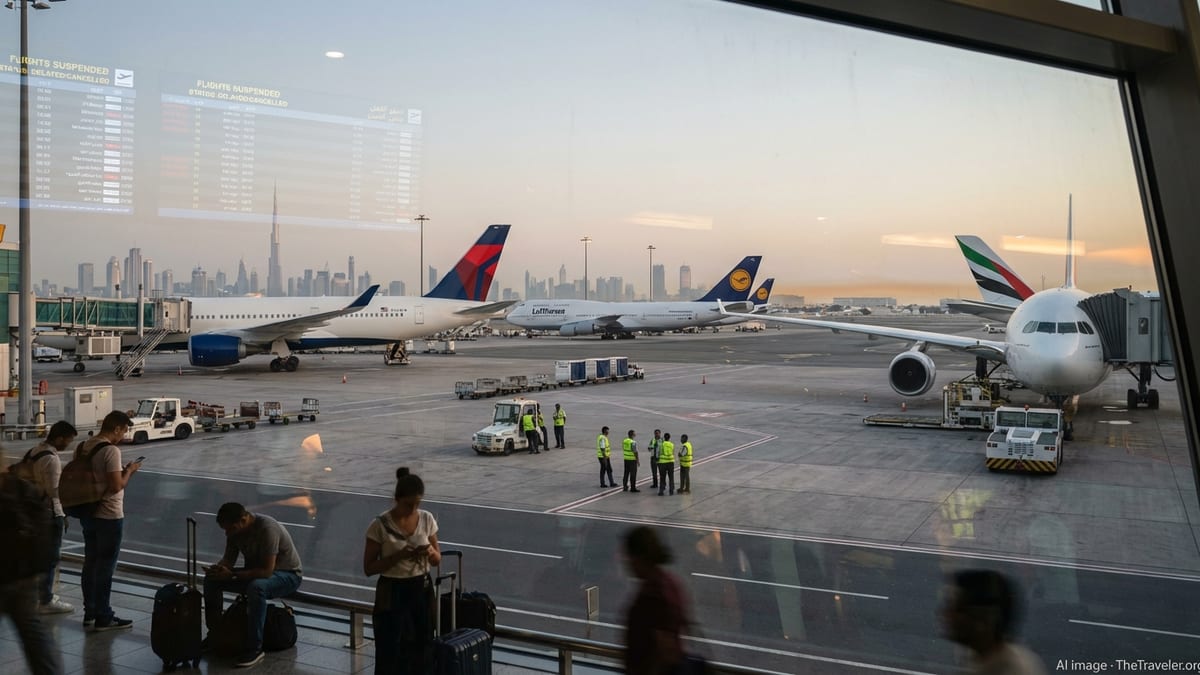
Disruptions Ripple Across Key European Hubs
The latest operational data and airport monitoring platforms indicate that the disruption is concentrated around some of Europe’s busiest gateways, including London, Rome, Milan, Lisbon and Zurich. Knock-on delays are also being reported at airports in Norway and Russia, as late-arriving aircraft and crew shortages cascade through tightly scheduled networks.
In the United Kingdom, London Heathrow, Gatwick and City airports are seeing clusters of delayed departures on short haul services into continental Europe, particularly to Italian and Swiss cities. Similar patterns are visible at Rome Fiumicino and Milan Linate, where departures to London, Lisbon and northern Europe are leaving behind schedule or facing rolling gate changes as airlines adjust rotations.
Lisbon Humberto Delgado Airport and Zurich Airport, both key bases for European and intercontinental services, are handling a significant share of delayed flights, with congested departure banks and aircraft waiting for slots. Publicly available tracking boards show that some departures are leaving more than an hour behind schedule, with late arrival of inbound aircraft a recurring factor.
The total of 118 cancellations across the affected countries represents a modest share of Europe’s daily schedule but is enough to trigger widespread rebooking pressure and capacity constraints. With 1,821 flights delayed, the majority of passengers are facing extended travel days, missed connections and last minute itinerary changes.
Flag Carriers ITA and British Airways Under Strain
National carriers ITA Airways and British Airways are among the most visibly affected, reflecting their heavy exposure on trunk routes between Italy, the UK and wider Europe. Schedules between London and Rome, London and Milan, and Rome and Zurich show an elevated number of delayed departures, with some flights pushed back well beyond their original times.
Tracking services highlight multiple ITA Airways services into and out of Rome and Milan departing late, including flights linking Italian hubs with Swiss and UK airports. British Airways departures from London to Rome, Milan and Lisbon are also registering revised departure and arrival times, illustrating how quickly disruption at one end of a route can propagate across a wider network.
Virgin Atlantic, while primarily focused on long haul operations, is caught in the turbulence through its reliance on timely feeder traffic at London hubs. Late inbound short haul flights operated by European partners can affect connection windows onto transatlantic services, forcing some passengers into same day rerouting or overnight stays even when long haul flights themselves operate.
Published operational coverage notes that both ITA Airways and British Airways have been refining schedules and capacity across Europe in recent months, leaving relatively little slack in peak periods. When irregular operations occur, this lean scheduling approach can translate quickly into longer queues at rebooking desks and tight aircraft utilisation that amplifies even minor delays.
Ryanair and Low-Cost Networks Feel Knock-On Effects
Ryanair and other low-cost carriers are not at the centre of today’s cancellation tally but are experiencing the familiar side effects of congestion across Europe’s skies. With point to point models that rely on quick aircraft turnarounds, any delay in slot allocation, ground handling or crew availability can cause a string of late departures through the rest of the day.
Ryanair’s extensive presence in Portugal and across secondary airports in Italy, the UK and central Europe means its schedule intersects heavily with constrained airspace and busy terminal infrastructure. Recent reports on the airline’s European operations have highlighted how reductions in airport capacity or regulatory changes to slots can force frequency cuts and create pressure on remaining flights.
Other low cost operators serving Lisbon, London and Milan are facing similar issues, as packed schedules leave limited room to recover when weather, technical checks or air traffic flow restrictions slow the system. Passengers booked on seemingly unaffected carriers can still be delayed when aircraft arrive late from disrupted airports or when crews reach their maximum duty hours.
Industry punctuality data published for early 2026 already pointed to stress at several of the hubs currently experiencing delays, including London Heathrow, London Gatwick, Lisbon and Zurich. Those reports showed comparatively lower on time performance at some southern European and Atlantic-facing airports, underscoring how sensitive operations are to any additional constraint.
Operational Pressures Behind Cancellations and Delays
The current wave of disruptions appears to stem from a mix of operational pressures rather than a single identifiable incident. Factors typically cited in similar events include adverse weather at key hubs, staffing constraints in air traffic control or ground handling, aircraft rotation issues and tight crew rostering that leaves limited margin for recovery when flights run late.
Europe’s aviation network functions as an interconnected system, so issues in one country can rapidly affect others. Delays at London or Rome can ripple into Scandinavia, Switzerland and Russia as aircraft and crews move around the continent. When rotations slip, airlines may cancel selected services to stabilise schedules, concentrating resources on long haul or high demand trunk routes.
Punctuality reports from European aviation bodies for recent months have already highlighted rising average delay minutes per flight and variability between airports. While some hubs have improved timekeeping with operational tweaks, others have struggled with a combination of infrastructure limits, weather variability and staffing gaps that leave them vulnerable during busy travel days.
In this context, today’s tally of 118 cancellations and 1,821 delays fits into a broader pattern of strain as European aviation continues to operate near capacity on many routes. Travellers are increasingly advised by consumer groups to factor in buffer time for connections and to monitor their flights closely on days with elevated disruption.
What Travellers in Affected Cities Are Experiencing
At airports including London Heathrow, London Gatwick, Rome Fiumicino, Milan Linate, Lisbon and Zurich, passengers are contending with crowded departure halls, extended security and check in queues and busy customer service counters. With cancellations spread across multiple airlines, availability on later flights can quickly tighten, particularly on popular city pairs.
In Norway and Scotland, where regional flights often connect to long haul services via London or continental hubs, late arrivals can mean missed onward connections. Travellers in Russia are similarly exposed when westbound flights arrive behind schedule into European hubs, narrowing or eliminating transfer windows.
Passenger rights frameworks such as EU261 and the UK’s equivalent regulations continue to apply in many of the affected markets, offering potential compensation and assistance in the event of significant delays or cancellations under defined conditions. Consumer advocates consistently urge travellers to keep documentation of boarding passes, delay timings and any additional expenses when irregular operations occur.
For now, publicly available information indicates that airlines across Europe are working to realign aircraft and crews through the current disruption window, with the scale of recovery dependent on how quickly schedules can be brought back into sync. With summer schedules ramping up, the operational resilience of Europe’s air transport network is likely to face further tests in the weeks ahead.