


More news on this day
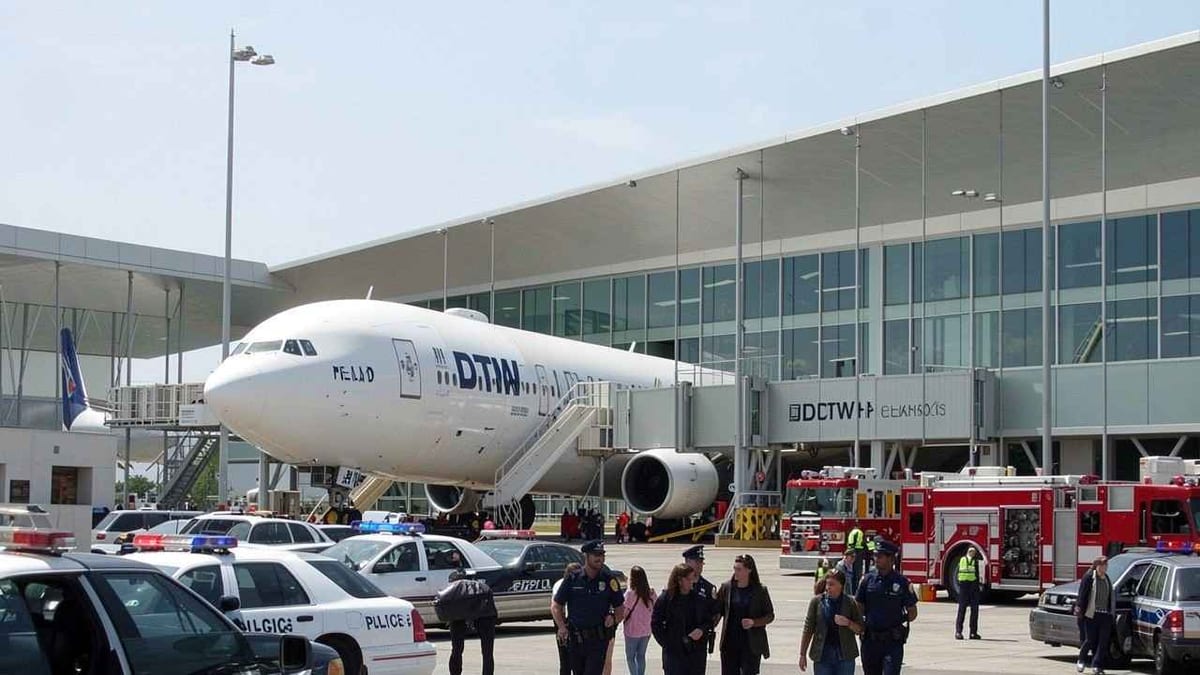
A Delta Air Lines Boeing 737-900 operating as Flight DL3056 diverted to Jacksonville during a midweek operation after a reported in-flight disruption, making an emergency landing that prompted a fresh round of questions about schedule reliability and contingency planning across the carrier’s domestic network.
Get the latest news straight to your inbox!
Midweek Disruption Forces Unscheduled Diversion
Publicly available flight-tracking data and aviation records indicate that Delta Flight DL3056, operated by a Boeing 737-900, was forced to divert from its planned routing and land at Jacksonville instead of continuing to its scheduled destination. The midweek incident occurred during an evening operation, with the aircraft descending into Jacksonville following what was described as a disruption to normal flight service.
Initial information from flight data services suggests the diversion was precautionary, with the crew opting to route the aircraft to Jacksonville, an airport with full maintenance and emergency response capabilities. Reports indicate the aircraft landed safely and came to a controlled stop on the runway, where it was met by airport and airline ground teams.
There were no immediate indications in publicly accessible sources of serious injury among passengers or crew. Available reports instead highlight the operational impact on travelers, many of whom faced missed connections and rebookings after the Boeing 737-900 was removed from its original schedule for checks.
The diversion adds to a series of recent irregular operations affecting multiple carriers, where relatively minor technical alerts, smoke indications or other suspected anomalies have led to conservative decisions to divert or return to departure airports.
Passenger Experience and Onward Travel
Accounts shared through online tracking logs and social media posts describe a flight that initially appeared routine before the diversion decision was communicated in flight. Passengers reported being informed of a change in routing toward Jacksonville, where the aircraft would undergo inspection before any onward travel could be arranged.
After landing in Jacksonville, travelers on DL3056 reportedly remained on board during an initial assessment before deplaning at the gate. Publicly available information shows that Delta coordinated rebookings onto later flights and, where necessary, arranged overnight accommodations for those unable to depart the same day.
Some passengers described extended waits at the gate and customer-service counters while the airline worked through alternative itineraries. The disruption fell in the middle of the work week, a period when both business and leisure demand remains high, amplifying the knock-on effects to connections in Atlanta and other hub cities.
While delays and diversions are an accepted part of commercial air travel, the incident underscores how a single unplanned landing can ripple through personal schedules, particularly when it involves a larger narrowbody such as the Boeing 737-900 used on many core domestic routes.
Safety-first Decisions and Fleet Context
Industry data and past incident reports show that unplanned landings and diversions involving Boeing 737-900 aircraft typically stem from conservative responses to mechanical alerts, cabin smoke or pressurization concerns. In many cases, subsequent inspections find only minor faults, but operators prioritize immediate landings at suitable airports to eliminate potential risk.
Delta’s 737-900 and 737-900ER fleet forms a significant portion of its domestic and medium-haul operations, connecting smaller markets to larger hubs and supporting peak-time departures on heavily traveled corridors. The fleet type is widely used across North America, and aviation safety statistics over the past decade have consistently reflected strong overall performance for the 737 Next Generation series.
Recent aviation coverage has highlighted several diversions and returns across the industry involving a range of aircraft types, often due to smoke indications, suspected engine irregularities or system warnings that ultimately prove non-critical. Analysts frequently note that such events are evidence of safety systems functioning as intended, prompting crews to make conservative choices including unscheduled landings.
Against that backdrop, the diversion of Flight DL3056 to Jacksonville fits a broader pattern in which airlines prefer to interrupt service rather than risk continuing with any unresolved technical doubt. The outcome in this case, with the aircraft landing safely and passengers moved to alternate flights, is consistent with that industry-wide approach.
Impact on Operations at Jacksonville and Beyond
Jacksonville International Airport, which has reported record passenger volumes in recent years, has become accustomed to handling both routine operations and occasional unscheduled arrivals. A diverted Boeing 737-900 such as DL3056 brings additional passenger loads into the terminal, potentially stretching gate availability and customer-service resources during already busy periods.
Operational data from recent weeks shows Jacksonville linked by frequent Delta services to Atlanta and other hubs, making it a logical diversion point within the carrier’s network. Once DL3056 was on the ground, onward connections through Jacksonville’s existing schedule offered options for re-accommodating affected travelers.
The diversion also created a short-term aircraft-positioning challenge. When a narrowbody jet unexpectedly ends its day at a non-scheduled station, airlines typically have to reposition the aircraft after it clears maintenance checks and adjust crew assignments to maintain the broader schedule. This can lead to secondary delays or equipment swaps on unrelated routes.
For Jacksonville, however, such events can also underscore the airport’s role as a capable regional hub, equipped to manage emergency landings, provide ground support and handle surges in passenger volume tied to irregular operations.
What the Incident Signals for Travelers
For passengers, the emergency landing of Delta Flight DL3056 at Jacksonville reinforces a set of practical takeaways that aviation analysts and travel experts often emphasize. Even on routine domestic segments, diversions or returns can occur with little warning, and flexibility in travel plans remains essential.
Observers note that the pattern of recent airline incidents, including smoke events, mechanical alerts and pressurization concerns across several carriers, has been accompanied by consistently safe outcomes, in large part because flight crews and operations centers take a cautious stance when irregularities appear. The DL3056 diversion falls into that category of precautionary action, with an emphasis on landing at an airport with ample runway length and ground support.
From a broader network perspective, episodes like this illustrate how quickly weather, technical issues or other disruptions can cascade through a hub-and-spoke system. A single diverted Boeing 737-900 can affect hundreds of passengers, both on the incident flight and on later services that must be adjusted to compensate.
As investigations into the exact cause of the DL3056 disruption continue through standard internal reviews and regulatory reporting processes, the flight’s safe arrival in Jacksonville, along with the subsequent rebooking of travelers, stands as the most immediate outcome for those on board and for the airline’s ongoing operations.