


More news on this day
Passenger traffic at major Caribbean airports has fallen sharply in the months following Hurricane Melissa, with fresh data showing a prolonged slump that is reshaping travel patterns and recovery timelines across the region.
Get the latest news straight to your inbox!
Sharp Drops at Jamaica’s Busiest Gateways
Jamaica’s two largest international gateways, Sangster International Airport in Montego Bay and Norman Manley International Airport in Kingston, have recorded some of the steepest declines in passenger volumes since Hurricane Melissa tore across the northern Caribbean in late 2025. Publicly available traffic figures for the first quarter of 2026 indicate that combined passenger numbers at these airports are well below prior-year levels, interrupting what had been a strong regional rebound in air travel.
Data disclosed in airport operator and investment-analyst reports points to a year-on-year fall in passenger traffic at Sangster of more than 20 percent in early 2026, with some months showing even deeper contractions. Analysts link the slump directly to the temporary loss of hotel capacity along Jamaica’s north coast tourism corridor, where many resorts sustained heavy damage from Melissa and have yet to return fully to service.
Norman Manley International Airport has been less severely affected but is still reporting single-digit declines in international passenger traffic compared with the same period a year earlier. Industry commentary suggests that Kingston’s role as a hub for business and visiting-friends-and-relatives travel has provided a partial buffer, yet not enough to offset the broader downturn in leisure arrivals that traditionally pass through Montego Bay.
Official economic assessments released in recent weeks describe a parallel contraction in transport, storage, accommodation, and food services, underscoring how the aviation slowdown is feeding through to the wider Jamaican economy. The documents highlight reduced airport activity and lower foreign arrivals as key factors behind the weaker output in early 2026.
Tourism Arrivals Under Pressure Across the Region
The hit to airport passenger volumes is closely mirrored in tourism arrival figures. Newly released data from tourism and financial institutions points to a substantial decline in stopover visitors to Jamaica in the first months of 2026, compared with the same period in 2025. One analysis of national statistics cites a more than 40 percent drop in foreign arrivals at the start of the year, coinciding with the period when many hurricane-affected hotels remained closed or operated with reduced inventory.
Regional datasets compiled by the Caribbean Tourism Organization and national tourism boards show that while some destinations are achieving or surpassing pre-pandemic arrival levels, those directly in Melissa’s path are lagging. The uneven pattern is creating a patchwork recovery in which unaffected islands capture displaced demand, while storm-hit locations struggle to rebuild both infrastructure and traveler confidence.
Published coverage from Caribbean-focused business outlets notes that airlines and tour operators have responded to the shifting demand by trimming capacity to certain gateways while reinforcing stronger-performing routes elsewhere in the region. These adjustments, made in response to load factors and revenue performance, have in turn reinforced the lower traffic numbers at airports most exposed to hurricane damage.
Analysts tracking the sector warn that sustained dips in air arrivals can delay investment decisions in new hotels and airport facilities, particularly when insurers, lenders, and developers are simultaneously dealing with reconstruction costs. That dynamic is prompting calls from regional organizations for stronger resilience planning, including incentives to harden tourism and aviation infrastructure against more intense storms.
Operational Disruptions and Route Reshaping
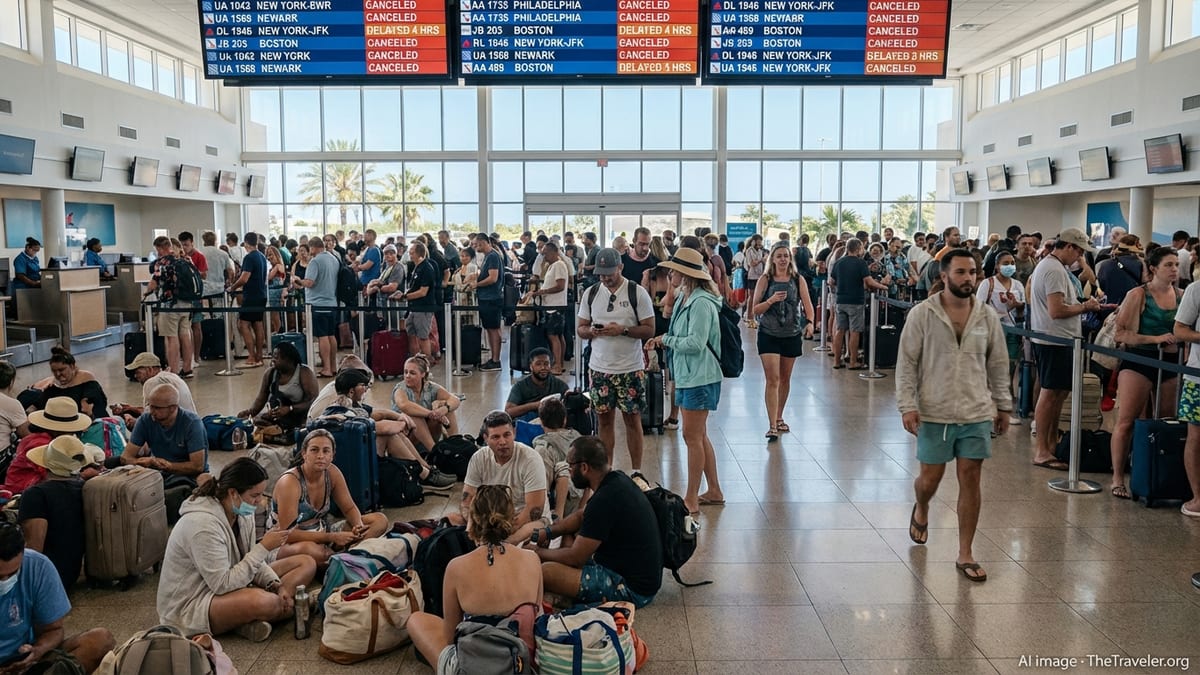
In the immediate aftermath of Hurricane Melissa, airport closures in Jamaica and other affected territories led to widespread cancellations, diversions, and multi-day delays for travelers trying to exit or enter the region. Reports from North American and Caribbean media outlets at the time described passengers arriving into Florida and other gateways after navigating improvised routings once airports gradually reopened to limited operations.
Subsequent months have brought a more structural reshaping of airline networks. Caribbean Airlines and other regional carriers have announced schedule cuts and reduced frequencies on select routes, particularly those tied to destinations where hotel capacity and visitor demand remain constrained. According to recent reporting in regional travel publications, airlines are concentrating aircraft and crew on core markets serving Trinidad, Guyana, Jamaica’s capital, and major North American hubs, while marginal leisure routes see thinner service.
Industry commentary suggests that even short intra-Caribbean sectors can be difficult to sustain in this environment, given high operating costs, airport charges, and seasonally variable passenger flows. The post-Melissa period has therefore intensified long-standing concerns about the fragility of air links between smaller islands, many of which rely on a handful of daily flights for both tourism and essential connectivity.
For travelers, the network changes translate into fewer nonstop options, longer connection times, and a greater need to monitor schedule updates closely. Travel forums and advisories have highlighted the importance of flexible planning for multi-island trips, as carriers continue to adjust capacity in response to evolving demand and ongoing reconstruction along key tourist corridors.
Slow but Steady Recovery Signals
Despite the sharp initial declines, there are early signs that Caribbean airports are gradually recovering from Melissa’s shock. Jamaican government information services and recent statements by aviation officials describe a steady rebuilding of passenger numbers and a phased restoration of terminal facilities, particularly at Montego Bay, where interior damage and temporary closures disrupted operations in late 2025.
Forward-looking projections shared in public briefings suggest that Jamaica’s total aviation traffic could reach more than six million passengers in 2026, with further gains expected in 2027 and 2028 as hotel stock returns and new investments come on stream. These forecasts are framed cautiously, acknowledging that volumes at key airports remain below earlier growth trajectories, but they nonetheless point to a sector moving from emergency response into a medium-term recovery phase.
Across the wider Caribbean, some destinations outside Melissa’s direct path are reporting record air arrivals in early 2026, indicating that the region as a whole remains attractive to international travelers. This divergence underscores how recovery prospects depend not only on marketing and airlift strategies but also on physical exposure to severe weather and the speed of post-storm reconstruction.
Economic assessments from multilateral organizations emphasize that enhancing climate resilience in airports, coastal resorts, and transport links will be critical to stabilizing passenger traffic in the long term. Recommendations include upgrading building standards, improving early-warning and evacuation logistics, and diversifying tourism offerings beyond the most storm-prone coastal zones.
Balancing Risk, Resilience, and Traveler Demand
The experience of Hurricane Melissa has renewed debate within Caribbean aviation and tourism circles about how the region manages climate risk. Studies of the 2025 Atlantic hurricane season describe Melissa as one of several intense systems that benefited from exceptionally warm sea surface temperatures, a trend that climatologists associate with a higher likelihood of powerful storms affecting popular travel corridors.
For airport operators, airlines, and tourism boards, the current challenge is to restore passenger volumes without underestimating future climate-driven disruptions. Publicly available recovery plans in Jamaica and other affected territories stress the need for integrated approaches that combine physical rebuilding with financial risk-transfer mechanisms such as insurance and catastrophe bonds, alongside efforts to maintain air service during reconstruction.
Travelers are responding in varied ways. Some are postponing trips to storm-affected areas or shifting to alternative Caribbean destinations, while others continue to book holidays in Jamaica and neighboring islands, encouraged by reports of reopened resorts and functioning airports. Travel advisors are increasingly steering clients toward comprehensive insurance coverage and flexible booking policies, reflecting a heightened awareness of weather-related uncertainty.
As the 2026 hurricane season advances, passenger traffic figures at Caribbean airports will serve as a closely watched barometer of how quickly confidence returns to the region’s most damaged hubs. The trajectory of those numbers will help determine not only the pace of tourism’s comeback but also the resources available to invest in the stronger, more resilient infrastructure that climate scientists say will be essential in the years ahead.