


More news on this day
A SkyWest-operated regional flight designated as SWA1111 diverted to Casper, Wyoming, after encountering issues en route, with publicly available flight-tracking data and local reporting indicating that the aircraft landed safely and passengers were accommodated for onward travel.
Get the latest news straight to your inbox!
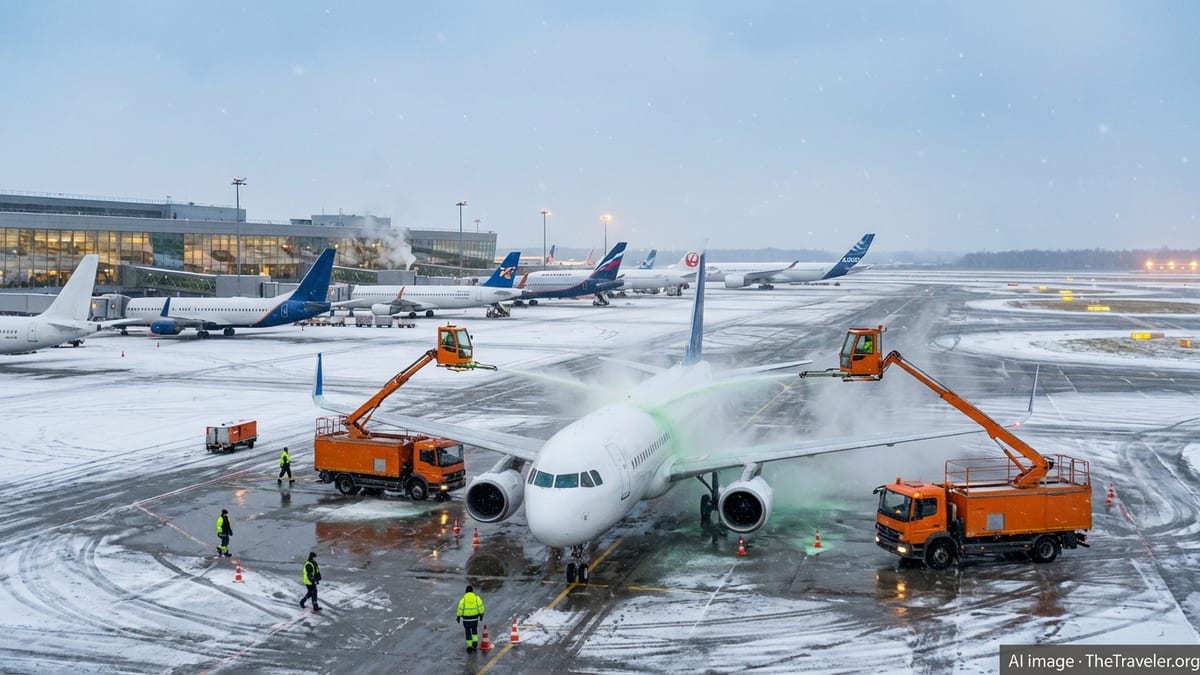
Unscheduled Landing Brings Regional Jet to Casper
The diversion of SkyWest flight SWA1111 to Casper placed an unexpected spotlight on Casper–Natrona County International Airport, a regional facility that typically handles a mix of scheduled airline, air taxi and general aviation operations. According to available flight-tracking data and local operational summaries, the aircraft altered course from its planned route and set down in Casper without incident, joining a small but significant number of regional flights that use the airport as an alternate when conditions deteriorate elsewhere on the network.
Publicly accessible information indicates that the aircraft used for the flight was a regional jet of the type SkyWest routinely operates on behalf of major U.S. carriers. These jets are configured for short to medium segments, often linking smaller communities with larger hubs, and are certified to operate into airports such as Casper that provide instrument approaches, deicing capability and basic passenger-handling facilities.
While comprehensive incident details for SWA1111 were not immediately available, reporting on similar SkyWest diversions into Casper and other regional airports points to a range of routine triggers. These include rapidly changing weather at destination, runway or navigation-system limitations, crew duty-time constraints, and conservative fuel-planning decisions that favor diverting to a nearby field rather than holding in marginal conditions.
In this case, records suggest the aircraft remained under control at all times, with no indication of a serious onboard emergency. The sequence aligns with the pattern of precautionary diversions that occur daily across U.S. airspace and rarely escalate beyond schedule disruption and logistical challenges for passengers.
Why Regional Flights Choose Casper as an Alternate
Casper–Natrona County International Airport occupies a strategic position in the central Rockies region, making it a practical alternate for flights that traverse Wyoming, Montana, South Dakota and neighboring states. Public airport data show that commercial service, much of it historically operated by SkyWest under contract for larger airlines, is layered atop a steady base of general aviation and air taxi movements. That mix gives the field experience in handling unplanned arrivals, including those carrying full loads of diverted passengers.
Airport board documents and operational reports highlight that the facility maintains runway length, instrument-approach procedures and support services suited to regional jets. These characteristics make Casper an attractive option for aircraft that must divert from more terrain-challenged or weather-sensitive airports, particularly in winter or during fast-changing frontal systems common across the high plains.
From the airline’s perspective, an unscheduled stop in Casper offers several advantages. The airport can typically provide parking, refueling and ground handling within existing capacity, while nearby hotels and ground-transport providers can be engaged on short notice when passengers need to remain overnight. For carriers operating dense networks of regional flights, the ability to rely on such alternates is a core part of maintaining safety margins.
Reports from past diversions in the region also underline the role of crew discretion. Flight crews are trained to weigh remaining fuel, forecast weather, air traffic control constraints and company dispatch guidance when deciding whether to proceed or divert. In many instances, selecting a stable, well-equipped alternate like Casper is a textbook example of conservative decision-making rather than an indication of acute danger.
Passenger Experience After the Diversion
For travelers on SWA1111, the diversion likely translated into an unexpectedly long travel day, even as the flight concluded safely. Passengers on similar SkyWest diversions described in public forums and local coverage have reported routine sequences once on the ground: the aircraft taxis to a remote stand or gate, crew members provide basic information about the change in plan, and ground staff coordinate with the operating airline to determine whether the journey will continue on the same aircraft or via a later flight.
When diversion timing and crew duty limits permit, airlines sometimes refuel the aircraft and proceed to the original destination once conditions improve. In other cases, passengers are rebooked on alternative services or provided overnight accommodation if onward flights are not available until the following day. Casper’s inventory of nearby lodging, along with the ability to arrange shuttle transportation between hotel properties and the airport, has featured prominently in publicly available accounts of previous irregular operations there.
Although such events are disruptive, they remain relatively uncommon when measured against the total number of regional flights operated each day in U.S. airspace. Federal statistics on airline performance show that only a small fraction of scheduled flights end up diverted, and most of those result in safe, controlled landings at suitable alternates rather than emergency situations.
For anxious flyers, experts often note that diversions like that of SWA1111 are an expression of an airline’s safety culture. Choosing to alter course early, even when destination weather or other factors might still allow a marginal arrival, is presented in many educational resources as a positive outcome that preserves substantial safety buffers.
Operational and Safety Context for SkyWest
SkyWest occupies a significant share of the U.S. regional airline market, operating thousands of flights each week on behalf of larger network carriers. Federal on-time performance and reliability data published for the regional sector indicate that SkyWest’s diversion rate is consistent with that of comparable operators, underscoring that events such as the SWA1111 diversion are a routine part of managing a large, weather-exposed schedule.
Precautionary diversions are especially common on routes that serve mountain and high-elevation airports. These destinations can be vulnerable to sudden drops in visibility, wind shifts and low cloud ceilings that narrow the margin for safe approaches. Industry analyses of previous SkyWest operations in similar regions highlight the airline’s reliance on alternates like Casper and other inland fields that offer more straightforward instrument procedures and terrain clearance.
Regulators require airlines to plan enough fuel to reach the destination, fly to an alternate if necessary and still retain reserve fuel on landing. Flight-dispatch practices documented across the U.S. industry show that when updated forecasts or unanticipated delays begin to erode those reserves, dispatchers and pilots coordinate to select alternates that will keep the aircraft within regulatory and company policy limits. In the case of SWA1111, the decision to route to Casper fits squarely within that broader operational framework.
Safety investigations of previous weather-related incidents involving regional jets in the northern Rockies region have repeatedly emphasized the value of early, conservative decisions to divert. While those reports focus on different flights, the themes they raise about balancing schedule reliability against operational margins resonate with how airlines and pilots approach any decision to leave the planned route and proceed to an alternate like Casper.
What the Diversion Means for Future Travelers
The experience of SkyWest flight SWA1111 offers a reminder to travelers that diversions, though inconvenient, are an integral part of modern commercial aviation. When conditions along the route or at the destination change, routing to a secondary airport that is prepared to handle an unexpected influx of passengers is one of the primary tools airlines use to maintain safety.
For those planning trips through weather-prone regions or to airports surrounded by complex terrain, publicly available guidance from aviation experts often recommends building extra flexibility into itineraries. Longer connection times, travel insurance and awareness of regional alternates like Casper can help passengers manage the disruption if a flight follows a path similar to SWA1111.
Airports that regularly serve as alternates, including Casper–Natrona County International, may see opportunities in such events to reinforce their role within the broader network. Investment in deicing capacity, runway lighting, passenger amenities and ground-transport links can all make a difference when hundreds of unplanned passengers suddenly arrive on a diverted jet.
Ultimately, the diversion of SWA1111 to Casper underscores that a safe landing at an unexpected airport is a successful outcome from an operational and safety standpoint. While many affected passengers may remember the delay and logistical complications first, the underlying story is one of routine safety protocols working as designed.