


More news on this day
Passengers flying through several major U.S. airports this year are facing a growing tangle of runway work, terminal overhauls and road closures, as federally backed construction programs reshape facilities from Denver and Boise to Baltimore, Houston and New York’s John F. Kennedy International Airport.
Get the latest news straight to your inbox!
Federal Funding Fuels a Wave of Airport Construction
A multiyear surge in federal airport funding is driving much of the work now affecting travelers. Publicly available information from the Federal Aviation Administration shows that the Airport Infrastructure Grant program created under the 2021 infrastructure law is distributing nearly 15 billion dollars over five years for runways, taxiways, safety projects and terminal upgrades nationwide. A separate supplemental appropriation under the Airport Improvement Program is adding targeted discretionary grants through at least 2027, with priority for safety and resilience.
These programs are helping large hubs and fast‑growing regional airports tackle projects that had been postponed or downsized during the pandemic. The result in 2026 is a record volume of simultaneous work at major facilities, particularly where long planned terminal redevelopments and runway rehabilitation are moving ahead at the same time. FAA operations advisories and local government documents indicate that several of the nation’s busiest airports are operating with temporary capacity constraints while construction is under way.
For passengers, the investment promises more gates, more space and improved reliability in the long run. In the short term, however, the overlap of airfield and landside work is showing up as longer taxi times, ground delay programs during peak hours and heavier congestion on airport roadways.
Denver and Boise Balance Growth With Runway and Concourse Work
At Denver International Airport, one of the country’s largest hubs, a recently approved 2026 work plan outlines continued airfield and terminal upgrades intended to keep pace with steady traffic growth. City records show that the plan includes taxiway and runway rehabilitation, additional ramp improvements and continued work around the terminal complex. While much of the activity is phased to avoid peak periods, travelers are being advised to expect occasional runway closures and shifting gate assignments as projects move across the airfield.
Periodic construction related constraints in Denver have been reflected in national operations plans, where FAA traffic managers list runway and taxiway work as factors behind ground delay programs on high volume days. These measures reduce arrival rates to match available capacity, lowering the risk of airborne holding but contributing to longer gate and departure queues during busy stretches.
In Boise, years of rapid passenger growth are driving a different kind of strain. The city reports that traffic has climbed by more than eighty percent since the mid‑2010s, pushing the small hub beyond its original capacity. To respond, the airport is pursuing a multistage “BOI Upgrade” program that includes reconstruction of its primary runway, expansion of the terminal and preparatory apron work for a future Concourse A.
Recent grant announcements show Boise securing tens of millions of dollars in FAA funding for runway reconstruction and apron construction tied to that new concourse. While much of the heavy airfield work is scheduled in defined seasons, the combination of runway closures and terminal construction has already led to temporary gate losses and longer walks through interior detours, effects that are likely to continue through the next several construction seasons.
Baltimore and Houston Face Operational Squeezes
On the East Coast, Baltimore/Washington International Thurgood Marshall Airport is emerging from one major project while preparing for more. State and airport information indicates that the new Concourse A and B connector and an upgraded baggage handling system are now in service after several years of work. At the same time, Maryland Board of Public Works documents show additional contracts for airfield and terminal improvements on the agenda for 2026, pointing to continued construction activity across parts of the airport campus.
Baltimore’s airfield has already seen the impact of urgent maintenance on operations. Earlier this year, online aviation forums and local coverage described a surprise ground stop tied to unplanned runway inspection and maintenance, temporarily closing two of the airport’s main runways and forcing diversions. While that episode was not directly tied to a planned capital program, it highlighted how quickly runway availability can change and how constrained airfield geometry leaves little slack when key pavement is out of service.
In Houston, both George Bush Intercontinental and William P. Hobby airports are in the midst of a broad transformation campaign. The Houston Airport System describes 2025 and 2026 as pivotal years that include major work on the international terminal complex at Bush Intercontinental and roadway and curbside projects at Hobby. An FAA construction impact report for late 2025 listed Intercontinental among airports expected to experience reduced capacity and increased delay while work continued.
More recently, public advisories have warned Hobby passengers that traffic patterns around the terminal are being altered for several months as lane closures and construction zones shift. The work is intended to prepare the airport for additional gates and larger security and ticketing areas in the coming years, but for now it is producing longer times from freeway to curb and encouraging travelers to arrive earlier than they might have in past summers.
JFK Redevelopment Brings Long Term Disruption to New York Airspace
New York’s John F. Kennedy International Airport is undergoing one of the largest single airport redevelopment efforts in the United States, with multibillion dollar rebuilds of its international Terminal 1 and new Terminal 6 moving forward alongside roadway realignments. Redevelopment updates from the Port Authority describe a multi year sequence of demolition, new construction and traffic pattern changes designed to keep the airport operating as a global hub while replacing aging facilities.
The scale of the work is being felt beyond the terminal walls. FAA operations plans for the New York region have cited taxiway construction at JFK as a factor in capacity reductions, with notes indicating that certain taxiways will remain affected through at least the late summer of 2025. That kind of prolonged configuration change can contribute to longer taxi routes, increased ground congestion and occasional departure metering during peak departure banks.
In 2026, passengers are also encountering disruptions to ground access and rail links. Construction notices for the AirTrain system show that segments of the inner loop around JFK’s central terminal area are temporarily modified as contractors work near multiple terminals at once. The combination of lane closures on airport roads and altered train service is prompting operators to advise travelers to budget additional time not only for security queues but also for transfers between terminals.
Despite these challenges, redevelopment planners emphasize that the projects are intended to address long standing chokepoints in terminal capacity and roadway design. Once new facilities open, the expectation is that more intuitive terminal layouts, expanded curb space and updated taxiway geometry will ultimately ease some of the very delays now being aggravated by the construction.
Summer and Holiday Travelers Urged to Plan Around Work Zones
The overlapping projects at Denver, Boise, Baltimore, Houston and New York reflect a broader national pattern in which deferred maintenance and capacity upgrades are being tackled at the same time that air travel demand has largely recovered. Research on airport delay patterns underscores that construction related reductions in runway or taxiway capacity can quickly ripple into longer queues and missed connections when schedules are tightly packed and weather is marginal.
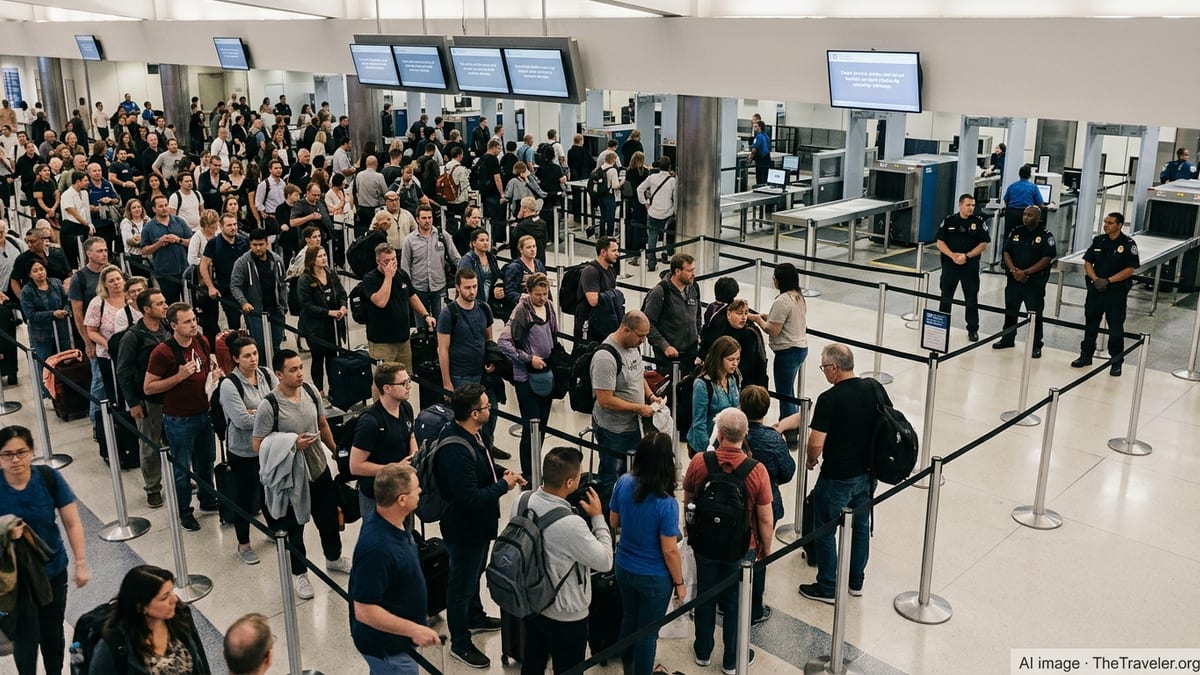
Industry and academic studies increasingly point to congestion at security checkpoints, gate areas and curbside drop offs as additional sources of delay, especially when construction walls and temporary detours compress passenger flow. With several high profile hubs managing both airfield and terminal work simultaneously, these effects are more visible to travelers who may struggle to distinguish between routine congestion, staffing shortages and construction induced bottlenecks.
For travelers navigating this environment, publicly available guidance from airports and FAA traffic tools points to a few practical steps. Passengers are being encouraged to check airport construction advisories before leaving home, pay attention to updated airline messaging on gate and terminal changes, and allow extra time during the busiest morning and evening departure waves. Those steps cannot eliminate the risk of delay, but they can reduce the chances that a last minute detour around a work zone will mean a missed flight.
As federal grants continue to roll out and local authorities advance their own capital plans, the current period of disruption is likely to stretch through the middle of the decade. For many airports, the hope is that a few more summers of construction will yield a smoother experience in the years that follow.