


More news on this day
A Carnival Cruise Line ship has skipped a scheduled port of call after a technical issue on board combined with local regulatory constraints, leading the company to revise the voyage’s itinerary and offer compensation measures to affected passengers, according to publicly available information and recent cruise industry coverage.
Get the latest news straight to your inbox!
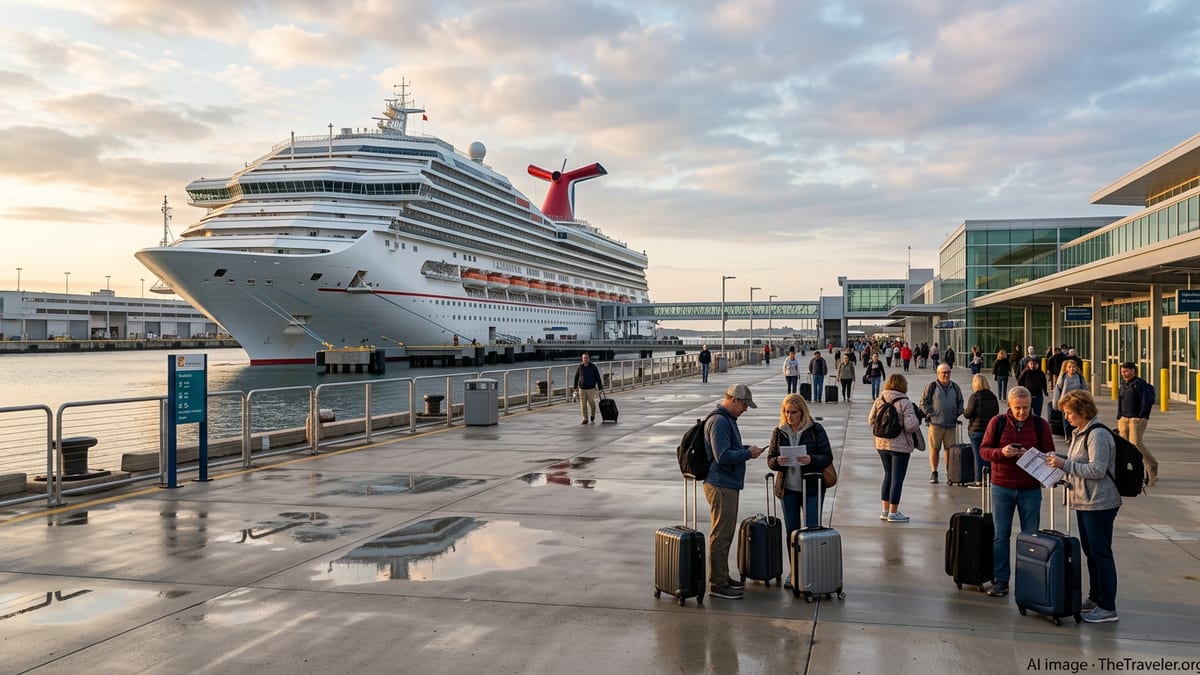
Technical Issue Forces Last-Minute Itinerary Change
Recent cruise industry reports indicate that a Carnival-operated vessel experienced a technical problem significant enough to disrupt its planned schedule, resulting in the cancellation of at least one port call. While such issues can range from propulsion limitations to onboard systems requiring repair, even relatively contained malfunctions can affect a ship’s speed and maneuverability, leaving insufficient time to safely enter and depart a port within allotted windows.
The incident aligns with previous cases where Carnival ships have altered routes after mechanical or technical concerns arose during a voyage. In similar situations, vessels have reduced speed, adjusted sailing patterns, or remained in port longer than planned while engineers assessed and addressed defects. These operational decisions, though disruptive to holiday plans, are framed by the company’s public materials as part of a broader safety-first approach to fleet management.
Technical challenges can cascade quickly into itinerary changes at sea. If a ship is unable to reach a port at the scheduled time, or if approaching a particular harbor requires higher operating margins than a temporarily affected system can safely provide, operators may opt to bypass the call altogether. In such cases, the ship typically spends additional time at sea or redirects to a nearby, more accessible port with fewer operational constraints.
For passengers, the most immediate effect is the loss or shortening of a planned day ashore. However, travel professionals note that these adjustments are a recognized risk embedded in cruise contracts, which specify that advertised ports and times are not guaranteed and may be changed for a variety of reasons, including equipment issues.
Local Regulations Limit Options for Port Access
Alongside the technical complication, local regulations at the affected destination played a key role in the port cancellation, according to available information. Cruise operations are tightly governed by a combination of maritime law, national security rules, environmental standards, and health requirements, all of which can constrain when and how a vessel may dock.
Ports can impose conditions related to traffic management, pilotage, tug assistance, and environmental compliance. If a ship’s technical status raises questions about its ability to meet those conditions, local authorities may limit or deny entry, or the cruise operator may determine that attempting to call would not satisfy the regulatory framework in place. Documentation for major cruise lines, including Carnival, underscores that compliance with local laws and port requirements rests ultimately with the operator and its guests.
In many jurisdictions, cruise itineraries are also influenced by cabotage and immigration rules, which dictate how foreign-flagged ships move between ports and the mix of domestic and foreign destinations. If a vessel can no longer follow its original sequence of calls because of time lost to a technical problem, alternative ports must still align with those legal constraints. That can narrow the range of viable substitute stops, especially on short itineraries or in regions with limited deep-water facilities.
Publicly available contracts and advisory materials make clear that when a voyage is hindered by mechanical issues or government-related restrictions, cruise operators maintain broad discretion to modify routes, skip ports, or disembark passengers at alternate locations. These provisions are designed to reflect the primacy of local regulations over commercial schedules whenever the two are in tension.
Passenger Impact, Compensation and Contractual Fine Print
The canceled port call has sparked questions among travelers about compensation and their rights when a cruise no longer visits an advertised destination. Carnival’s published ticket contracts and policy documents state that specific ports and arrival times are not guaranteed and may be changed for reasons beyond the company’s control, such as equipment breakdowns or government decisions affecting port access.
At the same time, past industry practice suggests that guests often receive limited reimbursement when a port is removed entirely from an itinerary, particularly if the change stems from operational or regulatory concerns rather than guest behavior. Compensation may take the form of port fees refunds, onboard credit, or discounts or credits toward future sailings, although the precise remedy varies by case and is typically outlined in direct communications sent to passengers.
Consumer-oriented guidance on Carnival’s policies notes that while the cruise line has flexibility to alter routes, it generally provides some form of gesture when a key highlight of a voyage is lost. Travel advisors frequently recommend that passengers review the fine print of their booking documents and consider travel insurance, particularly for sailings featuring unique or hard-to-replace destinations where a missed call would significantly affect the perceived value of the trip.
Legal analyses of cruise contracts emphasize that courts have often upheld broad modification clauses, leaving limited grounds for passengers to claim additional damages when ports are missed due to safety or regulatory reasons. As a result, guest expectations are largely managed through company communication and any discretionary benefits offered after an itinerary change.
Safety, Reliability and Reputation in Focus
While serious technical incidents on large cruise ships remain relatively rare compared with the overall volume of voyages, any cancellation or visible disruption can draw attention to questions of reliability and maintenance. In recent years, online discussion forums and independent cruise news outlets have highlighted several cases across the industry where propulsion problems, steering issues, or unexpected repairs led to altered routes, longer days at sea, or extended port stays.
Carnival’s public materials emphasize an ongoing program of maintenance, inspections, and periodic dry-dock work aimed at reducing the likelihood of in-service disruptions. Even with these efforts, complex marine engineering systems are subject to wear, unforeseen component failures, and external factors such as harbor conditions and weather, which together can create conditions where conservative decisions are favored over pressing ahead with a challenging port approach.
From a reputational standpoint, how a cruise line handles communication and compensation in the wake of a canceled port often shapes guest perceptions as much as the disruption itself. Clear advance notice when possible, prompt updates on revised schedules, and transparent information about available remedies are closely watched by both travelers and the wider industry. Repeated incidents of missed ports on the same vessel, however, can lead to increased scrutiny from regular cruisers and travel professionals evaluating ship reliability.
Analysts observing the sector point out that technical and regulatory setbacks are not unique to Carnival and affect operators across the global cruise market. As fleets incorporate new technologies and ports tighten environmental and safety requirements, the margin for error in meeting schedules can narrow, making proactive maintenance and contingency planning increasingly central to cruise line operations.
What This Means for Future Carnival Sailings
The latest port cancellation serves as a reminder to prospective Carnival guests that cruise itineraries remain inherently subject to change, especially when technical concerns intersect with local regulatory obligations. Travel specialists suggest that passengers consider the advertised route as an intention rather than an absolute guarantee and weigh how flexible they are about potential adjustments when choosing a voyage.
Some advisors recommend prioritizing ships with recent refurbishment histories or consistent records on similar routes, while also looking at how cruise lines have responded to past disruptions in terms of guest support. Public commentary on previous Carnival itinerary changes shows that experiences can vary, with some guests expressing appreciation for added sea days and compensation and others disappointed by the loss of bucket-list destinations.
For Carnival, each event of this kind becomes a test of operational resilience and guest relations strategy. Rapid resolution of technical problems, close coordination with port authorities, and straightforward messaging about the reasons behind changes can help maintain confidence among repeat and first-time cruisers alike.
As the cruise season progresses, industry observers will be watching for any patterns of recurring technical constraints on individual ships or routes. For now, the affected Carnival sailing highlights the complex interplay between shipboard engineering, legal frameworks, and guest expectations that underpins every port call on a modern cruise itinerary.