


More news on this day
Carnival Cruise Line has revealed new details of its next-generation Ace class, confirming that the first vessel will be named Carnival Destiny and is scheduled to debut in 2029 as one of the largest ships in the company’s history.
Get the latest news straight to your inbox!
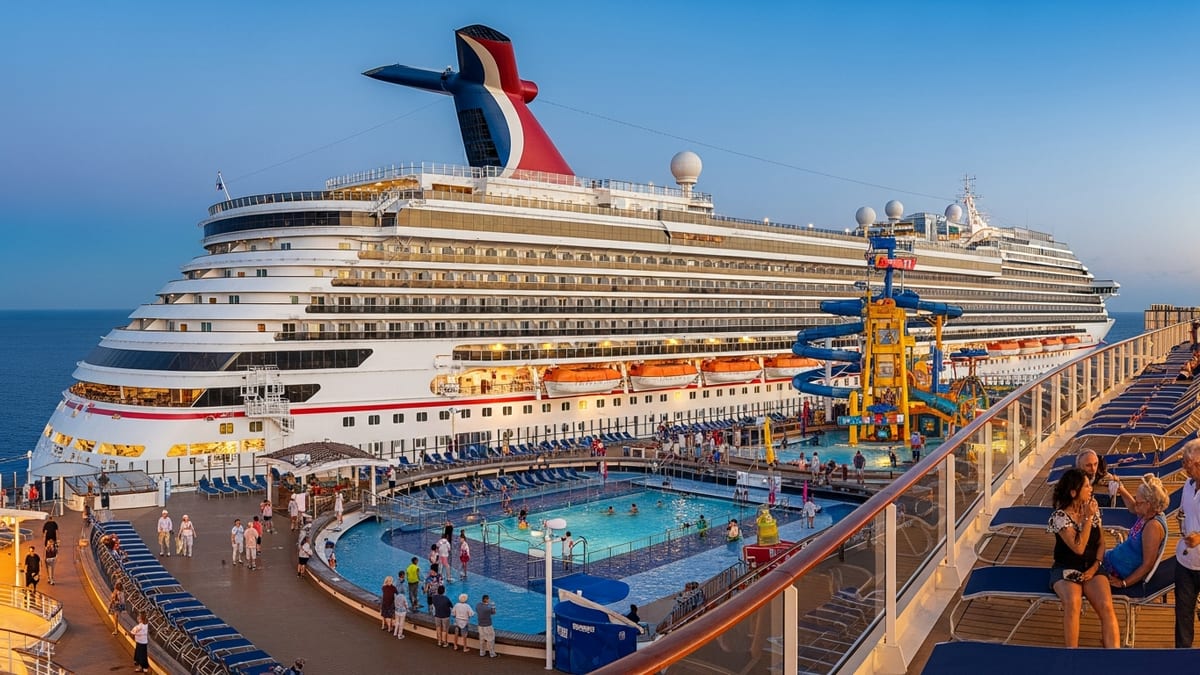
Ace Class Sets New Scale for Carnival Fleet
The Ace class represents Carnival’s most ambitious newbuild project to date, designed to exceed 200,000 gross tons and significantly enlarge the brand’s footprint in the mega-ship segment. Publicly available planning documents and industry reports indicate that the platform is being developed in partnership with Italian shipbuilder Fincantieri, with delivery of the lead ship expected in 2029.
Early figures cited in corporate materials and trade coverage suggest a design capacity of more than 6,000 lower berths and potentially up to around 8,000 guests at full occupancy. If realized, that would make Carnival Destiny not only the largest ship in the Carnival fleet, but also one of the highest-capacity cruise ships in the global market.
The new class is widely viewed as Carnival’s strategic response to the latest wave of large-scale ships introduced by rival brands, while still aligning with the line’s long-standing focus on casual, value-oriented fun. Observers note that the Ace platform appears to evolve Carnival’s existing Excel-class blueprint rather than copy the “neighborhood” concepts used by some competitors.
Carnival Destiny Name Revives a Historic Legacy
The choice of the name Carnival Destiny revives one of the most notable identities in the company’s history. The original Carnival Destiny, launched in the 1990s and later transformed into Carnival Sunshine, was celebrated at the time for crossing the 100,000-gross-ton threshold and reshaping expectations for mainstream cruising.
By assigning the name to the first Ace-class ship, Carnival is signaling continuity between two eras of growth. Travel watchers point out that the new Carnival Destiny is expected to become the first Carnival vessel to exceed 200,000 gross tons, echoing how its predecessor once marked the brand’s leap beyond 100,000 tons. The move fits a broader trend at the line of reusing historically significant names for new, larger flagships.
Community reactions across cruise forums and social platforms highlight a blend of nostalgia and curiosity. Longtime guests associate the Destiny name with Carnival’s rise as a major force in the mass-market sector, while potential first-time cruisers are encountering it as a fresh brand anchored to a high-profile newbuild.
Design Direction: Bigger Platform, Familiar Fun
Although full renderings and deck plans have not yet been released, commentary in cruise media and enthusiast communities suggests that the Ace class will combine elements from Carnival’s Excel-class design with features reminiscent of recent large-ship concepts in the wider industry. Early silhouettes and descriptions indicate a broad, high-capacity superstructure intended to maximize outdoor space and poolside activity areas.
Observers expect the ship to retain signature Carnival attractions such as top-deck water slides and ropes-course style activities, expanded family zones and a mix of casual and specialty dining venues. At the same time, the larger footprint is anticipated to give designers more room for dedicated venues and enhanced traffic flows, addressing long-standing guest feedback about congestion on popular sailings.
Industry analysis also points to an emphasis on flexibility, with spaces that can shift between daytime family uses and evening entertainment. This kind of multi-use design has become increasingly common on the newest mega-ships as lines work to ensure high utilization throughout a cruise while still offering quieter corners for relaxation.
Sustainability and Technology Expectations
While detailed technical specifications for Carnival Destiny have not been formally published, Ace-class planning is unfolding against a backdrop of tightening environmental regulations and rapid advances in shipboard technology. Recent Carnival deliveries, including the Excel-class series, have been built to run on liquefied natural gas, and analysts broadly expect the Ace platform to incorporate a next-generation propulsion and energy model.
Trade commentary suggests that Carnival and Fincantieri are likely to focus on improving fuel efficiency per passenger, advanced waste and water treatment systems, and hull designs that reduce drag. The size of the new ship magnifies the impact of incremental efficiency gains, making environmental performance central to both cost control and regulatory compliance.
In terms of guest-facing technology, recent Carnival announcements around fleet connectivity and digital services indicate that the Ace class is positioned to launch with upgraded Wi-Fi capacity, expanded mobile app integration and more sophisticated crowd and reservation management tools. These systems are becoming increasingly important on large ships where thousands of guests need to move efficiently between venues and manage dining, entertainment and shore excursion choices in real time.
Timeline and Market Positioning Through 2029
The 2029 delivery date places Carnival Destiny on the far end of a multi-year fleet renewal and expansion pipeline that includes additional Excel-class ships, such as Carnival Tropicale, scheduled to arrive in 2028. This sequencing is expected to give Carnival time to refine its latest design features and operational practices on slightly smaller platforms before scaling them up to the Ace class.
Travel industry observers view the new ship as a cornerstone of Carnival’s late-decade deployment strategy, likely targeting marquee homeports in North America and high-demand Caribbean or near-Atlantic itineraries. The ship’s scale suggests a focus on drive-to and fly-cruise markets that can support higher year-round capacity.
More detailed information on itineraries, onboard features and interior design themes is expected to emerge gradually as the project moves from design to visible construction milestones. With steel cutting activity associated with Project Ace already attracting attention among cruise watchers, the naming of Carnival Destiny marks a significant step in turning Carnival’s largest-ever ship concept into a reality for the 2029 vacation market.