


More news on this day
Thunderstorms tracking across the Denver metro area prompted a temporary ground stop at Denver International Airport, disrupting afternoon and evening travel at one of the nation’s busiest aviation hubs.
Get the latest news straight to your inbox!
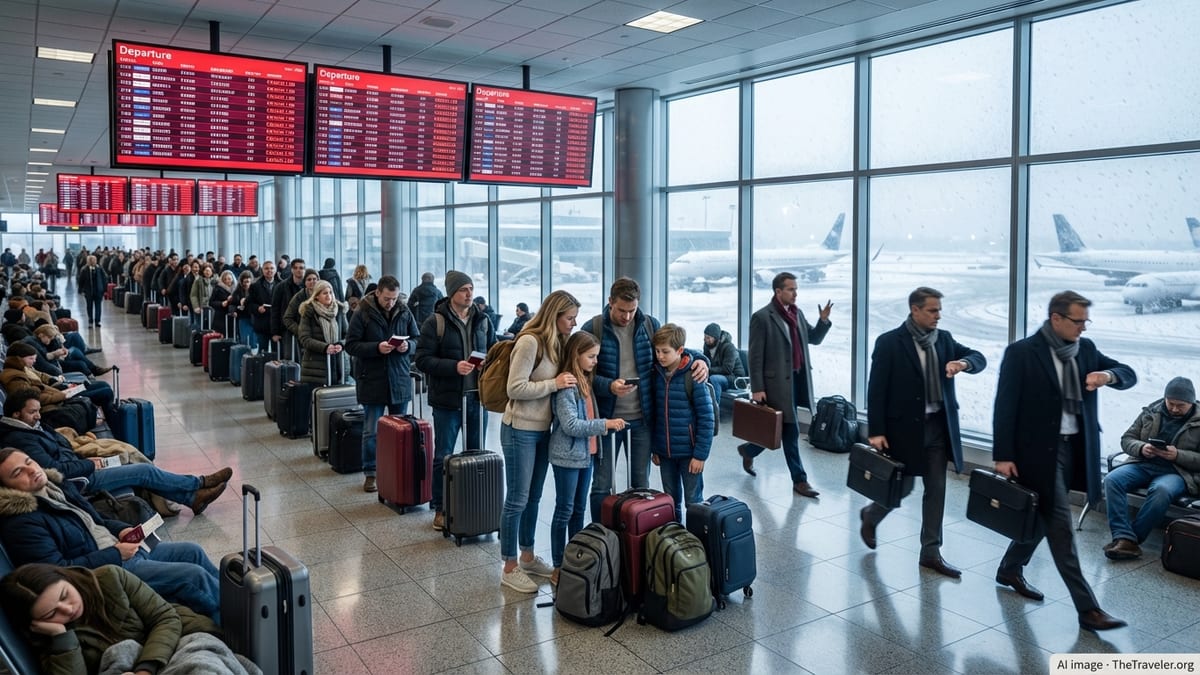
Ground stop halts arrivals and departures
According to publicly available flight tracking and federal aviation data, air traffic managers ordered a ground stop for Denver International Airport as thunderstorms developed in the vicinity of the airfield. The measure temporarily halted most arriving and departing flights, keeping aircraft at their origin airports and limiting movements on the ground in Denver.
Reports indicate that the ground stop was implemented as convective storms approached key arrival and departure corridors, reducing visibility and raising concerns about wind shear, turbulence and lightning in the terminal area. The decision is part of a standard set of tools used by air traffic managers to maintain safety when rapidly changing weather conditions intersect with heavy traffic flows.
Initial advisories pointed to a defined time window for the restrictions, with the possibility of extension if storms lingered over the region or redeveloped along the Front Range. As is typical during such events, the most immediate impacts were felt on late afternoon and early evening flights, when demand is high and aircraft rotations are tightly scheduled.
Ripple effects for airlines and passengers
Flight status boards for Denver showed a sharp increase in delayed and canceled departures once the ground stop took effect, as airlines adjusted schedules, reassigned aircraft and repositioned crews. Some flights bound for Denver were held at their origin airports, while others already en route were placed into holding patterns or diverted to nearby alternates until conditions improved.
Based on information compiled from airline status pages and passenger accounts, waits on aircraft already boarded at Denver stretched from modest delays to extended ground holds as crews awaited updated clearances. Passengers connecting through Denver faced missed onward flights and rebookings, with some itineraries pushed into the late evening or the following day.
The disruption added pressure to carriers that rely on Denver as a connecting hub, where a single period of constrained operations can cascade across networks. When storms coincide with peak travel periods or follow earlier operational challenges, recovery can take several hours even after weather conditions improve.
Front Range storms and aviation vulnerability
Meteorological discussions from the National Weather Service highlight the seasonal pattern of thunderstorms that frequently form along Colorado’s Front Range during the warm months. These storms can intensify quickly, producing strong and shifting surface winds, heavy rain, hail and frequent lightning in and around the Denver area.
Technical case studies on Denver airspace operations describe how convective activity near the airport can force controllers to sharply reduce arrival and departure rates, alter runway configurations and close certain routes entirely when storm cells intersect key paths. At a high-elevation airport such as Denver, hot temperatures accompanying summer thunderstorms can further constrain aircraft performance, making operational decisions more complex.
Published aviation analyses note that ground stops and similar traffic management initiatives are sometimes issued even when conditions at the terminal appear manageable from the ground, because weather hazards may be more severe along approach and departure corridors or in adjacent sectors. This can create a visible disconnect for travelers in the terminal who experience delays despite relatively calm weather overhead.
Travelers face extended waits and rebooking challenges
Social media posts and airline message boards from travelers moving through Denver during the storms described crowded gate areas, long lines at customer service counters and limited seat availability on later flights. Some passengers reported being automatically rebooked through alternative hubs or rerouted via overnight connections when same day options ran out.
For travelers whose trips began or ended in Denver, the ground stop led to rescheduled departure times and, in some cases, same day cancellations as airlines sought to reset aircraft and crew rotations. Hotel and ground transport demand around the airport increased as disrupted passengers arranged last minute overnight stays or rearranged rental car and shuttle plans.
Public guidance from aviation and consumer groups consistently encourages travelers using Denver during active thunderstorm periods to monitor flight status closely, enable airline notifications and build in additional time for connections. Flexible ticket policies and travel waivers, when offered, can provide options to shift itineraries away from the most volatile weather windows.
Managing operations as storms evolve
Operational planning documents for the national airspace system describe how ground stops at large hubs like Denver are coordinated with broader traffic management initiatives, including reroutes around storm complexes and speed restrictions on arrival and departure flows. Once the most severe weather clears critical airspace, managers may transition from a full ground stop to metered arrivals or reduced-rate operations to gradually restore normal traffic levels.
In the Denver case, publicly available data showed that departures began to resume as thunderstorm cells weakened or moved east of the metropolitan area, allowing air traffic to increase in stages. Even after restrictions eased, residual congestion and displaced aircraft continued to cause delays for some routes.
Weather and aviation specialists frequently point to Denver as an example of how complex geography, high altitude and seasonal storm patterns can converge to challenge airport reliability. Ground stops tied to thunderstorms remain a key safety mechanism in that environment, temporarily halting operations but ultimately enabling a more orderly and controlled return to normal service once conditions improve.