


More news on this day
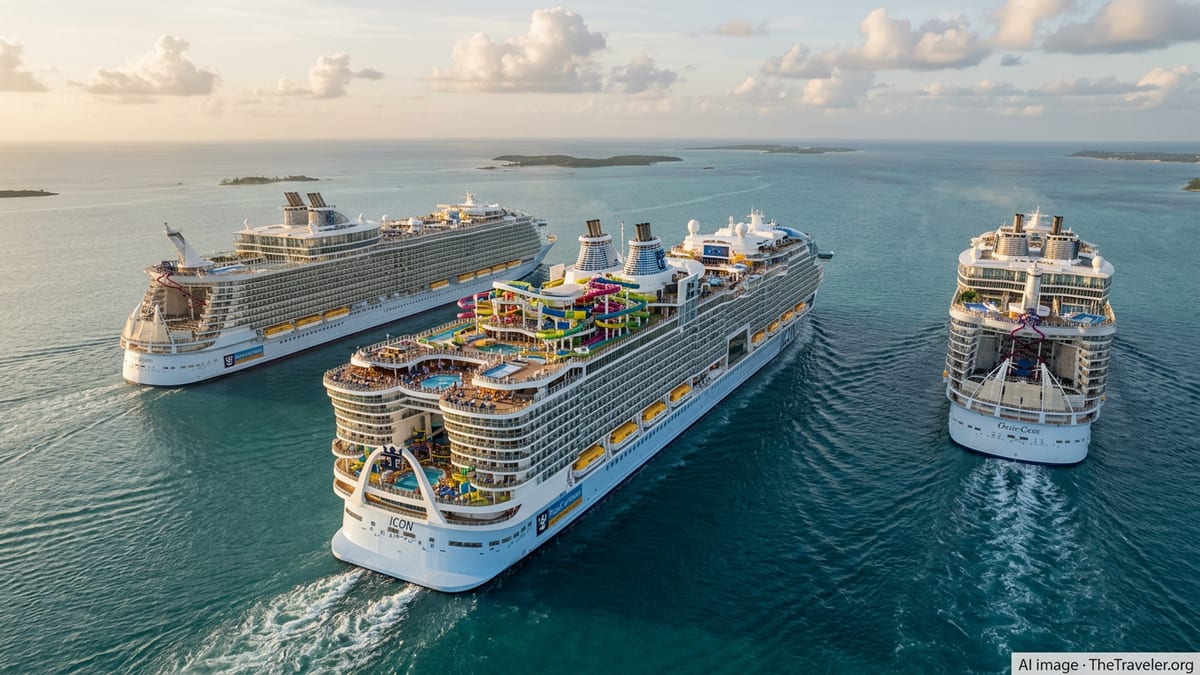
Royal Caribbean’s newest Icon Class ship, Legend of the Seas, is moving from shipyard milestone to launch countdown, drawing attention from travelers eager to experience its mix of supersized waterpark thrills, family‑focused neighborhoods and Europe‑to‑Caribbean itineraries set to begin in July 2026.
Get the latest news straight to your inbox!
A New Flagship Entering Service in 2026
Legend of the Seas is scheduled to begin carrying guests on seven‑night Western Mediterranean cruises from Barcelona and Civitavecchia, the port for Rome, in July 2026. The ship has recently completed key construction steps, including sea trials and delivery from the Meyer Turku yard, positioning it as the third vessel in Royal Caribbean’s Icon Class lineup after Icon of the Seas and Star of the Seas.
Publicly available information indicates that the 250,800‑gross‑ton ship will accommodate more than 5,600 guests at double occupancy, placing it among the largest cruise ships yet built. The design continues the Icon program’s emphasis on resort‑style hardware, with multiple open‑air decks, a wide central promenade and a series of themed zones intended to segment the experience for different age groups and travel styles.
The launch schedule keeps Legend of the Seas in Europe for its inaugural season before it repositions to Florida in late 2026. From Fort Lauderdale, the ship is expected to operate weeklong itineraries in the Southern Caribbean, adding further capacity on routes that already rank among the most in‑demand in the contemporary cruise market.
Onboard Experience: Waterparks, Pools and Neighborhoods
For travelers, one of the biggest draws of cruising on Legend of the Seas will be Category 6, billed as the largest waterpark at sea. Plans show six waterslides, including free‑fall and family raft designs, along with splash areas tailored for younger children. Adjacent to the waterpark, attractions such as the Crown’s Edge hybrid ropes course and skywalk aim to extend the line’s focus on high‑visibility, high‑adrenaline features.
The ship also places unusual emphasis on pools. Royal Bay, promoted as the largest pool at sea, anchors a multilevel outdoor deck area with in‑water loungers, surrounding bars and live‑music spaces. Additional pools are distributed across the vessel, including an adults‑oriented infinity pool complex and covered options designed for use in cooler shoulder seasons in the Mediterranean.
Legend of the Seas follows the neighborhood concept seen on earlier Icon Class ships, with eight distinct zones that cluster venues by mood and activity. Family‑centric areas combine water features, casual dining and attractions geared toward children and teens, while other neighborhoods focus on nightlife, theater shows and quieter lounge spaces. Early previews highlight the continuation of all‑ages entertainment, from large‑scale production shows under a dome‑style venue to live music in more intimate bars.
Dining, Bars and New Concept Venues
Cruisers booking Legend of the Seas will find one of Royal Caribbean’s broadest dining lineups to date, with around 28 venues ranging from complimentary casual spots to specialty restaurants. A central buffet and main dining rooms are joined by a collection of grab‑and‑go cafés, poolside options and familiar branded venues that have migrated from earlier ships in the fleet.
Among the talked‑about additions is Royal Railway – Legend Station, an experience venue where guests sit in train‑style carriages while a multi‑course menu is paired with shifting visuals themed to historic overland routes. Industry coverage describes the concept as an attempt to create a transport‑themed dinner show that differs from typical cruise ship specialty dining.
Legend of the Seas also introduces Hollywood‑inspired supper club spaces and an expanded mix of bars, including cocktail‑driven lounges and open‑air venues overlooking the pool decks. The goal, according to published coverage and brand materials, is to distribute late‑night crowds across multiple hubs so that travelers can find either high‑energy nightlife or quieter, more low‑key corners without leaving the ship’s main thoroughfares.
Itineraries from the Mediterranean to the Southern Caribbean
The ship’s inaugural program focuses on weeklong itineraries in the Western Mediterranean, sailing from Barcelona and Civitavecchia. These routes typically include marquee ports such as Naples, Palma de Mallorca and Provence‑area gateways, along with a mix of coastal cities and resort islands. For North American travelers, the itineraries are positioned as a way to combine a European city‑break stay with a cruise aboard one of the newest ships in service.
In November 2026, Legend of the Seas is scheduled to cross the Atlantic and begin sailing from Fort Lauderdale. Based on schedules and trade coverage, the program centers on Southern Caribbean itineraries, adding calls at islands such as Aruba, Curaçao and other ports that offer longer sea days and more time aboard the ship. The move reflects broader demand for warm‑weather cruising from South Florida in winter and adds another large‑capacity vessel to the region.
The deployment also helps Royal Caribbean balance its newest hardware between European and Caribbean markets, with Icon of the Seas and Star of the Seas already focused heavily on North American departures. For frequent cruisers, the result is a mix of options that allow them to experience the Icon Class across different regions, seasons and styles of voyage.
Sustainability, Technology and Market Impact
Beyond headline attractions, Legend of the Seas is part of Royal Caribbean Group’s stated strategy to advance toward a net‑zero cruise ship by 2035. The vessel is powered by liquefied natural gas and equipped with waste‑heat recovery, advanced air‑emissions controls and shore‑power connectivity where port infrastructure allows. While environmental groups continue to scrutinize large‑ship cruising, the line is positioning Legend and its Icon Class siblings as transitional hardware that reduces per‑guest emissions compared with earlier generations.
Technology on board extends to guest‑facing services, with the line’s app‑based systems for embarkation, dining reservations and show bookings expected to play a central role in managing crowds on a ship of this scale. The design incorporates expanded stateroom categories, including family suites and interior cabins that use virtual and architectural features to maximize space in response to changing travel party sizes.
For the cruise market, Legend of the Seas represents both incremental capacity and a new benchmark in the competitive race to build larger, more feature‑rich ships. Booking activity highlighted in trade and consumer forums suggests strong advance demand, particularly for early Mediterranean sailings and first‑season Caribbean departures. For travelers considering a cruise in late 2026 or 2027, the ship stands out as one of the highest‑profile new options entering service, combining headline thrills with a dense roster of venues designed to keep guests on board as much as in port.