


More news on this day
Nonstop flights from Casablanca and Cairo to Los Angeles are set to redraw the Africa–US air map, as Royal Air Maroc and EgyptAir prepare new long-haul links just ahead of the 2026 FIFA World Cup.
Get the latest news straight to your inbox!
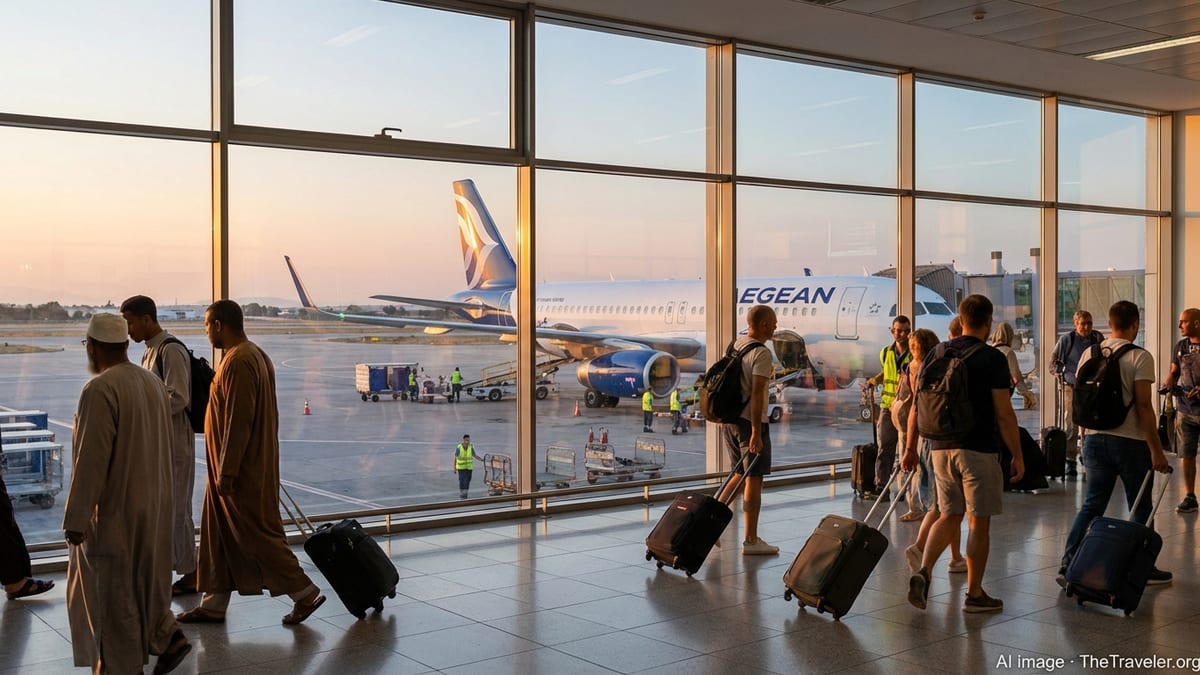
New Nonstop Gateways From North Africa to the U.S. West Coast
Royal Air Maroc is preparing to launch its first nonstop service between Casablanca Mohammed V International Airport and Los Angeles International Airport in June 2026, according to airline schedule data and recent route announcements. Industry trackers indicate the route is planned three times weekly, using Boeing 787 aircraft, with a flight time of around 11 hours. The service will mark the Moroccan flag carrier’s debut on the U.S. West Coast and its first direct link to Southern California.
EgyptAir is moving even faster. Publicly available schedules and recent coverage show the Egyptian flag carrier will start nonstop flights between Cairo International Airport and LAX on 23 May 2026, initially three times per week with Airbus A350-900 aircraft. The route will become EgyptAir’s longest nonstop service and its only direct link to the U.S. West Coast, complementing its existing East Coast network.
Together, the launches represent a significant deepening of air links between North Africa and the western United States. Until now, travelers from Morocco, Egypt and much of Africa heading to California have typically connected through European or Gulf hubs, adding several hours and an extra transfer to their journeys. The new routes create the first direct North Africa–California options and broaden the limited selection of Africa–US long-haul services overall.
Aviation analysts note that the timing of both launches is likely shaped by capacity growth in long-haul fleets, the recovery of transatlantic demand, and a desire by African carriers to secure strategic footholds at major U.S. gateways before the travel surge expected around the 2026 World Cup.
LAX Emerges as a Transcontinental Hub for World Cup Traffic
Los Angeles is already on course to be one of the busiest cities of the 2026 FIFA World Cup, with SoFi Stadium in Inglewood scheduled to host multiple matches during the expanded 48-team tournament. Tournament planning documents and host-city briefings indicate that LAX will serve as a primary international entry point for fans traveling to the Southern California games.
The addition of nonstop links from Casablanca and Cairo further elevates LAX’s role as a global football gateway. Travelers from North and West Africa will be able to reach Los Angeles with a single overnight flight, connecting onward to intra-U.S. services or basing themselves in Southern California for matches, fan festivals and side trips. Tourism and events planning materials for the World Cup point to Los Angeles as a hub not only for match attendance, but also for pre- and post-tournament tourism across the American West.
For Royal Air Maroc and EgyptAir, anchoring services at LAX aligns their networks with one of the 16 official World Cup host cities and one of only two host venues in California. The move is expected to diversify passenger flows beyond traditional New York and East Coast entry points, encouraging visitors to plan itineraries that link California, Mexico and other U.S. host cities by air or rail.
Industry observers suggest that strong World Cup demand patterns, particularly from African and Middle Eastern fan bases, could help support the initial ramp-up of both routes. LAX’s considerable long-haul infrastructure, ongoing investment in terminals, and its direct ground-transport links to SoFi Stadium position it as a natural beneficiary of that demand.
Shorter Journeys and New Options for African Travelers
For travelers across Africa, the new Casablanca–LAX and Cairo–LAX routes promise both time savings and more choice. In Royal Air Maroc’s case, Casablanca functions as an established connecting hub for West and Central Africa, while EgyptAir’s Cairo base is a major transfer point for East Africa and the Middle East. Publicly available timetables show that both carriers intend to align their long-haul departures with regional banks of flights feeding into their hubs.
On many itineraries to California, this will eliminate one connection and cut four to eight hours of total travel time compared with routings via European or Gulf hubs. Business travelers and diaspora communities are expected to be among the early adopters, particularly in sectors where ties to North Africa are deepening, such as energy, film production, technology and higher education.
The new services also broaden options for travelers in the opposite direction. American visitors headed to Morocco, Egypt and connecting African destinations will gain additional one-stop routings that avoid congested European hubs. Tourism boards in both countries have been actively promoting multi-day stopovers, encouraging visitors to break their journeys to explore cultural sites before continuing deeper into Africa.
Travel booking platforms already show growing interest in combined itineraries that link multiple World Cup host cities with pre- or post-tournament trips to North Africa. Analysts say that the availability of convenient, one-stop journeys from LAX via Casablanca or Cairo could solidify these patterns, particularly among independent travelers and small group tours.
Strategic Moves in a Competitive Long-Haul Market
The decision by Royal Air Maroc and EgyptAir to target Los Angeles reflects broader competitive dynamics in transatlantic and transcontinental aviation. Over the past decade, Gulf and European carriers have dominated flows between Africa and the western United States, leveraging powerful hubs in Doha, Dubai, Istanbul, London and Paris. By introducing their own West Coast nonstops, the North African flag carriers are seeking to reclaim a larger share of traffic that originates or terminates on their home continents.
According to airline strategy briefings and regional aviation analysis, both carriers are in the midst of fleet modernization programs that prioritize fuel-efficient widebodies. Royal Air Maroc has expanded its Boeing 787 fleet, while EgyptAir has begun taking delivery of Airbus A350-900 aircraft. These jets are well suited to long, thin routes such as Casablanca–Los Angeles and Cairo–Los Angeles, where demand is promising but not yet at the scale of transatlantic trunk routes.
The World Cup adds a powerful catalyst. Forecasts from host city organizers and transport authorities anticipate millions of additional international arrivals across the United States, Mexico and Canada during the tournament period. By launching services in mid-2026, the airlines position themselves to carry both fans and broader leisure traffic, then evaluate performance and adjust capacity in the months that follow.
Observers note that success on these routes could encourage further experimentation with Africa–West Coast links, potentially opening the door to additional services from other African hubs if demand and aircraft availability permit. For now, however, Casablanca–LAX and Cairo–LAX are likely to stand out as flagship examples of African carriers pushing deeper into North America on their own metal.
Implications for Tourism, Trade and Cultural Exchange
Beyond the World Cup, the impact of the new routes is expected to ripple through tourism and trade. Morocco and Egypt are among Africa’s most visited destinations, combining historic cities with coastal resorts and desert landscapes. Direct connectivity to LAX brings these destinations closer to high-spending leisure markets in California and the broader U.S. West, where interest in long-haul cultural and adventure travel has rebounded strongly since the pandemic.
Trade flows may also benefit. Both countries maintain growing economic ties with the United States in sectors ranging from aerospace and automotive components to agriculture, film and renewable energy. More reliable passenger capacity can support business travel, while bellyhold cargo on long-haul widebodies provides additional space for high-value exports such as perishables, textiles and specialty manufactured goods.
Cultural and educational exchanges stand to gain as well. Universities in California already host significant numbers of students from North Africa and the wider Middle East, and streamlined air links could make study abroad, joint research programs and institutional partnerships easier to sustain. Nonstop services also facilitate arts, sports and film collaborations, particularly as Los Angeles continues to serve as a global center for entertainment production.
As Royal Air Maroc and EgyptAir move forward with their Los Angeles plans, booking patterns over the next year will offer the clearest indication of how travelers respond. For now, the dual launches underscore how the approach of the 2026 FIFA World Cup is accelerating aviation shifts, transforming LAX into a new frontline in Africa–US connectivity and giving travelers fresh options just as the global spotlight swings toward North America.