


More news on this day
Thailand is quietly recalibrating its pitch to European travelers, shifting the focus from palm-fringed beaches to a broader mix of wellness, gastronomy and culture as it races to stay competitive in a crowded long-haul market.
Get the latest news straight to your inbox!
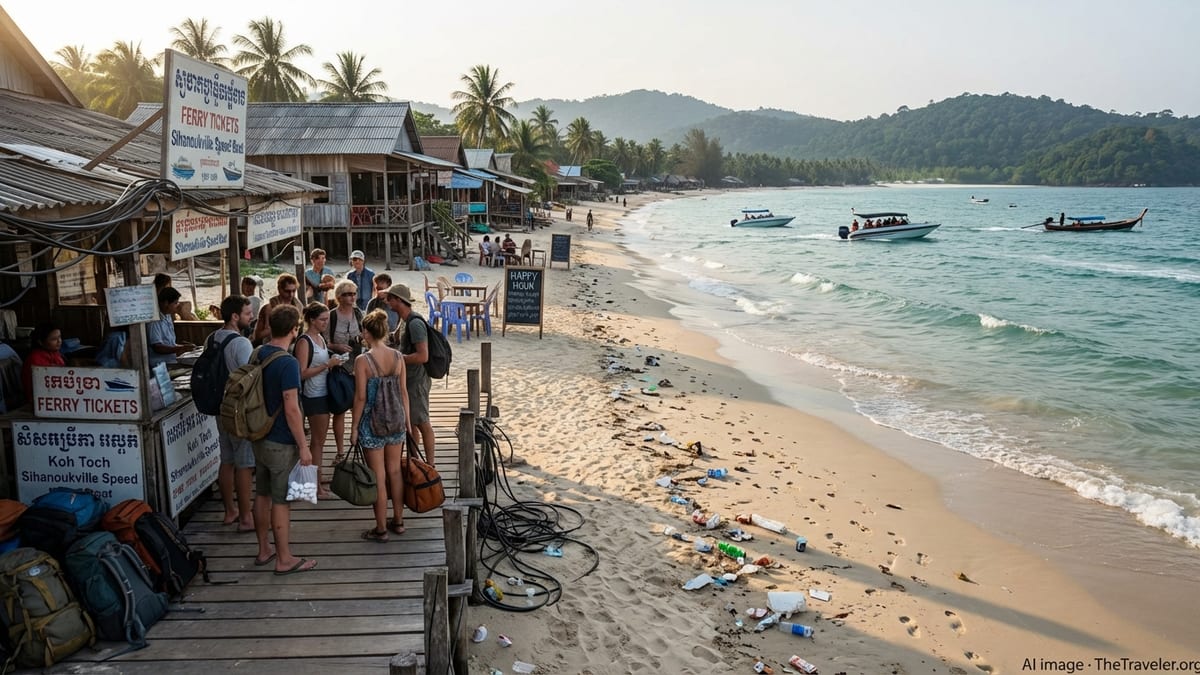
From Sun and Sand to Soft Power Strategy
For decades, Thailand’s tourism image in Europe has leaned heavily on white-sand beaches and island-hopping itineraries. Recent campaigns indicate a more complex story is now being pushed, one that leans into what policymakers describe as soft power assets such as food, festivals, film, fashion and traditional combat sports. Public information from Thailand’s National Soft Power Strategy bodies shows these sectors being grouped as priority cultural exports, with tourism positioned as one of the main beneficiaries.
This strategic turn comes as the country seeks to defend and grow its share of Europe’s outbound travel. Independent statistical overviews of Thai tourism note that total international arrivals recovered to the mid-30 million range in 2024, still slightly below the pre-pandemic peak but ahead of much of Southeast Asia. Analysts tracking the market point out that European visitors, in particular, have returned more quickly than some regional segments, encouraged by relaxed visa rules and expanded air links.
Policy documents and academic commentary describe how Thai officials now frame tourism less as a volume game and more as an arena to showcase national creativity and culture. The aim is to lengthen stays, increase spending and steer visitors toward experiences that reinforce Thailand’s global image beyond clichéd beach holidays.
The recalibration has been visible in Europe’s major travel trade events. At recent editions of leading fairs in London and Berlin, Thailand’s national pavilions have foregrounded themes of wellness, sustainability and cultural immersion rather than resort imagery, signaling the emergence of a new tourism “product” for long-haul markets.
Wellness as Thailand’s New Long-Haul Calling Card
One of the most prominent pillars of this shift is wellness tourism, marketed directly to European travelers as a form of “healing” travel. Official campaign material for upcoming global promotions describes Thailand as a sanctuary where spa traditions, meditation, nature and healthy cuisine are combined into upscale, multi-day experiences aimed at mid to high-spending guests from Europe and other long-haul regions.
Earlier initiatives laid the groundwork. In 2024, a nationwide “Wellness on a Plate” campaign tied Thai cuisine to health benefits, farm-to-table experiences and regional food trails, framing dining as part of a holistic wellness journey rather than a standalone attraction. That narrative has since been woven into broader positioning that presents Thailand as a world-class healing destination, with spa resorts, medical check-up programs and nature-based retreats packaged as alternatives to classic beach escapes.
Trade-focused events in Europe have amplified this direction. At the World Travel Market in London and other industry gatherings, Thailand’s exhibits have highlighted themes such as “Senses of Siam” and “Healing is the New Luxury,” showcasing boutique wellness resorts, slow-travel itineraries and community-based stays in lesser-known provinces. These presentations target European tour operators who increasingly report demand for restorative, experience-led trips among post-pandemic travelers.
Analysts who track high-yield tourism trends in Asia note that wellness travelers typically stay longer and spend more than average tourists. By centering wellness in its European outreach, Thailand is signaling a desire to compete directly with established spa destinations while using its cultural assets as a differentiator.
Gastronomy, Festivals and the 5F Soft-Power Play
Alongside wellness, Thai gastronomy has emerged as one of the most visible soft-power tools in the European market. Government communications and research on Thailand’s cultural strategy repeatedly reference the so-called 5F framework, in which food, film, fashion, fighting and festivals form the backbone of a new cultural export agenda. In practice, that has meant more chef-led roadshows, Thai food festivals and culinary masterclasses staged in European capitals to complement traditional tourism promotions.
Recent years have also seen Thailand’s domestic gastronomy scene linked more directly to tourism messaging. Official platforms have promoted creative food and wellness festivals in destinations across the country, presenting them as anchor events for international visitors. These festivals typically combine regional cuisine, artisanal products and wellness activities, creating narratives that can be repackaged for European tour operators looking for themed itineraries beyond the usual city-and-beach combinations.
Festivals themselves are being reimagined as exportable soft power. Flagship events such as Songkran and Loi Krathong are now marketed overseas as immersive cultural spectacles rather than simple public holidays. Policy discussions around a branded “world water festival” underscore ambitions to position Thai celebrations on the same global circuit as major European cultural events, inviting long-haul travelers to time their visits around specific dates and rituals.
Academic work on Thai soft power argues that these cultural offerings influence destination choice by building emotional connections well before a booking is made. For European audiences, exposure to Thai food, music or festivals in their home cities can serve as a gateway, later translating into interest in lesser-known regions and off-season travel windows inside Thailand.
Europe in Focus as Long-Haul Competition Intensifies
Against this backdrop, Europe stands out as a crucial testing ground for Thailand’s new tourism playbook. Long-haul visitor statistics compiled from various public sources show that travelers from the United Kingdom, Germany, France, Scandinavia and Southern Europe form a substantial portion of Thailand’s higher-spending arrivals. Some European markets have recently hit symbolic milestones, such as surpassing one million visitors annually, underlining their importance for Thailand’s revenue-focused strategy.
Tourism market reports note that European travelers tend to stay longer and travel further within the country than many regional visitors, often combining the capital with secondary cities and rural areas. By promoting culture, wellness and gastronomy, Thai planners aim to push more of this traffic into “hidden gem” destinations, dispersing tourism benefits and easing pressure on saturated beach hubs.
At recent tourism forums, Thai representatives have used European stages to present what they refer to as a “new Thailand” vision, tailored to long-haul tastes. Messaging emphasizes authentic, small-scale experiences, eco-conscious resorts and meaningful connections with local communities. This is being positioned as a counterbalance to concerns about overtourism and environmental strain that have periodically surfaced around the country’s coastal hotspots.
European travel trade media coverage suggests that the approach is timely. Competing long-haul destinations in Asia and the Indian Ocean are also pivoting toward wellness and culture, but Thailand’s dense network of existing tourism infrastructure, combined with its globally recognized cuisine and festivals, gives it a head start in building differentiated products for tour operators and online travel agencies.
Can Soft Power Offset Tourism Headwinds?
The strategic shift arrives at a delicate moment. Forecasts and commentary from tourism analysts point to a more volatile global environment, with European travel budgets squeezed by inflation, environmental concerns and geopolitical uncertainty. Some assessments suggest that overall arrivals to Thailand could fluctuate in the short term, despite ambitious targets set in earlier years.
In response, Thai planners have increasingly framed success not just in terms of headcounts but in visitor quality, length of stay and spending per trip. Soft-power tourism built around wellness, culture and gastronomy is being presented as a way to attract travelers who are less price-sensitive and more interested in immersive, higher-value experiences than quick beach breaks.
Policy and research documents linked to Thailand’s creative economy stress that this approach also aims to support local communities and small businesses. By promoting regional food, traditional crafts, festivals and community-based wellness retreats, the new tourism narrative aspires to spread economic gains beyond the main resort strips and into secondary cities and rural provinces.
Whether this soft-power pivot can fully offset external headwinds remains uncertain, but in Europe, the direction of travel is clear. Thailand’s latest campaigns increasingly ask long-haul visitors to look past the postcard beaches and discover a country selling something less tangible yet potentially more enduring: a curated blend of culture, cuisine and healing experiences that together form its new tourism weapon.