


More news on this day
Travelers across Europe, North America, Asia and the Middle East are facing fresh disruption after a blaze at Paris Charles de Gaulle Airport led several major carriers, including British Airways, Air France, Lufthansa, Emirates and KLM, to cancel dozens of flights and issue broad travel alerts on routes linking Paris with key global hubs.
Get the latest news straight to your inbox!
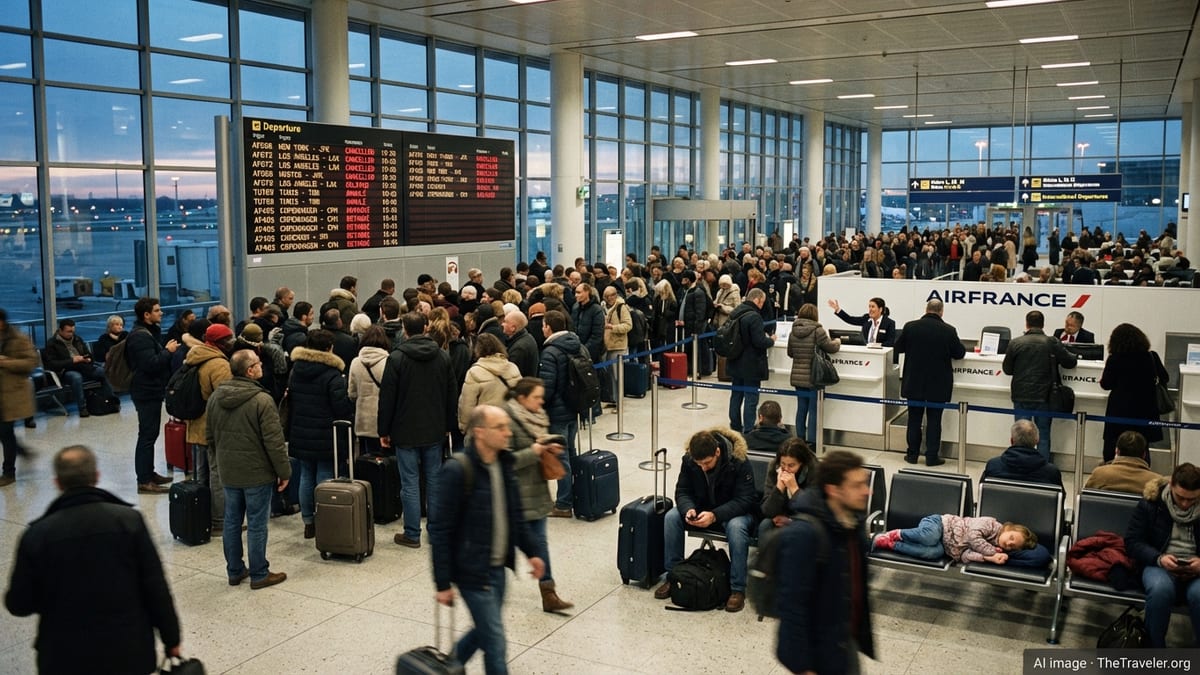
Blaze Disrupts Operations at Europe’s Second-Busiest Hub
According to early reports from French and international media, a fire in an infrastructure area serving terminals at Paris Charles de Gaulle Airport prompted an emergency response and a partial shutdown of operations. Initial indications suggest the incident affected systems that support passenger processing and baggage handling, triggering a cascading impact across multiple terminals used by European and Gulf carriers.
Publicly available information shows that flights were briefly grounded and departures significantly reduced as safety checks and inspections continued. While the blaze was contained, knock-on disruption spread across the airport’s complex terminal network, which handles tens of millions of passengers annually and serves as a critical transfer point between Europe, North America, Asia and the Middle East.
Operational data from airport trackers indicate that departures and arrivals at Charles de Gaulle remained irregular into the following days, with airlines opting to preemptively slim their schedules rather than risk day-of-flight cancellations. This approach has translated into sizable cuts on selected long haul and regional services as carriers work around damaged or offline infrastructure.
The incident comes at a time when European aviation is already under pressure from high fuel prices, geopolitical tensions and previous weather-related disruptions, amplifying the impact of any operational shock at a major hub such as Paris.
British Airways Joins Capacity Cuts After CDG Incident
British Airways has joined continental rivals in scaling back operations at Charles de Gaulle in the wake of the fire. Airline communication channels and booking systems show a wave of cancellations on short haul flights between Paris and London, along with adjustments on connecting itineraries that feed long haul services to the United States, the Middle East and Asia.
Rather than rerouting large numbers of passengers through Paris, British Airways appears to be consolidating travelers onto services via its London Heathrow base, using that hub to shoulder more of the traffic that would typically flow through CDG. This strategy is visible in inventory changes on transatlantic and Gulf-bound itineraries, where some Paris-origin segments have disappeared or shifted to London connections.
Travel industry analysts note that this kind of tactical schedule reduction is designed to create more predictability for travelers in the days after a major disruption. By canceling and consolidating early, carriers can reduce the risk of last-minute gate changes and rolling delays that have characterized previous European disruption events.
For passengers booked on British Airways services touching Paris in the coming days, the outcome is a growing number of rebookings onto alternative routings, often involving longer connection times or overnight stays in London instead of Paris.
Air France, KLM, Lufthansa and Emirates Scale Back Paris Links
Air France and KLM, which jointly use Charles de Gaulle and Amsterdam Schiphol as their twin long haul gateways, have already been operating with tighter schedules after months of weather and geopolitical challenges. Data from flight status platforms shows both carriers trimming CDG departures, particularly at peak times, and prioritizing key trunk routes where passenger demand and connectivity are highest.
Lufthansa has also cut selected services touching Paris, further reducing options for travelers relying on the group’s extensive European network to reach North America and Asia. Recent coverage of the German carrier has highlighted a broader pattern of schedule reductions this year, as Lufthansa reshapes its summer timetable in response to aircraft and crew constraints.
On the Gulf side, Emirates has canceled or retimed several flights connecting Dubai with Paris, reflecting both the immediate impact of the CDG blaze and the broader fragility of traffic flows between Europe and the Middle East. Emirates had already been operating a more cautious schedule on some European routes amid regional tensions, and the Paris incident has added a new layer of complexity.
Combined, these adjustments mean that travelers who once relied on frequent daily departures to and from Paris on SkyTeam, Star Alliance and independent Gulf carriers are now navigating a more limited set of options, with fewer same-day alternatives if something goes wrong.
Long Haul Travelers From the US, Asia and Middle East Face Ripple Effects
For passengers starting journeys in the United States, Asia and the Middle East, the most immediate impact of the CDG blaze is being felt in longer connection times, last-minute rebookings and tighter availability on remaining flights. Long haul itineraries that previously relied on quick transits through Charles de Gaulle are now more vulnerable to missed connections and schedule changes.
Travel alert pages issued by the affected airlines advise passengers to monitor the status of their flights closely and to allow extra time for transfers through Paris. In practice, this has translated into a surge in demand for alternative routings via London Heathrow, Amsterdam, Frankfurt and other European hubs that can serve as substitutes for CDG while recovery work continues.
Some travelers originating in the Middle East and South Asia are being rerouted away from Paris entirely and onto itineraries that connect through Gulf hubs or other European gateways. For U.S. travelers, the disruption is particularly noticeable on eastbound overnight flights that are carefully timed to meet morning departure waves from Charles de Gaulle to destinations across Europe, Africa and Asia.
Travel agents and online booking platforms report that inventories on nonstop services between major U.S. cities and Paris have tightened, with remaining seats often priced higher than before the incident as airlines manage both demand and operational risk.
What Passengers Should Expect in the Coming Days
Industry observers expect several more days of irregular operations at Charles de Gaulle as infrastructure inspections continue and airlines gradually restore capacity. Even as the immediate effects of the blaze recede, backlogs in aircraft positioning, crew rotations and maintenance schedules can prolong disruptions.
Public guidance from airlines consistently urges passengers with upcoming trips that involve CDG to check their flight status regularly, verify terminal and gate assignments before departure, and consider adding extra buffer time for connections. Travelers with flexible schedules are being encouraged to accept rebookings onto alternative dates or routings where possible, which can help ease pressure on the most heavily affected peak periods.
For those yet to book, analysts suggest considering routings through alternative hubs if the itinerary allows, especially for complex multi-leg journeys that depend on short connections. However, with several European carriers already operating leaner schedules for the summer season, alternatives may be limited on popular transatlantic and Middle East routes.
As investigations into the blaze continue, the episode underscores how quickly a localized incident at a major hub can spread across global aviation networks, particularly when key carriers such as British Airways, Air France, Lufthansa, Emirates and KLM respond with simultaneous schedule cuts that reverberate from North America to Asia and the Gulf.