


More news on this day
Kenya and Tanzania have signed a new package of cooperation agreements that tighten cross-border links in energy, trade and tourism, a move that regional observers view as a significant boost to East Africa’s fast-recovering travel and tourism economy.
Get the latest news straight to your inbox!
Eight New Agreements Anchor a Deeper Regional Partnership
According to publicly available information from both governments and regional business groups, Kenya and Tanzania concluded eight cooperation agreements in Dar es Salaam on 4 May 2026, covering energy, agriculture, railways, maritime transport, standards harmonisation and public service development. The package is framed as part of a wider effort to remove persistent non-tariff barriers, expand cross-border investment and give new momentum to East African Community integration.
Published coverage of the talks indicates that the agreements are designed to streamline customs procedures, align product standards and improve transport links between the two economies. The intention is to cut delays at border posts, lower logistics costs for traders and make it easier for travellers and tour operators to move seamlessly across the Kenya–Tanzania frontier.
Business councils in both countries have repeatedly highlighted the scale of commercial ties between Nairobi and Dar es Salaam. Recent trade data cited in regional reporting show that bilateral trade reached about 860 million US dollars in 2025, accounting for nearly 40 percent of all intra East African Community commerce. Analysts note that even modest efficiency gains from the new framework could therefore have a noticeable impact on trade volumes and associated travel flows.
Regional economic commentary suggests that the timing is significant. Intra East African Community trade has expanded rapidly in the past two years, supported by new infrastructure and policy reforms. Bringing the region’s two largest and most tourism-dependent economies into closer alignment is viewed as a signal that the bloc intends to compete more aggressively for global investment and long-haul visitors.
Energy Interconnection Sets Foundation for Growth
Energy cooperation features prominently in the new accords. Publicly available government documents show that the energy agreement advances work on the Isinya–Singida high-voltage transmission line, a flagship Kenya–Tanzania interconnection designed to enable large-scale cross-border electricity trade. The line complements the 400 kV Kenya–Tanzania interconnector that was energised in the 2024–2025 financial year, which national utilities describe as a milestone in the emerging Eastern Africa Power Pool.
The latest agreement also establishes a joint working group on renewable energy projects, reflecting each country’s interest in leveraging abundant solar, wind and geothermal resources. Energy-sector observers say greater interconnection can smooth supply imbalances, reduce reliance on expensive back-up generation and create a more resilient regional grid.
The implications for travel and tourism are indirect but important. More reliable and affordable power underpins hotel operations, conference venues, cold chains for high-end food and beverage, and digital systems that support everything from online booking to smart ticketing at national parks. Tourism investors have long cited energy costs and reliability as a constraint in parts of the region; a better integrated grid is expected to ease those concerns over time.
Environmental advocates in East Africa also point to the potential climate benefits of coordinated renewable development. If cleaner power generated in one country can be exported efficiently to its neighbour, it could support the marketing of the region as a low-carbon long-haul destination, an increasingly relevant factor for European and North American travellers.
Trade Facilitation and Standards Seen as Tourism Enablers
Several of the new agreements focus on trade facilitation and standards, but analysts argue that their effects will be felt across the wider visitor economy. Harmonisation of product and safety standards between Kenya’s and Tanzania’s regulatory agencies is expected to reduce duplication of inspections and certification, easing operations for logistics companies, airlines and tour operators that straddle both markets.
According to regional trade reports, the two countries have set a June 2026 target to resolve outstanding trade barriers, including recurrent disputes over sanitary and phytosanitary rules and licensing for transporters. If realised, this could significantly shorten clearance times at key crossing points such as Namanga and Holili, where tourist minibuses and safari trucks often share the same queues as commercial freight.
Travel-industry representatives quoted in sector publications frequently argue that smoother cargo flows and passenger movements are essential to unlocking the full value of multi-country itineraries. Lower transaction costs for goods can help bring down prices for imported food, fuel and construction materials used by hotels and lodges, while more predictable border processes make it easier to plan complex overland safaris and regional events.
Improved trade logistics are also expected to stimulate growth in conference and exhibition tourism, particularly in Nairobi, Arusha and Dar es Salaam. Facilitating movement of exhibition materials, business delegates and technical equipment across borders supports the development of East Africa as a meetings, incentives, conferences and exhibitions hub.
Toward a Single Tourist Circuit for East Africa
One of the headline outcomes for the travel sector is a mandate for tourism authorities to develop a joint destination framework. Public statements and media summaries of the Dar es Salaam talks note that Kenya’s Tourism Cabinet Secretary and Tanzania’s Minister responsible for natural resources and tourism have been tasked with presenting a strategy for marketing the two countries as a single destination.
Regional tourism bodies have long advocated for a more integrated product that links Kenya’s coastal resorts and savannahs with Tanzania’s renowned wildlife areas and Indian Ocean islands. The new political backing for single-circuit marketing is seen as a step toward coordinated branding, joint participation at international travel fairs and potentially streamlined visa or park-fee arrangements for cross-border itineraries.
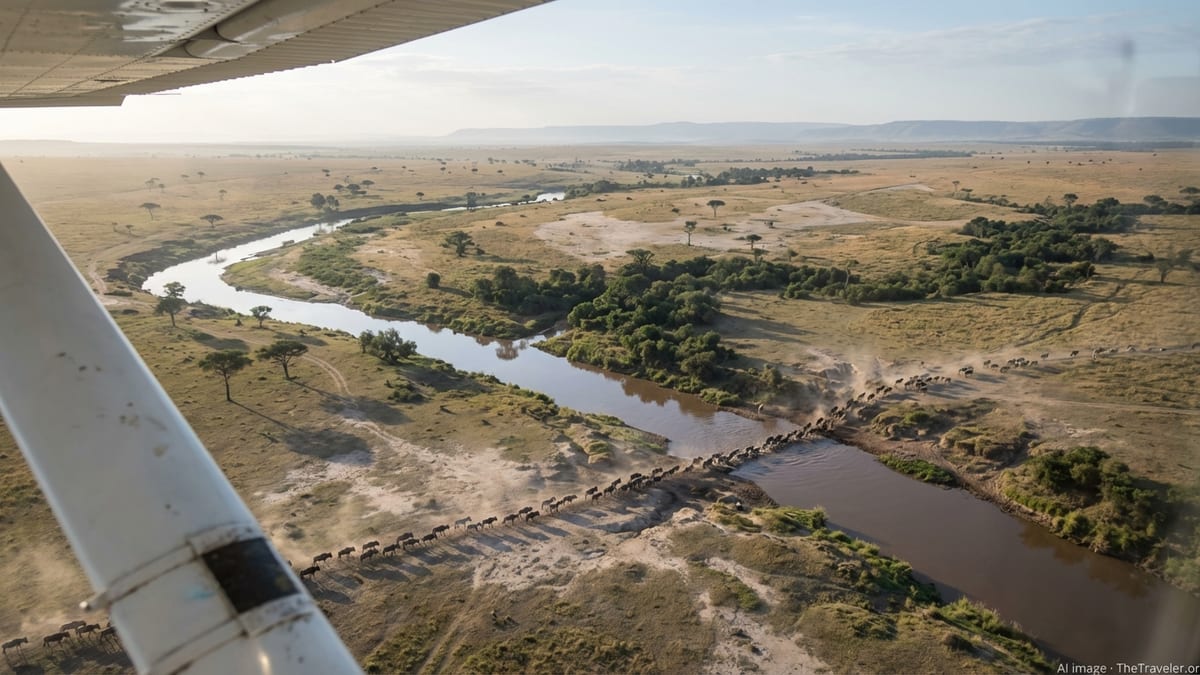
Tourism statistics compiled by national authorities show that both countries have rebounded strongly from the pandemic period, with Tanzania reporting record international arrivals and Kenya recording a sharp increase in tourism receipts. Industry analysts contend that jointly marketed products, such as combined Serengeti–Maasai Mara migrations, Kilimanjaro climbs with Kenyan beach extensions, or twin-city cultural tours, could extend visitor stays and raise per-trip spending.
There is also growing attention to community-based tourism and conservation models that bridge the border. Coordinated planning can help align wildlife corridors, cross-border conservancies and cultural routes, offering travellers a more coherent experience while supporting livelihoods in rural areas on both sides of the frontier.
Regional Context and Outlook for the East African Travel Economy
The Kenya–Tanzania agreements fit into a broader pattern of East African Community members using infrastructure and policy coordination to build a more integrated regional market. Recent years have seen progress on power pools, transport corridors and trade protocols that connect ports, inland logistics hubs and tourist gateways in multiple member states.
Economic and diplomatic briefings from the region highlight the rapid expansion of intra East African Community trade in 2024 and 2025, reaching an estimated 18 billion US dollars as tariffs fall and cross-border projects come on stream. For travel and tourism, this deeper integration brings both competition and opportunity, as destinations vie for visitors but also collaborate on branding, air connectivity and common standards.
Industry commentators expect the new Kenya–Tanzania framework to encourage further private investment in hotels, transport and destination infrastructure, particularly around major corridors linking Dar es Salaam, Tanga, Arusha, Kilimanjaro, Taveta, Mombasa and Nairobi. Developers are watching closely for concrete follow-through on border reforms, aviation cooperation and joint promotion in key source markets.
While implementation risks remain, the latest agreements are being interpreted by regional analysts as a strong signal that Kenya and Tanzania intend to anchor East Africa’s next phase of integration. For the travel and tourism sectors, the combination of improved energy security, trade facilitation and coordinated destination marketing could mark the beginning of a more seamless and competitive regional tourism circuit.