


More news on this day
Singapore’s Changi Airport processed 17.2 million passenger movements in the second quarter of 2026, underscoring its role as a key Asian hub even as airlines adjusted global route networks and trimmed some Southeast Asian services.
Get the latest news straight to your inbox!
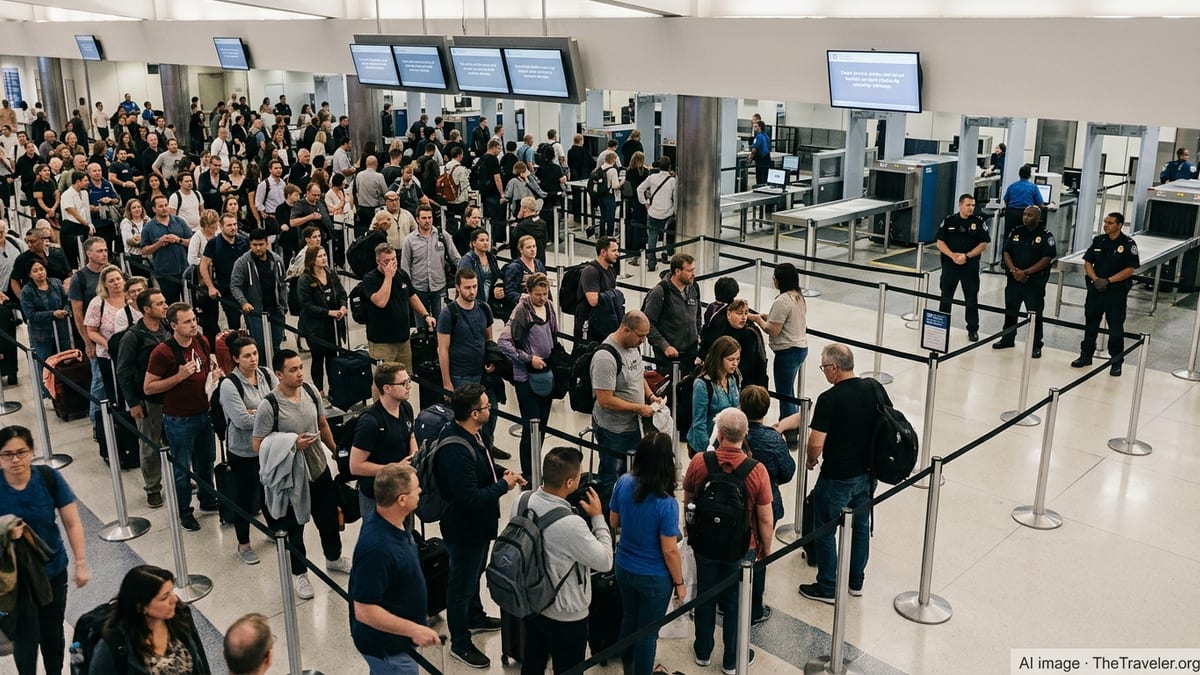
Traffic Eases Slightly After Record 2025 Recovery
Publicly available operating indicators show that Changi Airport handled 17.2 million passengers between April and June 2026, around 1.5 percent fewer than in the same quarter a year earlier. Q2 2025 had been a particularly strong comparison point, when volumes rose on the back of a broad post‑pandemic recovery and robust regional travel demand.
Despite the modest year on year decline, the latest quarter keeps the airport on a high base after a record 2025 in which annual traffic was reported to have reached close to 70 million passengers. Aviation data and previous statistics indicate that Singapore’s main gateway has effectively returned to, and in some segments surpassed, pre‑pandemic flow levels.
The softer second‑quarter outcome follows a firmer start to the year. According to earlier published figures, Changi saw about 17.6 million passengers in the first quarter of 2026, up from the prior year. Taken together, the first half suggests that overall annual throughput could still remain near historic highs, even if growth has shifted from rapid rebound to a more mature, capacity‑driven phase.
Industry observers note that small quarterly fluctuations are common once airports approach capacity ceilings or after a surge year. In that context, the Q2 2026 numbers are being interpreted more as a normalisation of growth than a reversal in Singapore’s aviation fortunes.
Route Shifts Weigh on Southeast Asia, Lift Europe and Pacific
Coverage of the operating data indicates that the headline dip in passenger volumes was closely tied to changes in airline network strategies. Several carriers have reportedly reduced frequencies or capacity on certain Southeast Asian routes as they redeployed aircraft to longer haul services viewed as more profitable in the current fuel and demand environment.
Available breakdowns suggest that flows to and from Southeast Asia and parts of North Asia cooled in the quarter, reflecting those schedule adjustments as well as more moderate leisure demand compared with the surge seen in 2025. Some regional markets also faced heightened competition from low‑cost carriers and alternative hubs, adding to the drag.
At the same time, Changi appears to have benefited from stronger demand on key intercontinental corridors. Reports citing the latest data point to passenger traffic between Singapore and Europe growing in the high single digits, supported by added capacity from both Asian and European airlines. Traffic to the South‑West Pacific region, including Australia and New Zealand, also registered gains as carriers restored more seats for winter and school holiday peaks.
The pattern fits a broader global aviation trend in 2026, in which airlines have been reshaping networks toward routes with higher yields and stable premium demand. For Changi, this rebalancing means fewer short‑haul frequencies but fuller long‑haul cabins, helping to support revenue even when headline passenger counts ease.
Hub Status Remains Firm Amid Global Competition
While the Q2 figures show a slight pullback from 2025’s highs, comparative rankings and international traffic tables continue to place Changi among the world’s busiest and most connected airports. Data on international passenger volumes indicate that Singapore consistently ranks near the top tier of global hubs, alongside major gateways in the Middle East and Europe.
Industry databases and official statistics highlight that Changi’s strength lies in its role as a transfer point for long‑haul journeys between Asia, Europe, Australia and, increasingly, North America. High proportions of transit passengers mean that the airport’s performance is closely linked not only to Singapore’s own outbound and inbound travel, but also to global schedules and alliance strategies.
Analysts following the region point out that competition for transfer traffic has intensified as airports such as Bangkok, Kuala Lumpur and various Gulf hubs seek to capture a larger slice of connecting flows. In that context, holding quarterly traffic within touching distance of last year’s peak is viewed as a sign that Singapore remains a preferred connecting point for many itineraries.
Changi’s continuing programme of terminal upgrades and capacity enhancements is also positioned as a key factor in sustaining its hub status. Industry material on upcoming projects, including the long‑planned Terminal 5, suggests that authorities are preparing for higher structural demand over the longer term, even if individual quarters show modest swings.
Implications for Singapore’s Tourism and Aviation Strategy
The latest passenger data carry broader significance for Singapore’s visitor economy and aviation strategy. Air connectivity is closely tied to tourism receipts, meetings and conventions, and the city‑state’s status as a regional headquarters location for multinational firms.
Tourism agencies and business groups are likely to watch how route reallocations affect key source markets, especially in Southeast Asia, which traditionally supplies significant visitor numbers. If capacity cuts on some near‑by routes persist, policymakers may look at targeted marketing or partnerships to sustain arrivals while leveraging the stronger links to Europe and the South‑West Pacific.
On the aviation side, the Q2 2026 figures underline the importance of maintaining a diversified route mix. Reliance on a narrow set of regional flows can leave hubs exposed when airlines rebalance networks. By contrast, Changi’s access to long‑haul markets and its role in alliance networks provide some insulation, as evidenced by the resilience of its traffic in intercontinental segments.
Observers also note that cargo trends, fleet renewal plans by Singapore‑based carriers, and emerging travel patterns such as “work from anywhere” itineraries will shape how the airport performs in coming quarters. As airlines and regulators refine slot allocations and infrastructure plans, the current year’s data will likely serve as a benchmark for calibrating capacity ahead of the next phase of growth.
Outlook for the Rest of 2026
Looking to the second half of 2026, market expectations point to steady but uneven growth across Changi’s key regions. Northern winter schedules will determine how much additional capacity is deployed to Europe and North Asia, while leisure demand to Australia and New Zealand could remain firm if economic conditions hold up.
Travel demand from China and parts of North Asia remains a variable to watch. Any acceleration in outbound tourism from those markets would likely lift transit and origin‑destination traffic through Singapore, potentially offsetting the current softness in some Southeast Asian flows.
Industry forecasts generally anticipate that global passenger numbers will continue edging higher this year, though at a slower pace than in 2024 and 2025. For Changi, the core challenge is expected to be balancing operational resilience with the need to capture high‑value routes as airlines refine fleets and networks.
Much will depend on how quickly planned infrastructure works progress and how carriers respond to evolving demand on both regional and long‑haul sectors. For now, the Q2 2026 data show that even amid global route shifts and capacity reshuffles, Singapore’s main gateway remains near record territory in passenger volumes and continues to anchor one of the world’s most important air travel networks.