


More news on this day
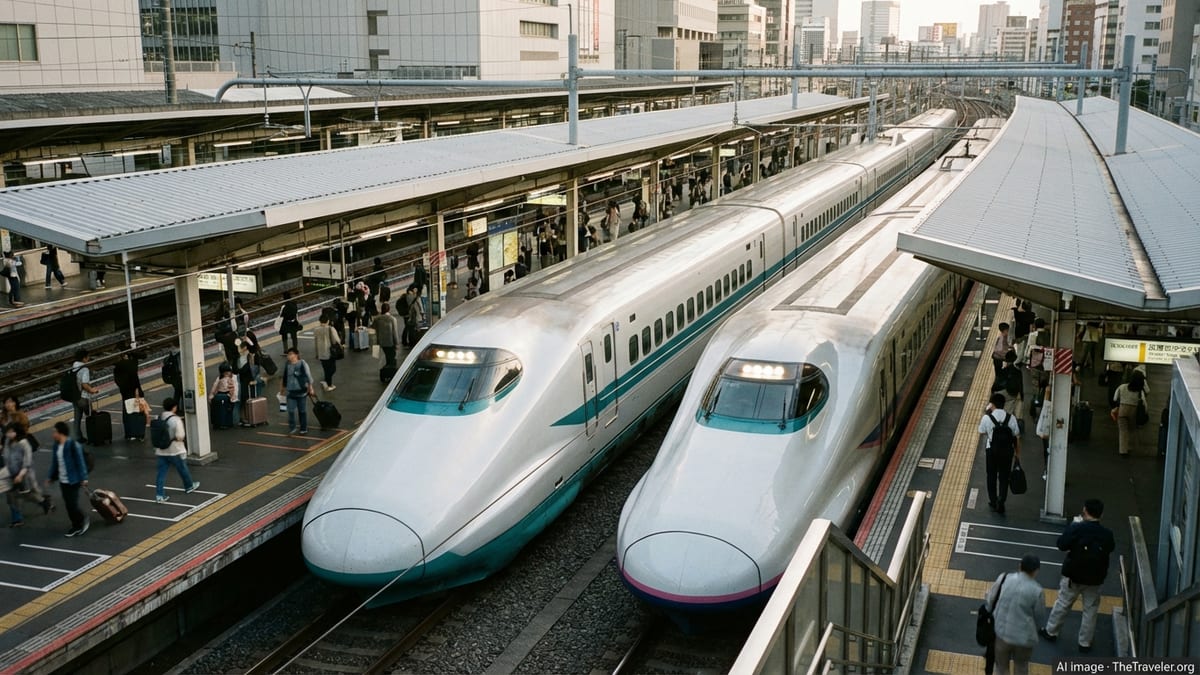
Japan has introduced a new chapter in high-speed rail with the launch of the Tokaido Shinkansen Lumiere Express, an overnight service linking Tokyo and Osaka that offers travelers a sleeper-style alternative to the classic daytime bullet train run.
Get the latest news straight to your inbox!
A New Overnight Chapter on the Tokaido Shinkansen
The Lumiere Express operates between Tokyo Station and Shin-Osaka Station on the Tokaido Shinkansen corridor, long known as one of the busiest high-speed rail routes in the world. The service is being promoted as an experimental overnight option that allows passengers to travel while they sleep instead of booking a hotel night in either city.
Publicly available timetables and promotional material indicate that one of the first departures is scheduled around 10 p.m. from Tokyo, with arrival in Shin-Osaka close to 7 a.m. the following morning. That journey time is significantly longer than the usual two and a half hours on the fastest Nozomi services, reflecting the train’s slower running pattern and extended stops designed to fill the night.
The train’s name, Lumiere Express, highlights a focus on ambience rather than pure speed. The service is positioned as a way to reclaim elements of Japan’s traditional overnight rail culture, which has largely disappeared as high-speed daytime trains and low-cost air routes became dominant on long-distance corridors.
While the overnight run currently appears limited in frequency and framed as a special or seasonal operation, interest from rail enthusiasts and long-distance travelers has been immediate, with social media posts and travel forums closely following early journeys.
Onboard Experience Blends Comfort and Experimentation
Reports from early riders suggest that the Lumiere Express is configured to emphasize comfort for passengers spending the entire night on board. Instead of conventional daytime seating alone, the train is understood to offer upgraded reserved seating and sections designed to encourage rest, though it does not replicate traditional sleeping berths found on classic night trains.
Observers note that lighting, seat recline and quieter car arrangements are central to the concept, with the design aimed at creating an environment suitable for dozing or light sleep. The extended journey time allows for a less hurried ride, and passengers have more time to use onboard amenities or simply watch the landscape after dark.
Compared with the tightly scheduled daytime Shinkansen services, the overnight train is expected to operate with more flexible dwell times and a timetable shaped around nighttime operating conditions. This slower pacing is part of the appeal for rail fans who regard the journey itself as an experience rather than only a means of getting from one city to another.
For travelers used to Japan’s efficient but brisk daytime bullet train services, the Lumiere Express offers a different rhythm on a route that is otherwise associated with speed and business travel.
Positioning Against Existing Tokyo–Osaka Travel Options
The overnight Lumiere Express enters a corridor already crowded with options linking Tokyo and Osaka, including frequent daytime Shinkansen departures, domestic flights and highway buses that run through the night. In terms of sheer travel time, the new train is slower than all of these, but its value proposition lies in time shifting rather than time saving.
Passengers can depart late at night, arrive after sunrise and avoid paying for hotel accommodation, a calculation that may appeal to budget-minded tourists, solo travelers and rail enthusiasts. For business travelers, the service may be most attractive to those who need to arrive in Osaka early without losing the previous workday in Tokyo, or vice versa.
Comparisons are already being drawn with Japan’s former overnight limited express trains, many of which were discontinued as air and high-speed rail competition intensified. The Lumiere Express, however, leverages the modern Shinkansen infrastructure, promising smoother rides and contemporary safety systems while echoing the slower, more leisurely pace of classic night trains.
Travel analysts following the launch suggest that the overnight Shinkansen will serve as a test of whether there is sustainable demand for night services on routes where fast daytime trains are already well entrenched. Its performance could influence whether similar concepts are explored on other busy corridors.
Demand, Pricing and Booking Patterns
Initial interest in the Lumiere Express appears strong among domestic rail fans and international visitors who are actively seeking out unusual or limited-run rail experiences. Travel communities online have circulated seat maps, booking tips and firsthand ride reports, helping to build awareness of the new option beyond Japan’s borders.
Pricing information shared in publicly available booking platforms indicates that fares are positioned above the lowest daytime discount tickets but broadly in line with standard reserved seating on the Tokaido Shinkansen when accommodation savings are taken into account. The lack of a separate hotel bill may make the overnight journey cost-competitive, particularly during peak travel seasons when city-center rooms become expensive.
Because the service currently operates on limited dates, travelers are being encouraged by guidebook writers and rail bloggers to plan well in advance and to treat the Lumiere Express as a special experience rather than a guaranteed, everyday option. Some commentators note that the novelty factor is driving demand, with the long-term pattern likely to stabilize once the initial excitement eases.
For Japan’s tourism planners, the service offers another tool for spreading visitor spending across cities and hours of the day, potentially easing peak demand on morning departures while encouraging travelers to explore Osaka or Tokyo immediately upon arrival.
What the Lumiere Express Signals for Japan Rail Travel
The launch of an overnight Shinkansen on the Tokaido line is being watched closely as a signal of how Japan’s rail operators may adapt to shifting travel patterns and visitor expectations. The Lumiere Express suggests a willingness to experiment with service concepts that favor experience and flexibility over headline speed.
For international visitors, the new train adds another distinctive entry to the list of Japanese rail experiences, alongside themed sightseeing trains and character-branded services. It also underlines how the country’s high-speed network can be repurposed beyond its classic daytime role, potentially inspiring similar initiatives on other lines in the future.
If the Lumiere Express attracts steady ridership and positive feedback, observers expect that additional overnight slots, expanded dates or refined car layouts could follow. Conversely, limited demand would reinforce the dominance of fast daytime Shinkansen and budget flights when it comes to Tokyo–Osaka travel.
Regardless of its long-term trajectory, the overnight Lumiere Express has already broadened the conversation about how Japan’s flagship high-speed corridor can serve not just as a rapid link between economic hubs, but also as a stage for more atmospheric, unhurried journeys between the country’s two largest metropolitan areas.