


More news on this day
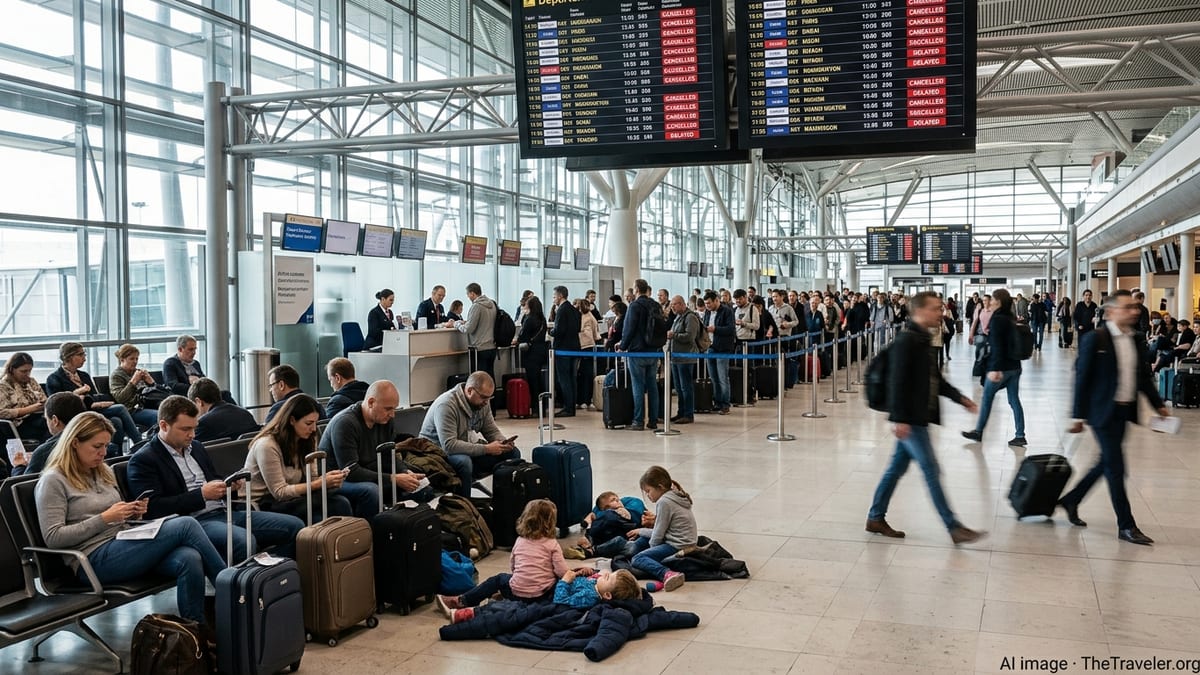
Hundreds of travelers on the busy Paris–Nice corridor have been caught in a fresh wave of disruption in June 2026, as a combination of industrial action, congestion and knock-on operational issues at Paris Charles de Gaulle Airport led to at least 11 grounded flights and more than 300 delays affecting services operated by Air France and easyJet.
Get the latest news straight to your inbox!
Industrial Action and Operational Strain Converge
Publicly available strike calendars for France indicate that Charles de Gaulle faced renewed pressure in mid June 2026, with ground handling, security and support staff staging a 24 hour walkout that affected flights at several Paris airports. That disruption, combined with a broader pattern of air traffic control issues over French airspace earlier in the year, has created a fragile operating environment at one of Europe’s busiest hubs.
Charles de Gaulle serves as the principal hub for Air France and an operating base for easyJet on short haul European and domestic routes. With both carriers relying heavily on dense schedules between Paris and Nice during the summer season, even short work stoppages or staffing gaps can quickly cascade into a high number of delayed rotations and cancellations along the Côte d’Azur corridor.
Tracking data and strike overviews for June show that services to and from Charles de Gaulle have repeatedly been singled out in disruption alerts, with airlines urging passengers to check flight status, arrive early and remain flexible on travel dates. The Paris–Nice market, one of the most heavily trafficked domestic routes in France, has been particularly exposed to these swings in operational capacity.
Grounded Flights and Cascading Delays on the Paris–Nice Route
Flight monitoring platforms and consumer-rights advisories point to at least 11 Air France and easyJet rotations between Paris and Nice being grounded in the latest spell of disruption, alongside more than 300 recorded delays on associated routes through Charles de Gaulle. The figures reflect not only outright cancellations but also aircraft and crew held out of position by earlier problems, which in turn affected later departures.
Schedules for June 2026 show that Air France and easyJet together operate multiple daily non stop services linking Paris Charles de Gaulle with Nice Côte d’Azur. When just a fraction of those departures are canceled because of staffing constraints, congestion at security and check in, or air traffic flow restrictions, subsequent flights can suffer extended delays as aircraft queues build and turnarounds lengthen.
Reports from passenger forums and aviation tracking sites during the second half of June describe long queues at Charles de Gaulle, late boarding, aircraft waiting for available slots and, in some cases, last minute cancellations on short haul sectors. Paris–Nice flights, which are often timed to connect with long haul arrivals and departures at Charles de Gaulle, have been especially vulnerable when earlier legs in the network run late.
Air France and easyJet Under Pressure in Peak Season
The timing of the latest disruption has intensified its impact. June marks the start of the main leisure season for travel along the French Riviera, and both Air France and easyJet typically increase capacity on Paris–Nice services in anticipation of higher demand. Publicly available timetable data for summer 2026 confirm that both carriers maintain a strong presence on the route from Charles de Gaulle.
Operational performance metrics for Air France at Charles de Gaulle in the months leading up to June show a mix of on time days and periods of heavier delay as traffic builds. EasyJet, which runs a substantial European network from the airport, has also encountered pockets of congestion linked to broader issues in the French and continental air traffic system. Together, the two airlines account for a significant share of daily movements on the Paris–Nice corridor, amplifying the effect when schedules are disrupted.
The cumulative result in June 2026 has been mounting pressure on both carriers to rebook affected travelers, secure replacement crews and aircraft, and restore regular rotation patterns. While many flights have still operated as scheduled, the cluster of 11 grounded services and hundreds of delayed departures and arrivals has underscored how quickly peak season operations can be thrown off course at a busy hub.
Impact on Travelers and Their Options
Passengers caught in the latest round of disruption between Paris and Nice have reported missed connections, overnight delays and significant schedule changes. For travelers using Charles de Gaulle as a transfer point to or from long haul flights, the knock on effects have in some cases extended far beyond the short domestic leg, forcing itinerary changes across multiple tickets.
Travel rights organizations and consumer advocates emphasize that, in the European Union, regulations provide specific protections in many delay and cancellation scenarios, although strikes or air traffic control restrictions can limit compensation in some circumstances. Even when compensation is not available, airlines are generally expected to offer alternatives such as rerouting at the earliest opportunity or refunds when flights are canceled.
Given the ongoing risk of operational turbulence around Paris, recent guidance from travel advisers has encouraged passengers on the Paris–Nice route to build extra time into connections, consider earlier departures in the day and monitor airport and airline communications closely. Some travelers have also looked at alternative options, including rail connections between Paris and the Riviera, particularly when advance warning of strikes has been available.
What June’s Turbulence Signals for the Summer
The concentration of cancellations and delays at Charles de Gaulle in June 2026 has raised questions about the resilience of operations ahead of the busiest summer weeks. Network performance reports for recent years show that European hubs, including Paris, often experience sharp increases in delays when traffic peaks and staff resources are stretched.
Industry observers note that Charles de Gaulle and its partner airlines have been investing in infrastructure, digital systems and coordination plans intended to improve punctuality and passenger flow. However, the June disruption on the Paris–Nice corridor indicates that the system remains vulnerable to sudden shocks such as industrial action, staffing shortages in critical functions and wider air traffic management challenges.
For now, travelers planning to fly between Paris and Nice this summer face a mixed picture. The majority of flights continue to operate, but the experience of June 2026 suggests that conditions can deteriorate quickly when multiple stress factors converge. Flexible planning, close attention to updates and readiness to switch to alternative transport remain key tools for anyone navigating this high demand route in the coming weeks.