


More news on this day
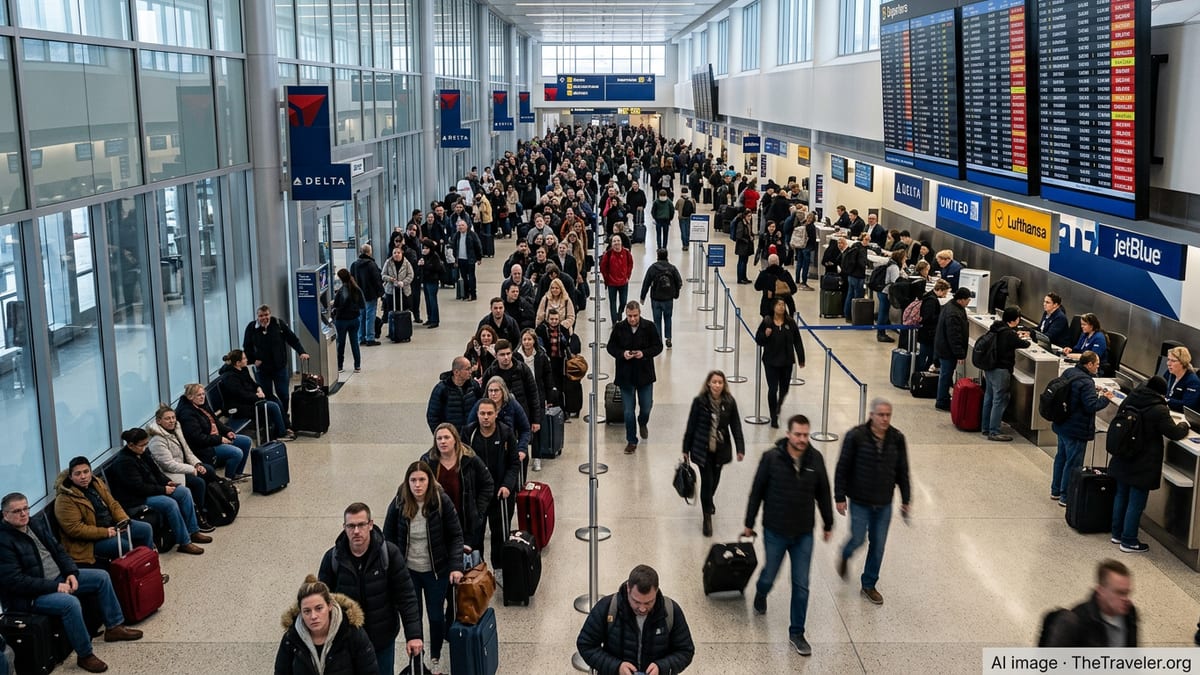
A fresh wave of delays and cancellations at Charleston International Airport is rippling through the U.S. aviation network this weekend, tangling connections at major hubs and adding pressure to an already fragile summer schedule.
Get the latest news straight to your inbox!
Local bottleneck, national impact
Charleston International Airport has seen a cluster of disrupted departures and arrivals on routes linking the South Carolina gateway to major U.S. hubs such as Charlotte, Atlanta, New York and Dallas. Flight status boards and tracking platforms for mid June show multiple services leaving late or being scrubbed entirely, particularly on evening bank departures that are critical for onward connections.
Because many Charleston flights feed into large connecting airports, a cancelled or significantly delayed leg from the city can quickly cascade into missed links across the country. Passengers who should have reached their final destinations in the Midwest, Northeast or on the West Coast are instead facing overnight stays and forced rebookings as aircraft and crews fall out of position.
The timing of the latest disruption is amplifying the effect. Mid June marks the ramp up of the peak U.S. summer travel season, with leisure demand layering on top of regular business traffic. Airlines are operating dense schedules with limited slack in aircraft rotations, meaning that even modest local issues at Charleston can generate outsized knock on effects.
Regional feeders under strain
Publicly available flight data for Charleston indicates that many of the most heavily affected services are operated by regional affiliates flying under major airline brands. These carriers connect Charleston with key hubs such as Charlotte Douglas, Hartsfield Jackson Atlanta, New York area airports and Dallas Fort Worth, where passengers transfer to longer haul domestic and international routes.
When a regional leg into or out of Charleston runs late, the impact often extends far beyond the city pair itself. A missed inbound from Charleston can leave a later departure from a hub airport short of passengers, while a delayed outbound may strand travelers who expected to make tight evening connections to cities across the United States.
Regional operations are particularly sensitive to disruptions because they rely on finely tuned crew schedules and limited spare aircraft. If a single aircraft is held at Charleston due to weather, congestion or a technical check, subsequent flights on that tail number across several states are likely to depart behind schedule, multiplying the inconvenience for travelers well outside South Carolina.
Weather and congestion add to peak season pressure
Thunderstorms and heavy cloud over the South Carolina Lowcountry and along the broader Southeast corridor in recent days have added another layer of complexity. Aviation weather reports around Charleston point to unstable convective conditions, with cumulonimbus clouds and lightning in the vicinity prompting ground stops, reroutes and airborne holding for arriving flights.
Those weather patterns are interacting with congestion at larger hub airports that sit downstream from Charleston traffic. Major connecting gateways, including Charlotte and Atlanta, have themselves reported elevated levels of delays and cancellations in mid June, with busy ramp operations and airspace saturation forcing airlines to meter arrivals and departures.
For Charleston bound flights, this can mean late inbound aircraft and unexpected diversions, which then push back departure times for outbound services. Passengers departing Charleston are encountering aircraft arriving well behind schedule from other parts of the country, followed by extended boarding processes as ground crews work through backed up turns.
Knock on effects for travelers across the U.S.
The disruption pattern linked to Charleston is being felt most acutely by travelers using the city as the first leg of multi segment itineraries. Missed connections at major hubs have led to reroutes through secondary airports, overnight layovers and, in some cases, complete re planning of trips as limited remaining seat availability constrains rebooking options.
Travel forums and social media posts from the past week highlight itineraries that unraveled after a single delayed departure from Charleston. In several cases, passengers reported being re accommodated on next day flights or sent through alternative hubs, turning what should have been same day journeys into multi day odysseys involving hotel stays and lost time at their destinations.
The operational knock on extends beyond individual frustrations. Airlines must reposition aircraft and crews, sometimes flying near empty segments or deadheading staff to restore schedules. Those recovery flights occupy additional slots at already busy airports, adding subtle strain to the national system and leaving less flexibility when the next weather system or technical issue emerges.
What travelers through Charleston can expect now
With summer demand continuing to build, travelers flying into or out of Charleston in the coming days are likely to face tighter margins for on time performance. Publicly available delay tracking tools show that even modest weather fluctuations or ground holds at Charleston or its primary hub partners can quickly translate into measurable schedule slippage.
Same day connections, especially those involving short layovers at major hubs, are currently at heightened risk when originating in Charleston. Passengers with itineraries that require evening transits through busy connecting airports may be particularly vulnerable if late afternoon thunderstorms crop up across the Southeast and Mid Atlantic corridor.
Industry analysts note that the broader U.S. network is operating with limited spare capacity this summer, making it more difficult for airlines to absorb localized issues at airports like Charleston. Until weather patterns stabilize and airlines are able to rebuild operational buffers, disruptions that start at a single regional gateway are likely to keep sending ripples across the national system.