


More news on this day
Railway supply companies are accelerating investment in low-carbon traction, digital signalling and large-scale infrastructure components as rail operators worldwide seek to modernise fleets, cut emissions and expand capacity.
Get the latest news straight to your inbox!
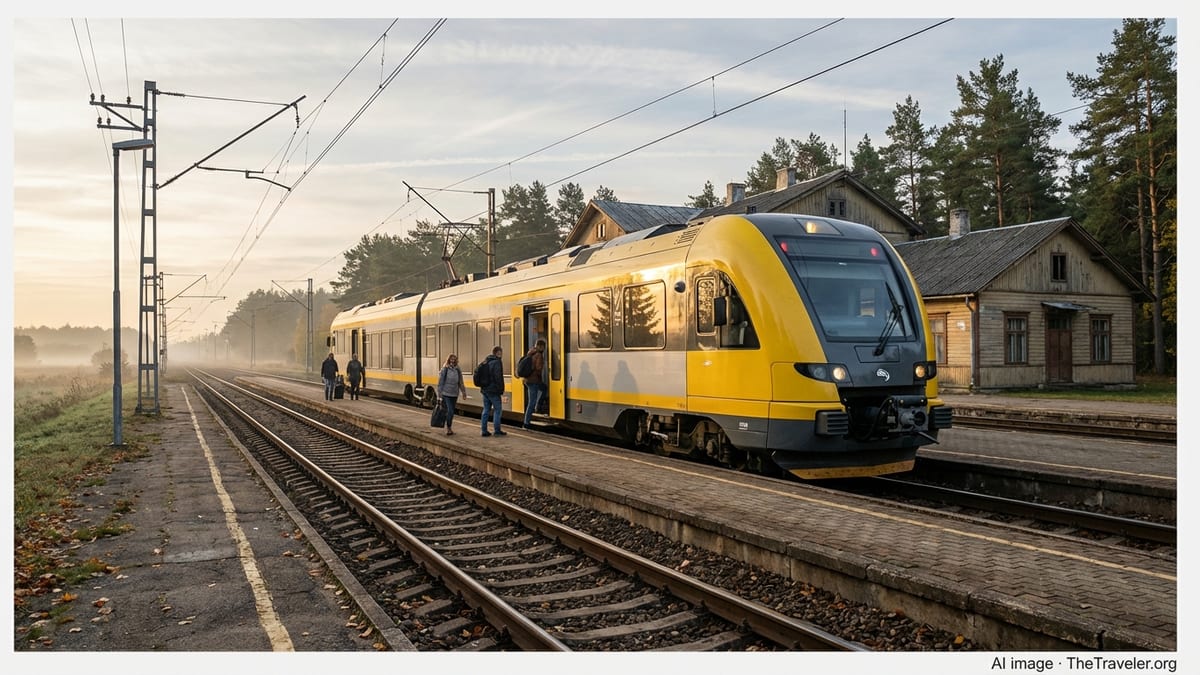
Alternative traction moves from pilot projects to fleet orders
Recent contract activity indicates that alternative traction technologies are moving from demonstration projects into mainstream fleet planning. Publicly available information shows that established manufacturers are broadening their portfolios of battery and hydrogen solutions, while operators focus on replacing diesel trains on non-electrified routes.
In Europe, new framework agreements for dual-mode and battery-equipped locomotives are being promoted as a way to maintain performance on long regional and freight corridors without continuous overhead electrification. Industry announcements highlight locomotives capable of operating on existing wired sections before switching to onboard battery modules on unelectrified stretches, a configuration aimed at reducing fuel consumption and local emissions while limiting the need for new infrastructure.
Alongside locomotives, suppliers are advancing multiple-unit platforms that can be delivered in battery, hydrogen or hybrid variants. These trainsets are being marketed for branch lines and regional services where passenger volumes do not justify full electrification but policy targets require rapid carbon reductions. Market commentary suggests that operators are increasingly seeking options that can be retrofitted or upgraded as technologies mature rather than committing to single-technology fleets.
North American and European policy studies on rail decarbonisation have also raised the profile of battery-electric and hydrogen concepts for freight applications. Research frameworks released over the past two years examine how battery tenders, charging infrastructure and alternative fuels could be deployed across heavy-haul corridors, signalling long-term demand for new traction equipment and energy systems from the supply industry.
Digital signalling contracts underline shift to higher-capacity corridors
Signalling and train-control suppliers continue to secure contracts for the deployment of advanced digital systems on busy passenger corridors. According to published coverage, national and regional infrastructure managers are committing to European Train Control System Level 2 and similar continuous-control platforms to relieve bottlenecks and improve reliability on lines where adding new tracks would be costly or disruptive.
In Australia, recent agreements for the rollout of ETCS Level 2 on core urban and regional corridors are being framed as part of long-term preparations for major international events and expected passenger growth. These projects typically combine on-board equipment, trackside signalling upgrades and integration with next-generation radio systems, creating multi-year pipelines of work for signalling houses and specialist telecoms partners.
Supplier news sites also point to growing interest in formal methods, digital twins and open signalling architectures. Some European infrastructure managers are working with software and verification specialists to translate rulebooks into machine-readable requirements, with the aim of reducing design errors and speeding up approvals for new interlockings. Meanwhile, initiatives promoting modular and open signalling ecosystems are attracting attention from smaller hardware and software firms that see opportunities to enter a market historically dominated by a few large vendors.
On secondary routes and regional networks, digital signalling is being positioned as a way to reduce life-cycle costs while maintaining safety standards. Suppliers are emphasising remote diagnostics, predictive maintenance and cloud-based control platforms, arguing that these tools can help smaller operators manage dispersed assets with limited staffing and budgets.
Major rolling stock and maintenance deals reinforce supplier backlogs
Rolling stock and maintenance contracts signed over recent months underline the strength of order backlogs at leading manufacturers. Company disclosures for Europe and North America reference multi-year agreements covering new trains, life-extension programmes and long-term service support, often bundled into performance-based packages.
In the United Kingdom and other European markets, published contract summaries describe large-scale refurbishment and maintenance programmes for existing regional and commuter fleets. These projects typically include interior upgrades, accessibility improvements and the installation of modern passenger information and safety systems, providing steady revenue for suppliers even as operators plan future fleet renewals.
Passenger operators in markets such as Mexico and parts of Europe are also awarding new-build contracts linked to wider network expansion or high-speed rail development. Recent tender activity reported in specialist media shows that competition remains strong among established suppliers, with some markets requiring a high share of local manufacturing and technology transfer as part of industrial policy goals.
Leasing companies and financial investors continue to play a visible role in rolling stock procurement. Framework agreements between manufacturers and leasing firms for new locomotive and multiple-unit fleets allow operators to access modern equipment with lower upfront capital commitments, while giving suppliers greater visibility on production volumes across several years.
Infrastructure and component suppliers benefit from high-speed and corridor upgrades
The push to expand and modernise high-speed and core intercity corridors is driving significant orders for infrastructure and component suppliers. Reports from industry news outlets highlight contracts for points, crossings, rails and fastening systems on new high-speed lines in northern and eastern Europe, including sections of the Rail Baltica project that will connect Baltic states more directly to the continental network.
Specialist track and turnout manufacturers note that high-speed projects require components engineered for higher axle loads and speeds, as well as integration with sophisticated condition-monitoring systems. These requirements tend to favour suppliers with extensive reference projects and testing facilities, reinforcing the position of established players while leaving room for niche firms providing advanced materials or digital monitoring technologies.
Beyond new construction, corridor upgrade programmes in countries such as Germany, Spain and the United Kingdom are generating demand for ballast, sleepers, overhead line equipment and power systems. Many of these projects are aligned with broader European initiatives to increase cross-border interoperability and shift more freight from road to rail, amplifying the market for signalling upgrades, telecoms systems and electrification components.
In emerging markets, multilateral development financing is helping fund major rail corridors and urban transit lines. This is encouraging global supply companies to deepen local partnerships and manufacturing footprints in regions where future demand for rail infrastructure and rolling stock is expected to grow over the next decade.
Supply-chain resilience and localisation remain strategic priorities
Despite strong order books, the railway supply industry continues to grapple with supply-chain resilience and localisation requirements. Since the pandemic, manufacturers have reported pressures linked to component availability, rising material costs and longer lead times, prompting efforts to diversify supplier bases and standardise components across platforms.
Government policies in North America, Europe and parts of Latin America increasingly require minimum thresholds for local content and domestic assembly, particularly on publicly funded projects. Publicly available tender documentation in countries such as the United States and Mexico shows that bidders are being asked to demonstrate local job creation, technology transfer and sometimes specific percentages of locally sourced materials or components.
These requirements are reshaping investment decisions by major rolling stock and component suppliers. Several manufacturers have expanded or modernised plants in strategic markets to meet local content rules while serving regional export demand. At the same time, some smaller or more specialised firms are forming joint ventures or licensing agreements to access markets where building a full manufacturing base would not be viable.
Analysts following the sector suggest that balancing localisation, cost control and standardisation will remain a central challenge for the railway supply industry. Companies that can deliver modular platforms, interoperable components and robust service support within differing regulatory frameworks are expected to be best positioned as governments continue to view rail as a backbone of sustainable transport policy.