


More news on this day
Rail and environmental crews in Upstate New York are moving from emergency response to long-term recovery after a multi-car freight train derailment disrupted passenger service and local travel across the region.
Get the latest news straight to your inbox!
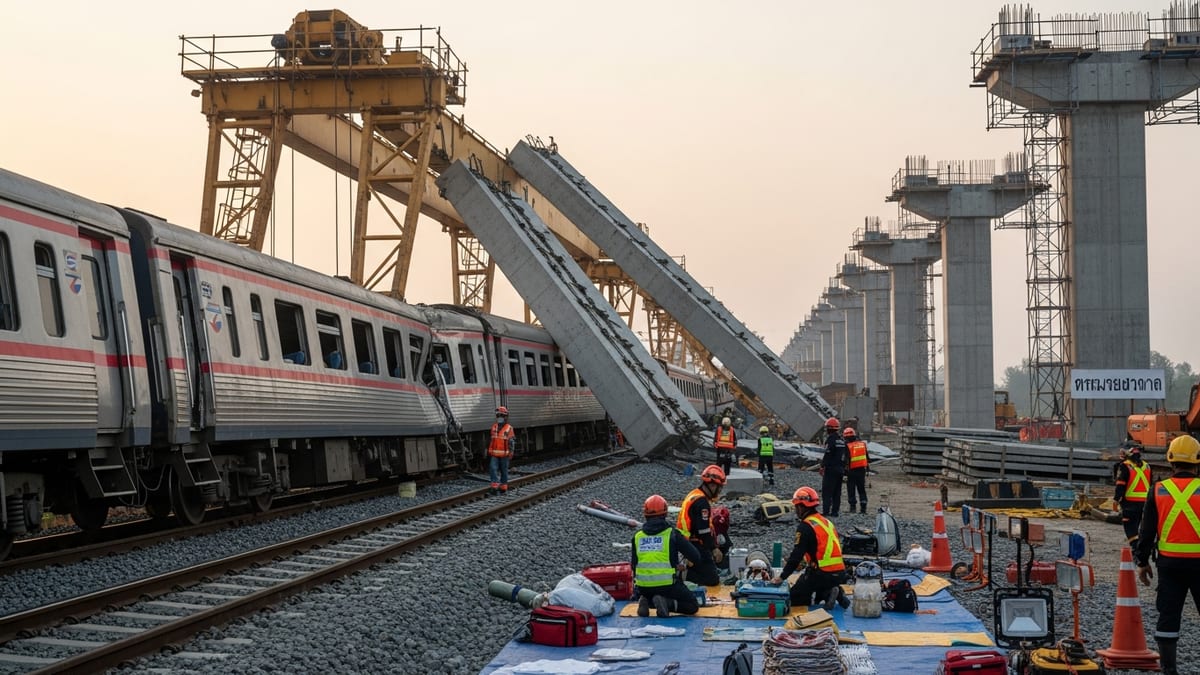
Shift from emergency response to sustained cleanup
Published coverage from regional outlets indicates that the multi-car derailment occurred on a busy freight corridor in Upstate New York, halting passenger rail connections across a key east–west route and triggering an intensive cleanup operation. Initial efforts focused on stabilizing damaged cars, removing debris from adjacent rights-of-way, and securing any hazardous cargo that might have been involved. Early assessments pointed to significant damage to both track and signaling infrastructure, prompting rail operators to suspend or divert several services while the site was made safe for heavy equipment.
In the days since the incident, operations at the crash site have transitioned toward methodical debris removal and track reconstruction. Heavy cranes, excavators, and specialized maintenance-of-way equipment are being used to cut up and lift derailed cars, clear twisted rail, and rebuild the crushed stone ballast that underpins the line. Publicly available information shows that work is continuing around the clock in an effort to restore at least partial rail capacity while maintaining a secure perimeter for workers and nearby communities.
Railroad engineering teams are also reported to be inspecting bridge structures, drainage systems, and overhead lines where applicable, looking for subtle damage that might not have been immediately apparent during the initial response. Those inspections are expected to guide a sequence of phased repairs so that some trains can return to service even as more complex infrastructure work continues in the background.
Travel disruptions ease as rail service slowly returns
The derailment had an immediate effect on travelers, with reports describing widespread cancellations and delays on intercity passenger routes that normally cross Upstate New York. According to published coverage, Amtrak and other passenger operators initially suspended service over the affected segment, turned trains short of the damaged corridor, or arranged bus connections where alternate highway routes were available. Some passengers experienced multi-hour delays or unplanned overnight stays as dispatchers worked to reroute equipment around the blocked line.
As cleanup has progressed, operators have begun to restore limited service through the region using remaining available tracks, siding connections, and detour routes. Schedules remain constrained, however, and riders are being advised through public channels to monitor service alerts closely, expect residual delays, and build extra time into their journeys. Rail advocates note that this corridor is a vital link between western New York communities and Albany and New York City, so even short-term disruptions can echo through the broader network.
Highway travel near the derailment site has also been affected. Local reports describe lane restrictions on nearby roads to accommodate cranes, lowboy trailers, and other heavy equipment involved in the cleanup. In some places, temporary traffic signals and reduced speed limits have been introduced to manage congestion and keep drivers clear of the most active work zones. Transportation agencies are expected to remove those restrictions in stages as rail-side operations wind down.
Environmental monitoring and river protection efforts
Given the proximity of many Upstate rail corridors to rivers, wetlands, and residential neighborhoods, environmental impacts have been a central concern in the aftermath of the derailment. Publicly available information indicates that emergency response teams moved quickly to check for fuel leaks, chemical releases, or cargo spills from damaged cars. In this case, early field reports have not pointed to large-scale contamination, but cleanup crews are continuing to monitor soil and surface water in the vicinity of the wreckage.
State environmental agencies and contracted specialists are reported to be collecting samples downstream and downwind of the derailment to establish whether any diesel, lubricants, or other materials have entered nearby waterways. Absorbent booms, portable containment pools, and vacuum trucks are on standby where rail lines approach streams or culverts, a standard practice when wreckage must be cut and lifted close to moving water.
Even if hazardous materials are not a primary factor in the incident, the physical footprint of the derailment can still influence local ecosystems. Heavy equipment operating over soft ground may compact soils and disrupt vegetation, while spilled cargo can alter drainage patterns if not removed promptly. Cleanup plans typically include regrading disturbed areas, replacing contaminated ballast, and reseeding embankments to limit erosion once the primary rail repairs are complete.
Infrastructure repairs and rail safety scrutiny
Engineers working along the damaged corridor are now focused on rebuilding the infrastructure needed to safely carry full freight and passenger loads. According to technical briefings released in similar derailments, this process usually begins with reconstructing the rail bed and replacing destroyed crossties, followed by installing new continuous welded rail and resetting signaling and communications equipment. Crews then perform a series of geometry tests using specialized inspection vehicles to check for alignment issues before trains are cleared to operate at normal speeds.
Rail companies commonly coordinate with federal and state regulators during this phase to ensure that the rebuilt track meets or exceeds current safety standards. That collaboration often includes additional ultrasonic rail inspections, monitoring of wheel impact loads, and checks on wayside detectors that can flag overheating bearings or dragging equipment. Although the precise cause of the Upstate New York derailment is still under investigation, past incidents in the region have prompted renewed attention to preventative maintenance and detector spacing along busy freight routes.
Public discussion following the derailment has also revived broader questions about the resilience of long-distance passenger service across Upstate New York. Advocates for rail investment argue that providing more double-track segments, sidings, and alternate routings could make the system more flexible when a single corridor is taken out of service. Those changes would likely require significant capital funding but could reduce the scale of disruption from future accidents, severe weather, or infrastructure failures.
Community impact and what travelers should watch next
For communities along the affected line, the derailment has been both a logistical challenge and a reminder of the close relationship between rail infrastructure and daily life. Local news accounts describe residents adapting to the steady presence of cranes, generators, and floodlights near their homes, along with the temporary quiet that comes when a normally busy rail line falls silent. Businesses that depend on passing rail passengers, such as cafes and hotels near stations, may see short-term declines in foot traffic while schedules remain limited.
Travelers planning trips through Upstate New York in the coming days are being encouraged, through publicly available advisories, to check their train status carefully and to be prepared for bus substitutions or altered departure times. Flexibility with seat reservations and connections can help mitigate the risk of missed onward travel, particularly for those linking to long-distance services beyond Albany or New York City. Some riders may opt for interim alternatives such as regional flights or intercity bus routes until rail timetables fully stabilize.
While it remains too early to pinpoint a firm date for complete restoration of normal operations, the pace of debris removal and track work suggests that conditions are gradually improving. Continued updates from rail operators and transportation agencies are likely to clarify which trains will return first, how long speed restrictions will remain in place, and what further infrastructure upgrades might follow as a longer-term response to the derailment.