


More news on this day
Network Rail has apologised to passengers travelling to and from Gatwick Airport after the discovery of sinkholes near a railway bridge in south London forced the suspension of services to the airport and Brighton, causing significant disruption for weekend travellers.
Get the latest news straight to your inbox!
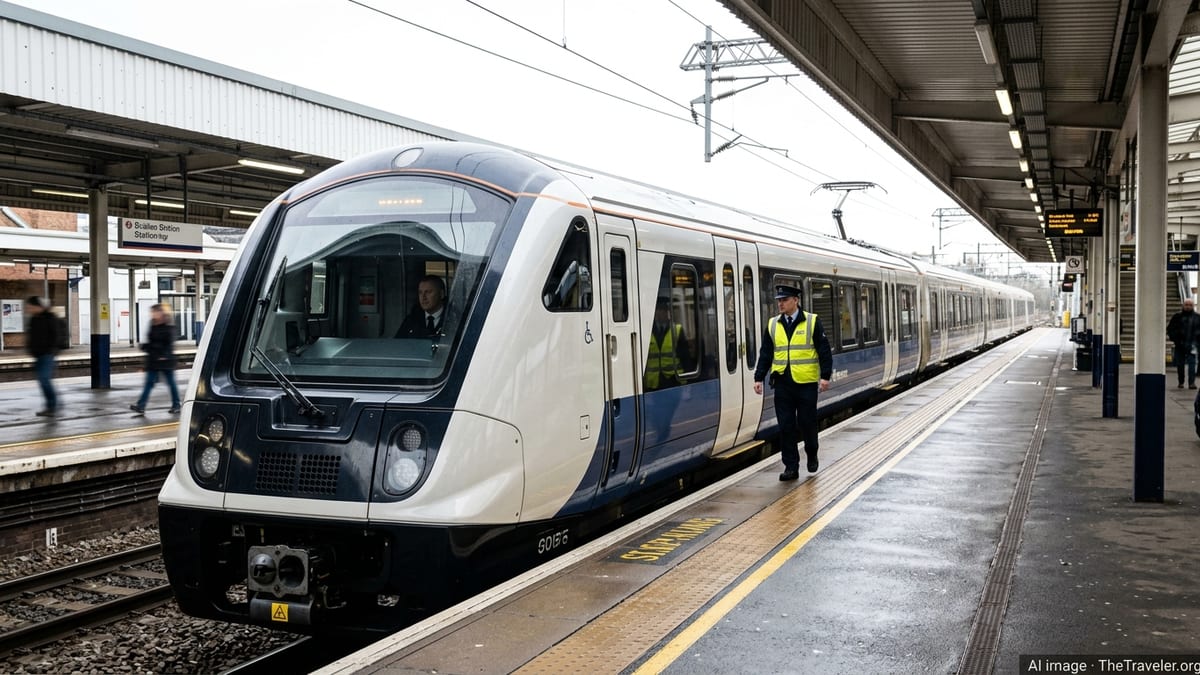
Sinkholes near Purley bridge force emergency line closures
Reports indicate that the sinkholes were identified close to a railway bridge in the Purley area, on the busy Brighton Main Line between East Croydon and Gatwick Airport. For safety reasons, all lines through the affected section were taken out of use while engineers and structural specialists were called in to carry out urgent inspections.
The closures meant that no trains could operate between Purley and East Croydon, severing one of the principal rail corridors linking central London with Gatwick Airport and the south coast. Services normally operated by Southern, Thameslink, Gatwick Express and other operators were either cancelled outright or diverted away from the route, leading to extended journey times and crowding on alternative lines.
Network Rail stated publicly that the decision to stop trains was taken as a precaution while the stability of the ground and the bridge structure is assessed. Initial assessments focused on determining the extent of the voids in the earthworks and whether further movement might threaten the tracks, overhead structures or nearby assets.
According to passenger accounts shared on social media and travel forums, some travellers were held on stationary trains for extended periods before services were turned back or terminated short of their destination. Others reported being advised to leave trains and seek replacement buses or alternative routes via nearby stations.
Gatwick and Brighton passengers face severe disruption
The suspension of services through Purley had an immediate impact on rail access to Gatwick Airport, a critical international hub for leisure and business travel. With direct links from London Victoria, London Bridge and other key hubs cut or severely reduced, passengers heading to the airport were urged to allow substantially more time for their journeys or to consider alternative transport.
Service update pages from train operators showed widespread cancellations affecting Gatwick Express services, as well as Southern and Thameslink trains that normally run through the corridor to Brighton and along the south coast. Some trains were able to start or terminate at alternative stations away from the affected section, but capacity on those routes was limited.
Airport-bound passengers posting online described missed check-in windows, last-minute changes to travel plans and long queues for rail replacement buses and taxis. Others reported being advised to travel via circuitous routes using other operators or to connect through stations such as Dorking, Redhill or Three Bridges where onward services remained available.
Travel information made clear that delays could run to several hours for some journeys, particularly for those attempting to reach Gatwick during busy weekend periods. Passengers were reminded that they may be eligible for compensation under existing delay-repay schemes, depending on the length of their delay and the type of ticket held.
Network Rail issues apology as engineers assess damage
In statements shared through official channels, Network Rail apologised for the disruption and inconvenience caused to passengers using the Brighton Main Line, especially those trying to reach Gatwick Airport or connections on the south coast. The organisation said the safety of passengers and staff remained its overriding priority while the sinkholes and bridge were being assessed.
Engineers were reported to be on site carrying out detailed examinations of the ground conditions, including surveys of the embankments and bridge foundations. Such work typically involves geotechnical investigations to determine whether water ingress, soil erosion or failures in nearby drainage or utility infrastructure may have contributed to the formation of the sinkholes.
Rail industry reports note that the affected stretch of line is one of the most intensively used in the United Kingdom, with a mix of fast airport services, commuter trains and long-distance services sharing the same tracks. Any significant infrastructure issue on this section can therefore have wide-ranging knock-on effects, leading to cancellations and timetable changes across multiple routes.
Network Rail has indicated that services will only resume once structural engineers are satisfied that the bridge and surrounding ground are stable and that running trains is safe. Until that point, operators have been asked to keep reduced or diverted timetables in place, and passengers are being advised to check live journey planners before setting out.
Knock-on effects for the wider Brighton Main Line
The sinkholes near Purley come at a time when passengers on the Brighton Main Line have already faced a series of planned and unplanned disruptions. Recent months have seen emergency engineering works near Salfords, as well as landslip repairs and essential maintenance south of Gatwick, all of which have required temporary closures or reduced services.
Industry analysis highlights that the line is particularly sensitive to infrastructure failures because there are few viable diversionary routes capable of handling the same volume of traffic. When a key section is closed, operators often have little choice but to cancel services, implement bus replacement links and re-route limited numbers of trains via longer paths.
For travellers, this means that airport journeys which are normally straightforward can quickly become unpredictable. Travel forums and passenger groups have long warned that those with early or time-critical flights should build extra contingency into their plans when using rail links to Gatwick, especially during periods of bad weather or known engineering activity.
The latest disruption is likely to renew scrutiny of the long-term resilience of the Brighton Main Line and its supporting structures, including embankments, cuttings and bridges in densely built-up parts of south London and Surrey. Questions are also being raised about how climate-related factors such as heavy rainfall and changing groundwater patterns may be affecting older infrastructure.
Passenger advice and what happens next
Train operators are advising anyone planning to travel between London, Gatwick Airport and Brighton to check live departure boards and journey planners on the day of travel, as timetables are subject to rapid change while inspections continue. Travellers with flexible plans are being encouraged to consider different days or times, or to use coach and road options where practical.
Passengers already holding rail tickets for affected services are generally being allowed to use them on alternative routes, including some services run by other operators, although exact arrangements vary by company and time of day. Replacement buses are being used on certain sections where road access allows, but capacity is limited and journey times can be significantly longer than by rail.
Once engineers complete their assessment of the sinkholes and the bridge at Purley, Network Rail is expected to set out a programme for stabilisation works and, if required, more extensive repairs. Depending on the findings, this could range from relatively swift infilling and reinforcement through to more complex remediation that might require extended closures or speed restrictions.
Until a clear picture emerges, passengers heading for Gatwick are being repeatedly urged to allow additional time, to prepare for crowding on remaining services and to monitor operator updates closely. For many travellers, the incident serves as a reminder of how vulnerable crucial airport rail links can be to sudden infrastructure failures, even on lines that form part of one of the country’s most important transport corridors.