


More news on this day
Rail service has resumed on the Eureka railroad line after a derailment temporarily shut the corridor, with repairs, safety checks and modified operations restoring a key connection for freight and travelers in the region.
Get the latest news straight to your inbox!
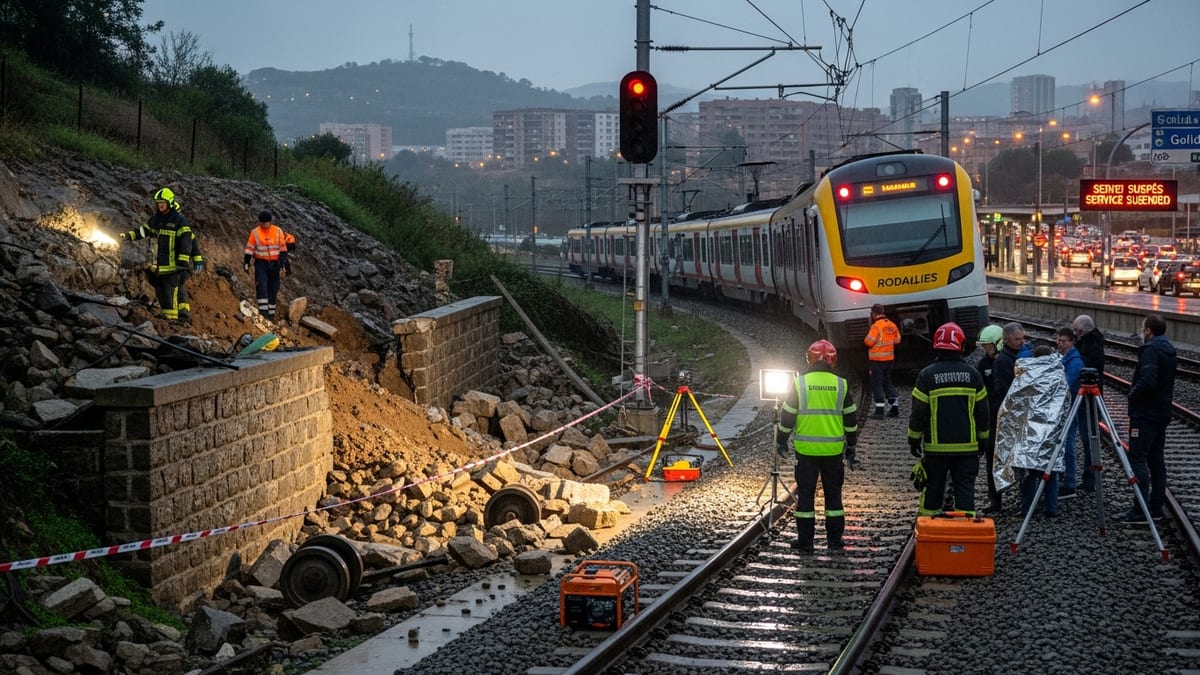
Service resumes following days of disruption
Train movements on the Eureka corridor have restarted after a derailment blocked the line, forcing a suspension of service while crews cleared damaged cars and repaired track infrastructure. Publicly available information indicates that the incident involved a freight consist, with railcars leaving the tracks and obstructing a section of line near a key junction.
During the outage, rail traffic was rerouted where possible and, on some connecting services, replaced by buses and altered schedules. Regional and local transit agencies reported delays and crowding on parallel road corridors as travelers shifted to highways while the rail line remained closed.
Reports indicate that trains are now running again through the affected area, although operating patterns have been gradually phased back in. Early runs focused on moving stranded equipment and restoring time-sensitive freight, followed by a return to more typical timetables once inspections and tests were complete.
The reopening restores a link that has long played an outsized role for a relatively remote coastal region. Even limited rail traffic helps relieve pressure on highways that face frequent congestion, steep grades and seasonal weather-related closures.
Track repairs and safety inspections underpin reopening
According to published coverage of the derailment and its aftermath, the rail corridor remained closed while repair teams removed derailed cars, replaced damaged ties and rail, and reconstructed affected ballast and drainage. In some locations, heavy equipment was required to stabilize embankments and verify that ground conditions were suitable for the return of traffic.
Before the line could reopen, track specialists conducted geometry testing, rail integrity checks and visual inspections along the damaged segment and adjacent approaches. These steps are standard following a derailment and are intended to confirm that alignment, gauge and rail condition meet federal and company standards before trains are permitted to operate.
Initial operations through the repaired segment are taking place at reduced speeds, reflecting a cautious approach while the rebuilt track bed settles and monitoring continues. Available technical guidance shows that railroads typically collect additional data over the first days of service and may adjust speed limits as confidence in the repairs grows.
The incident has also drawn renewed attention to wayside detection, track condition monitoring and inspection intervals on older infrastructure. Industry analyses often highlight coastal and river-adjacent rail lines, such as those serving the Eureka area, as particularly vulnerable to heavy rain, erosion and soil movement.
Freight flows restart as operators adjust logistics
The reopening of the line is especially significant for freight operators that rely on the corridor to move commodities, manufactured goods and agricultural products. During the closure, trains were either held short of the affected area or rerouted onto longer and more congested paths, adding time and cost to supply chains.
Rail industry reports indicate that restoring even partial capacity can ease those bottlenecks, allowing carriers to clear backlogs and reduce the number of out-of-position locomotives and railcars. In some cases, priority has been given to time-sensitive loads such as perishable goods and materials needed for ongoing industrial operations.
Shippers in the wider region have faced a series of transportation challenges in recent years, including highway closures from storms and landslides, fluctuating fuel prices and shifting long-haul trucking capacity. The temporary loss of rail service underscored how dependent coastal communities remain on a small number of critical corridors into and out of Eureka.
While the line is back in service, logistics planners are expected to maintain contingency arrangements for alternative routing and mode shifts, reflecting the broader trend toward building redundancy into transport networks that traverse geologically complex terrain.
Community impact and travel patterns during the shutdown
The derailment and resulting closure rippled through the Eureka area, affecting both passenger travel options and local perceptions of rail safety. Although the corridor primarily serves freight, travelers who connect to wider rail networks via regional services experienced altered timetables, longer journeys and increased reliance on bus connections.
Local news and social media posts during the disruption highlighted heavier traffic on main highways and downtown streets, particularly at peak times. Some riders reported extending their travel windows by several hours to account for congestion and uncertainty on replacement services.
For residents living close to the tracks, the sudden silence of trains during the closure was followed by a noticeable, if gradual, return of rail noise and activity once the line reopened. Community commentary reflects a mix of relief at restored connectivity and concern about the risk of future incidents along a corridor that runs near neighborhoods, waterways and recreational areas.
The episode has also sparked discussion about longer-term transportation options along the North Coast, including the balance between freight rail, potential passenger or excursion services, and expanded bus or shuttle networks designed to backstop the region when a single mode is interrupted.
Investigation focuses on cause and future safeguards
An investigation into the cause of the derailment is underway, with publicly available information indicating that analysts are reviewing train handling, track condition, signaling and equipment performance in the moments leading up to the incident. Inquiries of this kind typically draw on data recorders, inspection logs, maintenance records and physical evidence from the site.
Depending on the findings, the incident could lead to additional restrictions on train speeds, changes to inspection protocols, or infrastructure projects aimed at strengthening vulnerable sections of the corridor. In similar cases elsewhere, railroads have installed additional monitoring equipment, upgraded track components and refined operating rules for trains carrying heavy loads.
Residents along the line, community organizations and transportation advocates are watching the process closely, with particular interest in how lessons from the incident will be applied. The resumption of service has brought near-term relief, but the longer-term question for many in and around Eureka is how the line can be made more resilient in the face of aging infrastructure, extreme weather and growing freight demands.
For now, the reopened route restores a vital link for the North Coast, even as the derailment serves as a reminder of how quickly a single incident can reshape travel and trade patterns for an entire region.