


Premium airport lounges used to be the domain of first class tickets and frequent flyer elites. Today, travelers with the right credit card can access some of the most comfortable spaces in the terminal, complete with chef-designed menus, craft cocktails, showers, and quiet work areas. Two of the most coveted options are the Chase Sapphire Lounge by The Club network and the American Express Centurion Lounge network. Both raise the bar on airport comfort, but they are built around different cards, rules, and traveler profiles. Understanding those differences is key to deciding which service belongs in your wallet.
Get the latest updates straight to your inbox!
Where You Will Actually Find These Lounges
When you are standing at the departures board in Atlanta or Hong Kong, the most important question is simple: is there a lounge here I can actually use? American Express currently has one of the largest proprietary premium networks, with more than two dozen Centurion Lounges and Centurion Studio locations worldwide, including major U.S. hubs like Dallas Fort Worth, Miami, Las Vegas, Denver, Seattle, Los Angeles, and New York LaGuardia, plus international outposts in London Heathrow, Hong Kong, and Sydney. In Atlanta, for example, Amex operates a large space in Concourse E that has quickly become a favorite for long international layovers.
Chase’s Sapphire Lounge by The Club network is newer and smaller, but targeted at high-traffic hubs and growing quickly. As of mid‑2026, you will find Sapphire Lounges in locations such as New York JFK Terminal 4, Boston, Austin, New York LaGuardia Terminal B, Philadelphia and a flagship in Hong Kong, with additional sites announced in cities like Las Vegas and Phoenix. At JFK, the Sapphire Lounge by The Club with Etihad Airways sits airside in Terminal 4, convenient for many international departures.
Coverage beyond these branded spaces looks different too. The Sapphire Reserve card that underpins Chase’s lounge access includes a Priority Pass Select membership that gets you into more than 1,300 partner lounges worldwide, ranging from independent lounges to airline-affiliated spaces in airports like Cancun, Istanbul, or Zurich. By contrast, American Express leans on its Global Lounge Collection, which ties Amex Platinum and Centurion cards into partner networks like Delta Sky Clubs when flying Delta, Plaza Premium lounges in many international airports, and select Escape Lounges in smaller U.S. markets.
In practical terms, if you are a U.S.-based traveler who frequently flies through airports like Miami, Dallas, Denver, or San Francisco, you will encounter Centurion Lounges more often. If your travel pattern takes you through Hong Kong, Boston, New York, and a wide mix of secondary international hubs, the combination of Sapphire Lounges plus the broader Priority Pass network can provide more day-to-day coverage.
How You Get In: Cards, Guests, and Time Limits
Access rules are where many travelers get tripped up, and they differ sharply between Chase Sapphire and Amex Centurion lounges. For Chase, the key product is the Chase Sapphire Reserve card. Primary cardmembers and authorized users receive complimentary access to all Chase Sapphire Lounges by The Club and a Priority Pass Select membership. You can typically enter a Sapphire Lounge up to three hours before a departing flight, show your physical Sapphire Reserve or your digital Priority Pass card, and bring up to two guests at no additional charge, with extra guests generally around 27 dollars per person depending on the specific lounge policy.
American Express takes a more tiered approach. To enter a Centurion Lounge, you generally need The Platinum Card from American Express, the Business Platinum, or the ultra‑exclusive Centurion Card. With these cards, you show your eligible Amex card, same‑day boarding pass, and government ID. In recent years, Amex has tightened its guest rules to address overcrowding. Many Platinum cardholders no longer get free adult guests by default and instead pay a per‑visit guest fee, unless they meet specific annual spending thresholds on the card. For example, a frequent traveler flying from Dallas to Los Angeles with a Platinum card may enter the DFW Centurion Lounge at no charge but pay extra to bring a partner and children if they do not qualify for complimentary guests.
There is also a subtle but important distinction in who else can get in. Chase allows non‑Chase Priority Pass members one complimentary visit per calendar year to most Sapphire Lounges, with subsequent visits charged at a higher fee and access subject to capacity. In practice, that means a traveler holding a Capital One Venture X or another bank’s Priority Pass can often sample a Sapphire Lounge at JFK or Boston once a year. Centurion Lounges, by contrast, are essentially closed to non‑Amex cards; you cannot buy a simple day pass or enter with Priority Pass alone.
On timing, both brands focus on departing passengers, but the details can matter. Sapphire Lounges typically restrict entry to within three hours of departure, although some locations may admit travelers on longer international layovers. Centurion Lounges apply similar three‑hour rules at many airports and in some cases will no longer allow entry on arrival only, especially at crowded hubs. For a traveler landing early into Miami and connecting later to the Caribbean, that can be the difference between a long, comfortable shower stop and being turned away at the door.
Inside the Lounges: Design, Food, and Amenities
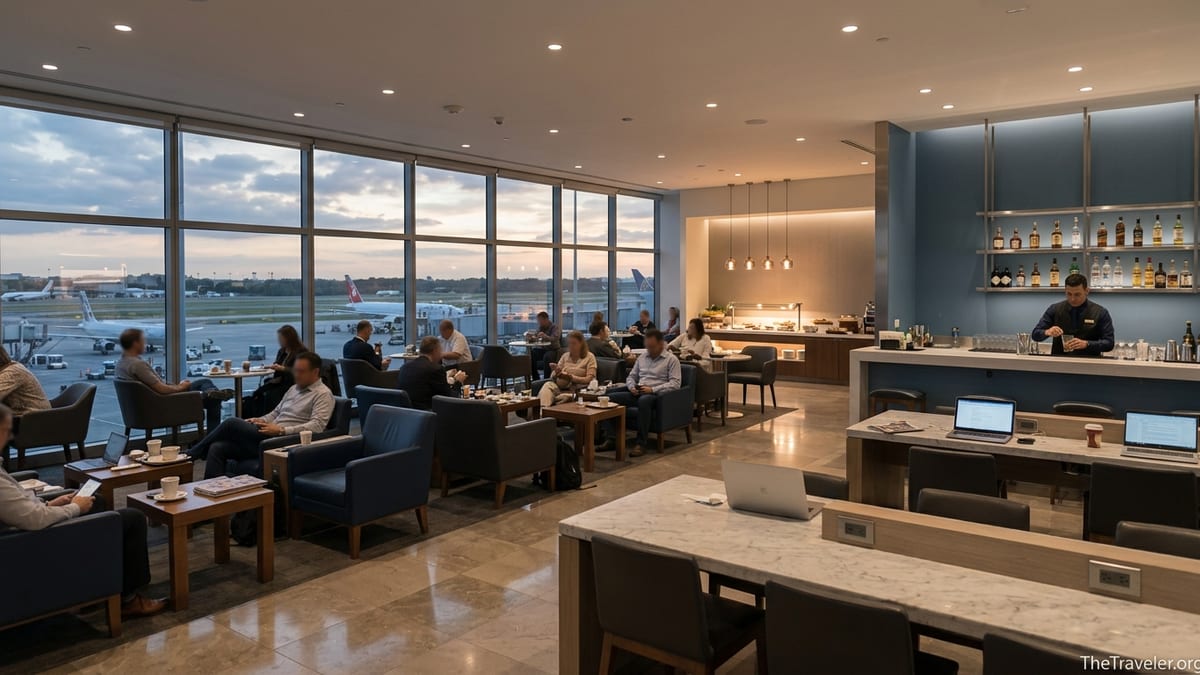
Once you are through the door, both networks aim to feel a clear step above the average contract lounge. Centurion Lounges are known for a consistent design language that mixes subdued lighting, art installations, and comfortable seating zones. Many locations feature full hot buffets with regionally inspired dishes, such as Tex‑Mex options in Dallas or Cuban‑influenced plates in Miami, along with a staffed bar offering complimentary cocktails created by well‑known mixologists. Several lounges, including those in Miami and Seattle, include shower suites and quiet work areas with plenty of power outlets.
Chase Sapphire Lounges by The Club lean into a slightly different aesthetic, often with darker woods, mood lighting, and generous natural light where architecture allows. At JFK Terminal 4, for instance, the Chase Sapphire Lounge with Etihad features a separate dining room with made‑to‑order dishes, a full bar pouring local craft beers and premium spirits, and quiet corners that feel more like a boutique hotel lobby than an airport. Some Sapphire Lounges add family rooms, wellness spaces, and dedicated work pods, while still offering essentials such as Wi‑Fi, charging ports, and a mix of armchairs and communal tables.
In terms of food quality, both services typically outperform the average Priority Pass or airline lounge. Travelers regularly report that Centurion Lounges provide one of the better hot buffet spreads in the U.S. market, especially during dinner hours. Sapphire Lounges, being newer, often highlight made‑to‑order options and elevated snacks; for example, in Boston you might order a freshly prepared grain bowl or a slider plate rather than relying solely on pre‑packaged sandwiches. Drinks policies are broadly comparable, with complimentary wine, beer, and cocktails in both networks, though centurion bars can feel livelier at hubs like Las Vegas or New York.
Shower access, nap or wellness rooms, and family spaces can be decisive for long‑haul travelers. Both networks include showers in many of their larger locations, such as Atlanta for Amex and Hong Kong for Chase. If you frequently fly overnight from the West Coast to Europe, the ability to land, clear security for a connection, and grab a shower in a Centurion Lounge at London Heathrow or a Sapphire Lounge in Hong Kong before the next leg can materially improve how you feel on arrival.
Overcrowding, Waitlists, and Real‑World Experience
A premium lounge is only valuable if you can use it when you need it. Both Chase and American Express have faced overcrowding at peak times, but the severity varies by airport and network. Centurion Lounges at major hubs like Denver, Dallas Fort Worth, and Charlotte can experience long entry lines during morning and evening banks of departures, especially on Mondays and Thursdays. Travelers frequently report waitlists, with staff texting guests once space opens up. It is not unusual for a business traveler leaving Denver on a 6 p.m. flight to find a 30‑minute wait for the Centurion Lounge on a busy day.
Sapphire Lounges, being fewer and newer, currently tend to feel less crowded on average, though capacity constraints are still real at compact locations like Boston and LaGuardia. During peak holiday periods, Chase has publicly noted that Sapphire Lounges prioritize entry for cardholders over general Priority Pass members, so a traveler entering on a non‑Chase Priority Pass may be turned away even while a Sapphire Reserve cardholder is admitted. At Philadelphia’s connector lounge between Concourses D and E, for instance, signage and staff reinforce that Chase cardholders are admitted first when the lounge is near capacity.
In practice, if you routinely travel through airports served by both networks, the Centurion Lounge is more likely to have an established crowd pattern you can plan around. Business travelers often adjust their habits accordingly, arriving at Miami earlier for breakfast to avoid the late‑morning rush or ducking into a quieter partner lounge when the Centurion waitlist looks long. For Sapphire Lounges, many travelers are still discovering them, which can translate into quieter mid‑day periods and a higher chance of finding an empty armchair with a power outlet.
Another real‑world difference lies in staffing and service style. Centurion Lounges often feel more like a busy upscale restaurant at peak meal times, with bar staff and attendants hustling to clear plates and pour drinks. Sapphire Lounges, which sometimes feature more spaced‑out seating and smaller footprints, can feel calmer, closer to a boutique hotel club floor. Which you prefer will depend on whether you value energy and buzz or peace and quiet before a flight.
The Cards Behind the Lounges: Costs and Value
Because access is tied to specific credit cards, your choice between Sapphire and Centurion lounges is ultimately a choice between ecosystems. The Chase Sapphire Reserve typically carries a high annual fee, but offsets it with a substantial annual travel credit, broad travel protections, and strong earning on travel and dining purchases. For a traveler who spends heavily on airfare, hotels, and restaurants, it is not hard to recoup the effective net fee, especially if they regularly use the included Priority Pass membership and Sapphire Lounges on trips.
The American Express Platinum, the main gateway to Centurion Lounges for most people, usually has an even higher annual fee but is packed with statement credits for airline incidentals, rideshare or transit, digital entertainment, hotel elite status, and more. Many of these credits are valuable only if you actively use specific partners and services. For example, a traveler based in New York who frequently uses rideshare services and books stays with Amex Fine Hotels & Resorts may extract outsized value from Platinum’s credits and benefits, making Centurion Lounge access feel like a powerful bonus.
On the earning side, Chase Ultimate Rewards points from the Sapphire Reserve are particularly flexible for travelers who prefer cash‑like redemptions or transfers to airline and hotel partners across different alliances, including United, Air Canada, British Airways, and Hyatt. Amex Membership Rewards points shine for travelers who are comfortable with a more complex partner ecosystem and who value transfers to airlines like Delta, ANA, and Singapore Airlines. Your preferred airlines and redemption style can therefore be as important as the lounge network in deciding which card to prioritize.
Another factor is how often you need to bring others with you. Sapphire Reserve’s ability to include two guests at no additional charge every time you enter a Sapphire Lounge can be decisive for families or couples who travel together multiple times a year. A family of four departing from Boston for a spring break trip, for instance, can settle into the Sapphire Lounge with two adults, two kids, and no guest fees as long as one adult holds the Reserve card and the policy remains in place. At Centurion Lounges, guest access may be more tightly restricted and fee‑based for many Platinum cardholders, so bringing the same family may involve extra out‑of‑pocket cost.
Which Service Fits Which Type of Traveler
For the frequent U.S. business traveler who spends much of their time transiting domestic hubs like Dallas, Denver, Charlotte, and Miami, an American Express Platinum card with Centurion Lounge access often delivers the most consistently premium experience. These travelers tend to value fast Wi‑Fi, reliable hot food between meetings, and access to a strong airline and hotel transfer ecosystem. If their home airport has a Centurion Lounge, that becomes a natural default stop on most trips.
By contrast, the globally minded traveler who values flexibility across airlines and spends heavily on general travel and dining may find the Chase Sapphire Reserve and its lounge access more compelling. Consider a traveler based in Boston who flies JetBlue to the Caribbean, Air France or KLM to Europe, and Cathay Pacific to Asia over the course of a year. With Sapphire Reserve, they can use the Boston Sapphire Lounge before the transatlantic flight, tap into Priority Pass lounges in smaller Caribbean airports, and visit the Chase Sapphire Lounge in Hong Kong on the way home, all tied to a single card.
Families and occasional vacationers will want to look closely at the total package. If you travel three or four times a year, mainly for leisure, the question is not just “which lounge looks nicer,” but “which card’s annual fee, credits, and lounge policies make sense for my pattern.” A couple in Chicago who travels once a year to Las Vegas and twice to Florida might find that Amex Platinum’s mix of credits, Centurion Lounge access in Las Vegas and Miami, and partner lounges elsewhere justifies the fee. On the other hand, a West Coast family who alternates between Hawaii, Mexico, and Asia may prefer the combination of Sapphire Lounges and Priority Pass access that comes with the Sapphire Reserve.
Finally, your tolerance for complexity matters. The Amex ecosystem can be extremely rewarding if you keep track of monthly credits, airline fee rules, and transfer bonuses. Chase’s Sapphire Reserve structure tends to be somewhat simpler: a clear annual travel credit, straightforward multipliers on common travel categories, and a single Priority Pass membership that opens many doors worldwide, including repeated access to Sapphire Lounges for the primary cardholder and authorized users.
The Takeaway
Chase Sapphire Lounges by The Club and American Express Centurion Lounges occupy the same rarefied space in the airport world: both offer significantly better food, drinks, and work conditions than the average contract lounge, and both are tied to premium credit cards that come with high annual fees and rich rewards ecosystems. The choice between them is less about which network is objectively “better” and more about which one lines up with where and how you travel.
If your itinerary often runs through airports where Centurion Lounges are already well established, and you can reliably extract value from Amex Platinum’s many statement credits and partner perks, the Centurion network is likely to feel like an indispensable part of your travel routine. If you prize a strong mix of domestic and international coverage via Priority Pass, appreciate the guest‑friendly policies at Sapphire Lounges, and prefer Chase’s approach to travel rewards, then the Sapphire Reserve ecosystem may be the better fit.
In many ways, the ideal scenario for frequent travelers is access to both networks through different cards, allowing you to choose the quieter or better‑located lounge at a given airport. For most people, though, starting with one premium card and its associated lounge access is more realistic. By mapping your typical routes, understanding each network’s locations and rules, and weighing the total value of the underlying card, you can decide with confidence whether the blue Sapphire door or the brushed‑metal Centurion plaque should be your go‑to escape from the terminal.
FAQ
Q1. Do I need a specific credit card to access a Chase Sapphire Lounge or an Amex Centurion Lounge?
Yes. Chase Sapphire Lounges are designed primarily for Chase Sapphire Reserve, J.P. Morgan Reserve, and certain legacy Chase cardholders, while Amex Centurion Lounges generally require an American Express Platinum, Business Platinum, or Centurion Card. Some Sapphire Lounges also admit Priority Pass members once per year, subject to capacity, but Centurion Lounges do not accept Priority Pass alone.
Q2. Which network has more lounge locations right now, Chase Sapphire or Amex Centurion?
American Express currently operates more Centurion and Centurion Studio lounges worldwide than Chase has Sapphire Lounges by The Club, with a particularly strong presence in major U.S. hubs. Chase’s Sapphire network is smaller but expanding, and Sapphire Reserve cardholders can also access more than a thousand additional lounges through Priority Pass.
Q3. Can I bring guests into Chase Sapphire and Amex Centurion Lounges for free?
Often, but policies differ. Chase Sapphire Reserve cardholders typically can bring up to two guests into Sapphire Lounges at no extra cost, while additional guests pay a fee. Amex Platinum and similar cardholders may have more limited complimentary guest privileges at Centurion Lounges and often pay a per‑person fee for extra guests unless they meet specific spending thresholds.
Q4. Are food and drinks really free inside these lounges?
Yes, both Chase Sapphire and Amex Centurion Lounges include complimentary food and non‑alcoholic beverages, along with a selection of complimentary wine, beer, and cocktails. Some premium spirits or specialty items may carry a charge, but most travelers find they can comfortably eat and drink without paying extra once inside.
Q5. Can I buy a day pass if I do not have the right credit card?
Access via day pass is limited. Certain Chase Sapphire Lounge locations occasionally sell walk‑in passes when space allows, sometimes around the price of a mid‑range restaurant meal at the airport. Centurion Lounges, however, generally do not sell day passes and are reserved for eligible American Express cardmembers and their guests.
Q6. Which is better for international travel: Chase Sapphire or Amex Centurion Lounge access?
For pure lounge count overseas, Chase Sapphire Reserve paired with Priority Pass often offers more total options, including independent lounges across Europe, Asia, and Latin America, plus flagship Sapphire Lounges in places like Hong Kong. Amex Centurion Lounges are present in select international hubs and work best when combined with the broader American Express Global Lounge Collection, which includes partner lounges and airline‑specific options.
Q7. How early before my flight can I enter these lounges?
Both networks commonly apply a three‑hour rule before scheduled departure, though enforcement can vary by airport and lounge. Some locations may permit earlier entry for long‑haul international flights or tight connections, while others strictly enforce the time limit to control crowding. It is wise to check the specific lounge’s published rules before you arrive.
Q8. Are showers and quiet work areas available in both networks?
Yes, many larger Centurion and Sapphire Lounges offer shower suites, quiet zones, and dedicated workspaces with ample power outlets and Wi‑Fi. Availability depends on the specific location, so at smaller lounges you might find only basic seating and food, whereas major hubs are more likely to include showers and business amenities.
Q9. If I already have Priority Pass from another card, do I still benefit from getting a Chase Sapphire Reserve?
Often yes. While many cards offer Priority Pass, Sapphire Reserve integrates that membership with unlimited access to Sapphire Lounges for the primary cardholder and authorized users, plus guest privileges. In addition, Sapphire Reserve’s travel credits, protections, and bonus earning may justify carrying it even if you already hold another Priority Pass‑issuing card.
Q10. For a traveler who flies only a few times per year, is either lounge service worth it?
It can be, but only if the underlying credit card’s overall benefits and credits make sense for your spending. Occasional travelers who use many of the card’s other perks, such as travel credits, rideshare or transit rebates, and strong travel protections, may find that lounge access is a valuable extra. If you travel infrequently and rarely use premium card benefits, paying a high annual fee just for lounge access may not be worthwhile.