


Airport lounges used to feel like an exclusive escape for road warriors and first-class flyers. Today, premium credit cards are the new key, and Chase Sapphire Lounges by The Club have become some of the most talked-about spaces in that world. But are they actually legitimate options for reliable, high-quality lounge access, or just glossy marketing wrapped around crowded rooms and complicated rules? This guide looks at how the Chase Sapphire Lounge network really works in 2026, what you will find inside, and when it makes sense to plan your airport time around them.
Get the latest updates straight to your inbox!
What Exactly Is the Chase Sapphire Lounge Network?
Chase Sapphire Lounge by The Club is Chase’s branded network of premium airport lounges, created in partnership with the independent lounge operator The Club. Unlike airline-run lounges such as Delta Sky Club or American Admirals Club, these are not tied to one carrier. Instead, access is primarily a perk for Chase Sapphire Reserve, J.P. Morgan Reserve, The Ritz-Carlton Credit Card and Sapphire Reserve for Business primary cardmembers and their authorized users through a complimentary Priority Pass Select membership.
As of mid-2026, Chase Sapphire Lounges by The Club are operating in several major markets. In the United States, you will find them at Boston Logan, Las Vegas, New York LaGuardia, New York JFK, Philadelphia, Phoenix and San Diego, plus a co-branded Etihad / Chase Sapphire Lounge at Washington Dulles. Chase also previously opened a lounge in Hong Kong, though that location is now closed, reflecting how fast the network has evolved in just a few years.
Functionally, these lounges are designed to compete with American Express Centurion Lounges and Capital One Lounges. Expect full bars with craft cocktails, complimentary hot food, and spaces that try to channel the character of their home city. The Boston lounge has become a favorite for New England travelers, while LaGuardia’s massive two-level lounge frequently features in traveler rankings as one of the best credit card lounges in the country.
The bottom line: this is a real, growing network with consistent branding and standards, not a one-off marketing pop-up. For travelers who pass through these airports often, Chase Sapphire Lounges can be a core part of an airport strategy, rather than a pleasant but occasional surprise.
How Access Really Works: Cards, Guests, and Time Limits
To decide whether the Sapphire Lounges are a legitimate solution for lounge access, you need to understand the rules at the door. For most readers, the Chase Sapphire Reserve is the key product. The card unlocks a complimentary Priority Pass Select membership that covers the cardholder and authorized users. With that membership, you can enter any Chase Sapphire Lounge by The Club with an eligible same-day boarding pass and your physical or digital Priority Pass or Sapphire Reserve card.
For Sapphire Reserve, J.P. Morgan Reserve and Ritz-Carlton cardmembers, access is complimentary for the cardholder and up to two guests at Sapphire Lounges. Additional guests are charged a per-visit fee, which Chase currently lists in the high-twenties in US dollars. All other Priority Pass members, such as travelers with a Priority Pass from another bank’s card, typically get one complimentary visit per calendar year to a Sapphire Lounge, after which visits cost a significantly higher fee, often quoted around seventy-five dollars per person. These limits are important if you travel with family or a group of friends and are trying to calculate the real cost of using one of these lounges on every trip.
Time limits matter as well. Chase’s official policy is that eligible cardmembers may enter within three hours of their scheduled departure time. In practice, travelers report that this rule is enforced, even on longer layovers where you might be in the airport for five or six hours between connections. For example, flyers connecting through JFK have shared experiences of being denied entry more than three hours before their onward flight, even though they were already airside. That makes the Sapphire network less helpful for very long layovers compared with some airline lounges that are more flexible about connection times.
One final nuance: the Phoenix lounge can require a reservation in the Chase mobile app during peak periods, and all locations are subject to capacity controls. That means that at very busy times, you may be placed on a waitlist despite technically having access. It is a real perk, but not an unlimited one.
What You Actually Get Inside: Food, Drinks, and Space
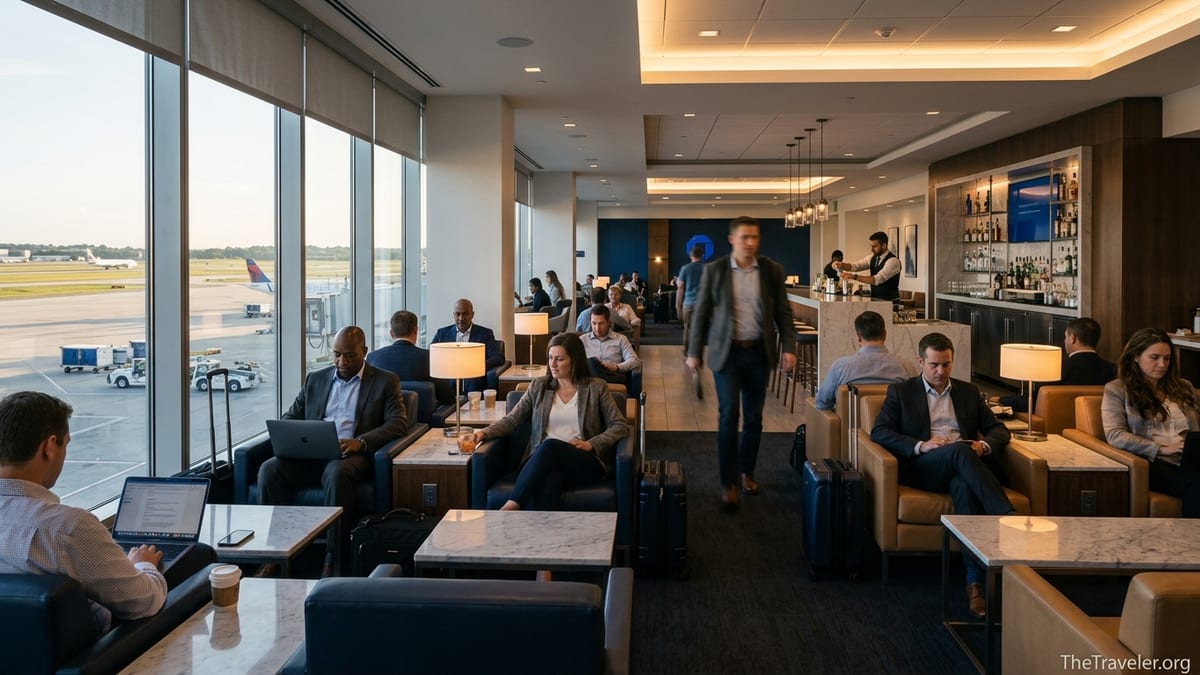
The core question for most travelers is simple: once you are inside, do Chase Sapphire Lounges feel like a meaningful upgrade over the main terminal? In most locations, the answer is yes. Take the LaGuardia lounge in Terminal B, which spans more than 20,000 square feet across two floors. Guests describe it as bright and airy, with wide windows looking onto the ramp, multiple seating zones, a speakeasy-style bar on the upper level, and quieter corners where business travelers can work before a shuttle to Chicago or Washington.
Food and beverage quality is a clear differentiator from more basic contract lounges. Instead of a few trays of chips and cookies, you might find a menu of small plates like roasted vegetables, seasonal salads, and hot dishes that rotate throughout the day. At the Philadelphia lounge, Chase highlights locally inspired touches such as cheesesteak-style sliders and soft pretzels, paired with a selection of regional beers. These are complimentary once inside, with no tipping or additional charges required.
Amenities go beyond food. Many Sapphire Lounges feature shower suites, family rooms, wellness or nap areas, and dedicated workspaces. In Boston, travelers frequently mention the shower rooms as a lifesaver after an overnight flight from Europe before connecting onward. At Washington Dulles, the Etihad / Chase Sapphire lounge mixes Chase branding with Etihad’s own premium space, giving Reserve cardmembers a more international-lounge feel than they might expect in a third-party facility.
That said, real-world experience does vary. The Las Vegas lounge, located in a busy leisure hub, is often described as smaller and more crowded, especially on weekends when waves of flights depart for West Coast cities. During peak times, it can feel more like a nice bar in the terminal than a peaceful sanctuary. As with most modern lounges, the best experiences tend to be in the early morning and late evening, outside the midday and Sunday afternoon rushes.
How It Compares to Other Lounge Options
To judge whether the Sapphire network is “legit” for lounge access, you have to weigh it against the alternatives. American Express Centurion Lounges are the closest comparison in terms of positioning and amenities. They are known for chef-driven food, specialty cocktails, and often eye-catching design. However, frequent flyers have noticed that Centurion Lounges can be very crowded, leading to occasional entry waitlists even for Platinum cardholders. In markets where both exist, such as Las Vegas, many travelers now treat the Chase Sapphire Lounge as a slightly quieter alternative with comparable food and drinks.
Capital One Lounges are another competitor in airports like Dallas Fort Worth and Washington Dulles. These offer strong grab-and-go options and high-quality food and beverage service, and they are generally accessible with a Capital One Venture X card. If you are based at an airport served by Capital One rather than Chase, those might offer more value simply because of location. In contrast, a Boston-based flyer who travels primarily on JetBlue and Delta might find that the Sapphire Lounge in Terminal B is far more convenient than an airline-branded club deeper in another concourse.
Airline lounges remain an important part of the equation. A United frequent flyer with a United Club membership at Newark, for instance, may still prefer the reliability and location of United’s own spaces near their gates, even if a Sapphire Lounge were available in another terminal that requires reclearing security. The same is true at hubs like Phoenix or Philadelphia, where airline clubs can be better located for tight domestic connections. For these travelers, Sapphire Lounges are a nice add-on rather than the primary lounge solution.
The tradeoff comes down to network breadth versus depth. Priority Pass with a Sapphire Reserve card gives you access to more than a thousand lounges worldwide, but those vary widely in quality. The Sapphire-branded lounges are at the top end of that spectrum, but they exist in a relatively small number of airports. If your home or most frequent airport has one of these lounges in the right terminal, the network feels extremely valuable. If not, it may change your flying habits only occasionally.
Real-World Scenarios: When Sapphire Lounges Work Best
Consider a traveler based in Boston who flies to the West Coast several times a year on JetBlue from Terminal B. With a Sapphire Reserve card, they can arrive at Logan two hours before a 7 a.m. departure, clear security, and head directly to the Sapphire Lounge. After grabbing a proper breakfast and coffee away from the hectic main concourse, they have a quiet place to answer emails before boarding. For this traveler, the lounge is not just a perk; it is part of their routine and makes the early wake-up call a bit more tolerable.
Now picture a leisure traveler from Philadelphia flying to Europe once a year. They might use the PHL Sapphire Lounge before their outbound overnight flight. The locally inspired menu and beer garden-style area make for a more memorable sendoff than a chain restaurant in the terminal. Because access through Sapphire Reserve includes up to two guests, a couple or small family can all enter without worrying about extra charges. The value here is concentrated in one or two trips a year, but the difference in comfort just before a long flight is significant.
On the other hand, imagine a traveler connecting through JFK with a six-hour layover between domestic and international flights. Even with a Sapphire Reserve card, the three-hour entry window means they will likely only be able to use the lounge for the last portion of their layover. If their flights are in different terminals, and the lounge requires re-clearing security or involves long walks, the benefit starts to shrink. In that scenario, an airline lounge near the connecting gate or a more flexible independent lounge might be more practical.
Another edge case is families and groups. A road warrior traveling alone or with one colleague slides neatly into the two-guest rule. A family of five, however, will face guest fees for extra members, which adds up on top of already high peak-season fares. For that family, it may be smarter to use the Sapphire lounge when traveling with just one other adult and rely on decent terminal dining when the full group is along.
Costs, Crowding, and Hidden Tradeoffs
Although Chase Sapphire Lounges do not charge entry fees to eligible cardholders, the access is not truly free. The Sapphire Reserve card carries a substantial annual fee, and while that fee is offset in part by travel credits and other perks, lounge access is one of the main reasons frequent travelers justify renewing the card each year. If you rarely pass through airports with Sapphire Lounges or other quality Priority Pass options, you should be honest with yourself about how much of the fee is actually being put to work for you.
Crowding is another tradeoff that feels very real on busy travel days. As Chase has expanded the lounge network and more people have obtained Sapphire Reserve and similar premium cards, these spaces have become busier. In some lounges, travelers encounter waitlists at evening bank times, or they notice that the most desirable seating fills up quickly. In Las Vegas, for example, late afternoon hours before waves of flights to California and the Pacific Northwest can be particularly packed, reducing the sense of sanctuary that lounge access is supposed to provide.
It is also worth noting that the Sapphire Lounges are just one piece of the broader Priority Pass offering tied to the card. At some airports, Chase’s own lounges do not exist, but you may still have access to contract lounges, independent operators, or even restaurant credits via Priority Pass. For a traveler based in a smaller city such as Cleveland or Nashville, the day-to-day value might come from those third-party options, with Sapphire Lounges reserved for occasional trips through hubs where they are present.
Finally, policies can and do change. Chase has already adjusted guest rules, introduced reservation requirements in certain locations, and shifted its network strategy in response to crowding and competition. Travelers who build their entire airport strategy around one network should keep an eye on communications from Chase and check details in the app before assuming that last year’s rules still apply this year.
The Takeaway
So is the Chase Sapphire Lounge network legit for airport lounge access in 2026? For many travelers, the answer is yes, with important caveats. The lounges themselves are real, high-quality spaces that often compare favorably with more established competitors. At flagship locations like Boston, LaGuardia and Philadelphia, the combination of thoughtful design, solid food and beverage programs, and amenities like showers and wellness rooms can transform a pre-flight wait from a chore into a pleasant part of the journey.
However, the value you get depends heavily on how and where you travel. If you frequently pass through airports and terminals with Sapphire Lounges and hold a Sapphire Reserve or equivalent card, these spaces can absolutely serve as your primary lounge solution. They are especially compelling for solo travelers and couples who fall neatly into the included guest policies and tend to arrive two to three hours before departure. In that scenario, Chase Sapphire Lounges are not only legitimate, they are one of the strongest reasons to keep paying a premium card’s annual fee.
If your home airport is outside the network, your trips involve long layovers that exceed the three-hour entry rule, or you regularly travel with larger groups, then Sapphire Lounges may feel more like an occasional bonus than a dependable benefit. You will still have access to the broader Priority Pass network, but the marquee Sapphire spaces will be more of a special treat than a foundation.
The smartest approach is to map your own travel patterns against the current Chase Sapphire Lounge locations and rules. If the pieces line up, you can confidently treat these lounges as a cornerstone of your airport experience. If not, consider them a valuable, but supplemental, tool in a broader mix that might include airline clubs, Capital One or Amex lounges, and the occasional well-chosen terminal restaurant.
FAQ
Q1. Which credit cards get me into Chase Sapphire Lounges?
Chase Sapphire Reserve, J.P. Morgan Reserve, The Ritz-Carlton Credit Card and Sapphire Reserve for Business primary cardmembers and their authorized users have complimentary access using the Priority Pass Select membership tied to the card.
Q2. Can I use a non-Chase Priority Pass card to enter?
Yes, but with limits. Most non-Chase Priority Pass members get one complimentary visit per calendar year to a Chase Sapphire Lounge, and additional visits are typically charged at a higher per-visit fee, so it is less generous than access with a Sapphire Reserve card.
Q3. How many guests can I bring into a Sapphire Lounge?
Eligible Chase Sapphire Reserve, J.P. Morgan Reserve and Ritz-Carlton cardmembers can usually bring up to two guests for free. Any additional guests will incur a per-person charge, which is billed to the card on file.
Q4. Do Chase Sapphire Lounges have a time limit on visits?
Yes. Standard policy is that you may enter within three hours of your scheduled departure time, and staff often enforce this even for connecting passengers with long layovers, so you should not expect to spend an entire day inside.
Q5. Are food and drinks really free inside the lounge?
Once you have been admitted, food, nonalcoholic drinks and most alcoholic beverages are complimentary. Some locations may offer premium wines or spirits for an extra charge, but the core menu does not require payment or tipping.
Q6. How crowded are Chase Sapphire Lounges in practice?
Crowding varies by airport and time of day. Large locations like LaGuardia and Boston generally handle traffic well outside peak hours, but evenings, holidays and Sunday afternoons can bring waitlists or difficulty finding the best seating.
Q7. Is the Sapphire Lounge network better than Priority Pass alone?
For many travelers, yes. Priority Pass alone gives broad but inconsistent lounge access. The Sapphire-branded lounges are usually among the highest-quality options in that network, so holding a Sapphire Reserve card effectively upgrades your Priority Pass experience where those lounges exist.
Q8. What if my home airport does not have a Chase Sapphire Lounge?
In that case, you will rely on standard Priority Pass lounges or restaurant partners at your home airport and treat Sapphire Lounges as an extra benefit on trips that route through cities like Boston, New York or Philadelphia.
Q9. Can I access Sapphire Lounges on arrival instead of departure?
Policies focus on departures, requiring a same-day boarding pass and generally limiting entry to the three hours before your scheduled flight. Some locations may allow short post-arrival visits at staff discretion, but you should not plan on using the lounges regularly as arrival facilities.
Q10. Are Chase Sapphire Lounges worth getting the Sapphire Reserve card for?
They can be, but only if your travel patterns match the network. If you regularly fly through airports that host Sapphire Lounges and can take advantage of the guest policy and three-hour window, lounge access will be a major component of the card’s value. If not, you should weigh other benefits like travel credits, earning rates and broader Priority Pass access before deciding.