


I have spent the past year airport-hopping with a Chase Sapphire Reserve card in my wallet, deliberately routing through cities with Chase Sapphire Lounges by The Club whenever possible. I have also ducked into Priority Pass partner lounges, Capital One Lounges and the occasional pay-per-use escape when nothing else was available. After multiple visits to Chase Sapphire Lounges in Boston, New York and San Diego, I started tracking what I paid, what I would have paid without the card and how the experience compared with other options. This review is my candid take on whether the food, drinks and amenities justify the real-world prices once you factor in annual fees, day passes and what you could get elsewhere in the terminal.
Get the latest updates straight to your inbox!
Where You Will Actually Find Chase Sapphire Lounges Today
Chase Sapphire Lounges by The Club have quietly gone from concept to a genuine network. As of mid-2026, you will find them in major U.S. gateways such as Boston Logan, New York LaGuardia, New York JFK, Philadelphia, Phoenix, San Diego and Las Vegas, along with an earlier flagship in Hong Kong. Chase also partners on the Etihad-branded space at JFK Terminal 4, which is effectively a Sapphire Lounge with an Etihad carve-out for its premium cabin passengers. New locations continue to be announced, but these are the ones you are most likely to encounter on common domestic and transatlantic routes.
In practice, this means the lounge fits easily into real itineraries. On a Boston to San Diego run, for instance, you can start in the Sapphire Lounge at Logan’s Terminal B and end in the new space at San Diego International, never relying on a generic Priority Pass lounge. Travelers based around New York can hit LaGuardia’s rebuilt Terminal B lounge for domestic flights or JFK Terminal 4 before international departures. West Coast flyers connecting through Phoenix or Las Vegas will increasingly see Sapphire Lounges as an alternative to airline-specific clubs that require their own memberships.
It is worth stressing that this is still a small network compared with legacy airline clubs. If you mostly fly out of airports without a Sapphire Lounge, you are relying on the broader Priority Pass network and occasional partner lounges, which dilutes the value of the “Sapphire Lounge” branding. In other words, these locations feel premium, but they may not yet justify choosing an airline routing by themselves unless you are already inclined to connect through these hubs.
How Access Really Works: Cards, Priority Pass and Day Passes
On paper, Chase says there are three ways into a Sapphire Lounge: a qualifying Chase card, a Priority Pass membership or a paid day pass. In reality, each path has meaningful caveats that affect how much you are paying for entry and how spontaneous you can be when you see the blue Sapphire logo at your gate.
For most frequent users, the Chase Sapphire Reserve is the gateway. Cardmembers and authorized users can enter any Sapphire Lounge by The Club, plus more than a thousand Priority Pass partner lounges, by showing either the card itself or the associated Priority Pass Select membership along with a same-day boarding pass. Access for the cardholder is complimentary, and up to two guests are included before extra guest charges typically kick in. That “two free guests” detail matters if you regularly travel with family; a family of four can walk into the San Diego lounge, for example, without any extra fees on top of the Reserve’s annual cost.
Priority Pass brings a more limited but still useful option. Travelers who hold Priority Pass through other premium cards, such as some bank-issued travel cards, typically receive one complimentary visit per calendar year to a U.S. Chase Sapphire Lounge, subject to capacity controls. In Hong Kong, the arrangement is more generous and Priority Pass members can visit more freely, but in U.S. locations you should treat Sapphire as a “special occasion” Priority Pass lounge rather than an unlimited stop. Many travelers learn this the hard way when they burn their single annual visit on a short layover in Phoenix and then discover that a second visit in Boston would incur a per-visit charge through their provider.
Finally, there is the paid day pass. Terms vary slightly by airport but you will commonly see prices in the 75 to 100 dollar range for walk-up access when space allows. For example, unofficial airport documents and lounge trackers list Sapphire by The Club day passes around 100 dollars at busy hubs such as New York JFK and Las Vegas. At San Diego, current data points suggest day passes near that same 100 dollar mark when available. That price point instantly puts Chase in competition with a decent sit-down restaurant plus a couple of drinks in the terminal, which is the real-world benchmark for many travelers who do not carry premium cards.
Breaking Down the Real Cost: Is the Lounge “Free” with a Card?
With a 550 to 595 dollar annual fee range typical of top-tier travel cards, it is easy to claim that Sapphire Lounge access is “free” with a Chase Sapphire Reserve. In reality, you are prepaying for the privilege through that fee and need to evaluate the lounge as one benefit among many. A simple way to think about it is to assign a notional value to each visit. If a day pass is effectively priced at 100 dollars, then five Sapphire Lounge visits in a year could be said to offset 500 dollars of your annual fee, ignoring all other perks.
On one Boston round-trip, I deliberately tracked what I would have spent otherwise. At Logan, I arrived three hours early and used the Sapphire Lounge instead of a mid-range airport restaurant. I had a hot breakfast with made-to-order eggs, a cappuccino, a glass of sparkling wine and a shower. In the terminal, that would have likely translated to 40 dollars for food, 6 to 7 dollars for coffee and 14 to 18 dollars for a drink, plus tax and tip. A quick shower in a pay-per-use spa, where available, often runs another 15 to 30 dollars. Conservatively, I would have spent at least 75 to 90 dollars to recreate the same mix of food, caffeine, alcohol and comfort. The lounge felt right in line with the unofficial 100 dollar day-pass value.
Where the math becomes more complicated is for infrequent travelers. If you only fly out of a Sapphire Lounge city once or twice per year and rarely use other Reserve benefits such as travel credits or transfer partners, then each visit is effectively costing hundreds of dollars in annual fee. In that case, standalone day passes or simply choosing a nicer meal in the terminal may be more rational. On the other hand, if you travel monthly, use Priority Pass around the world and regularly leverage Chase’s travel credit, the incremental cost of each Sapphire visit drops dramatically and it begins to feel like genuine added value rather than a splurge.
Amenities: Food, Drinks and Space Compared to Airline Clubs
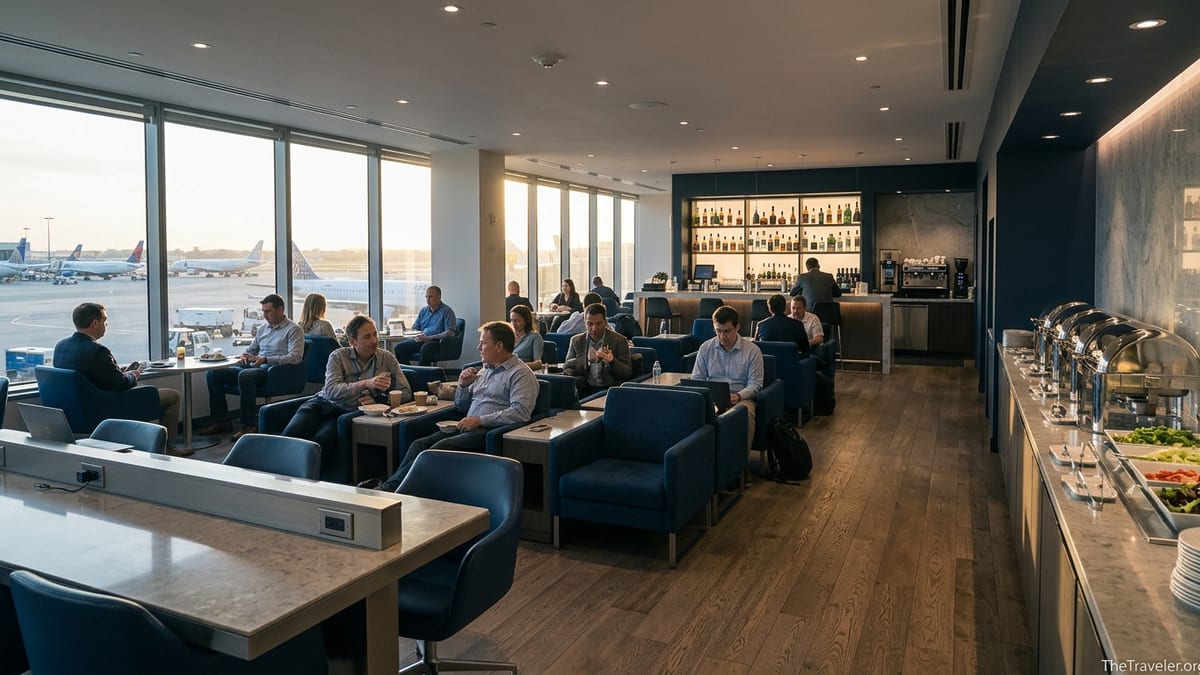
In almost every Sapphire Lounge I have visited, the most immediate impression is that the food looks more like a boutique hotel buffet than a traditional airline club. In Boston, for instance, the hot line has included options like miso-glazed salmon, roasted vegetables and substantial salads, not just a tray of pasta. At peak breakfast, you will see frittatas, Greek yogurt with fresh toppings and a staffed coffee bar. The San Diego lounge follows a similar pattern with regional twists, offering tacos, fresh salsas and pastries that taste closer to a local bakery than a packaged snack rack.
Drinks are another clear step up from mass-market lounges. Premium coffee machines are standard, but the real differentiator is the bar program. In New York, I watched bartenders craft cocktails that would easily cost 15 to 18 dollars apiece outside the lounge, featuring proper glassware and garnishes rather than the plastic-cup gin and tonic that still passes for a “complimentary cocktail” in many airline clubs. Sparkling wine, local craft beer and a small but thoughtful spirits selection are usually available without surcharge, which quickly adds value for travelers who might otherwise buy a round in the terminal.
The spaces themselves feel designed to encourage lingering. At LaGuardia, seating zones are broken into small clusters, with armchairs, banquettes and work nooks separated by plants and acoustic panels. Power outlets are near almost every seat, and there are quiet corners with more subdued lighting for people who need to catch up on sleep. In San Diego, floor-to-ceiling windows let in coastal light, making the lounge feel like an upscale living room rather than a buried club. Compared with some older airline lounges that still resemble generic conference centers, the design effort is noticeable.
That said, Sapphire Lounges are not immune to crowding. On a Friday evening at JFK, the check-in agent was operating a short waitlist and prioritizing Chase Sapphire Reserve cardholders and Etihad premium passengers over one-time Priority Pass visitors. Once inside, the space remained pleasant but decidedly busy, with certain seating zones full and a queue forming for showers. In that environment, the value proposition starts to narrow. If you cannot find a seat or have to hover for power, the theoretical worth of the food and drinks feels less compelling compared with simply finding a quieter restaurant in the terminal.
Showers, Wellness Rooms and Working Spaces
One of the more underrated aspects of the Sapphire network is the emphasis on what I would call “recovery amenities.” Showers are fairly standard across the lounges, equipped with rain heads, premium bath products and proper ventilation so your clothes do not emerge damp. After an overnight flight into Boston, I was able to shower, change into fresh clothes and feel almost human again before a morning meeting, an experience that would have been awkward and time-consuming to replicate in a public restroom.
Many Sapphire Lounges also include small wellness rooms and semi-private spaces. In LaGuardia, there are quiet rooms with reclining loungers and dimmed lighting that function as short-term nap pods. Some locations experiment with massage chairs or meditation rooms where you can disconnect from the boarding calls echoing through the terminal. None of these match the fully enclosed suites you might find in top-tier international lounges, but they are a meaningful step above the basic seating areas in many Priority Pass facilities.
For working travelers, the lounges provide a practical mix of communal tables, two-top desks and high-backed booths that offer enough privacy for calls when used with headphones. During a long layover in Phoenix, I comfortably spent two hours on video conferences using the lounge Wi-Fi without dropouts, something that would have been more challenging in a public gate area competing with hundreds of other devices. This is where the true value of lounge access often lives: not in the buffet, but in the ability to treat a two- or three-hour layover as productive time.
However, availability can be limited during banked departure waves. Showers are often managed by waitlist, and small wellness rooms might be occupied for extended periods by travelers catching naps. If you are counting on a shower before a long-haul overnight flight, it is wise to head directly to the desk and secure a slot on arrival rather than assuming immediate access.
Comparing Sapphire Lounges to Capital One, Amex and Priority Pass
When you compare across premium lounge ecosystems, Sapphire Lounges generally land in the same tier as Capital One Lounges and slightly below the very best American Express Centurion Lounges. Capital One’s flagship spaces in Dallas and Washington, for example, feature similarly inventive food and beverage programs, strong design and amenities like exercise rooms and cycling equipment that Chase has not yet widely replicated. On the other hand, Chase’s network is slowly catching up and in some cities, such as Boston or San Diego, the Sapphire Lounge is arguably the nicest non-airline option available.
Against Centurion Lounges, Sapphire often feels a touch calmer but slightly less extravagant. Amex tends to go big on high-end bar programs and chef partnerships, especially in hubs like New York and San Francisco. Chase’s approach is a bit more restrained, with fewer marquee names but consistently solid quality. In Las Vegas, for instance, Sapphire competes directly with multiple Centurion and airline lounges. If you hold both cards, your choice may come down to which lounge is less crowded at your departure time rather than any huge quality gap.
The more interesting comparison is with generic Priority Pass lounges and contract spaces like The Club or Aspire. In many airports, those lounges offer limited snacks, basic drinks and seating that fills quickly. A Sapphire Lounge, by contrast, feels like a significant upgrade in both design and offerings, even if it shares a management company with some of those contract lounges. When your alternative is a cramped space with packaged crackers and filtered coffee, paying a bit more in annual fees or using a precious Priority Pass visit for a Sapphire location makes intuitive sense.
Where Sapphire falls short is simply availability. Capital One and Amex have each focused on a smaller set of high-impact locations, but Amex especially has a longer legacy network. Chase is still building out its footprint. If your home airport has a Sapphire Lounge and you travel frequently through one or two other Sapphire cities, the ecosystem feels coherent. If not, you may find yourself defaulting to whichever lounge you can actually access on a given itinerary, regardless of brand.
The Takeaway
After a year of deliberately seeking out Chase Sapphire Lounges and comparing what I received against what I would realistically pay in the terminal, my conclusion is that these spaces deliver solid value for regular travelers who already make full use of a premium Chase card. The food is genuinely good rather than merely acceptable, the drinks are on par with competent city bars and the design feels intentionally comfortable instead of purely functional. A typical three-hour visit at a busy airport easily replaces 75 to 100 dollars of restaurant and bar spending, which aligns closely with unofficial day-pass pricing.
That said, Sapphire Lounges are not a reason by themselves to carry a high-annual-fee card or to radically reroute your travel. For occasional flyers or those whose home airports lack a Sapphire presence, the effective cost per visit remains high, and a nice meal in the terminal can be both cheaper and more predictable. Crowding is a real factor during peak banks, and the limited one-visit-per-year policy for most non-Chase Priority Pass members makes these lounges more of a treat than a staple.
If you are already in the Chase ecosystem, especially with a Sapphire Reserve card, think of the lounges as an amplifier of value rather than the foundation. Plan ahead, arrive a bit early at airports like Boston, LaGuardia, JFK or San Diego, and treat the lounge as a comfortable workspace, dining room and reset zone between flights. Used this way, Chase Sapphire Lounges compare favorably with most competing premium spaces and can turn a long layover from a chore into something close to an enjoyable pause in your trip.
FAQ
Q1. Do I need a Chase Sapphire Reserve card to use a Chase Sapphire Lounge?
While the Sapphire Reserve is the most straightforward way in, you can also access Chase Sapphire Lounges with certain other premium Chase cards that include Priority Pass Select, or with a standalone Priority Pass membership that typically grants one complimentary Sapphire Lounge visit per calendar year in the United States, subject to capacity. Some locations also sell paid day passes when space allows.
Q2. How much does a Chase Sapphire Lounge day pass usually cost?
Pricing varies by airport, but recent examples at major hubs suggest that day passes commonly fall in the 75 to 100 dollar range per person. At New York JFK and Las Vegas, for instance, unofficial airport and lounge documentation has indicated walk-up day-pass pricing near the 100 dollar mark when available.
Q3. Are food and drinks free inside Chase Sapphire Lounges?
Yes, in practice the vast majority of food and standard drinks are included with your lounge entry. You can expect a hot buffet, salads, desserts, specialty coffee and a selection of wines, beers and basic cocktails without extra charges, though some locations may offer premium wines or rare spirits for an additional fee.
Q4. Can I bring my family or guests into a Sapphire Lounge?
Chase Sapphire Reserve cardholders and authorized users typically receive complimentary access for themselves plus up to two guests. Additional guests may incur a per-person charge that is billed via the card’s lounge program. If your guests hold their own eligible Priority Pass memberships, they may be able to enter on their own allotment instead of counting against your guest limit.
Q5. How early before my flight can I enter a Chase Sapphire Lounge?
Most Sapphire Lounges follow the general Priority Pass guideline that you can enter up to three hours before your scheduled departure time. Some locations may allow slightly earlier access for long-haul international flights, but you should not count on being admitted many hours in advance unless specifically indicated by lounge staff.
Q6. What happens if the lounge is full when I arrive?
When a Sapphire Lounge reaches capacity, staff may operate a waitlist and prioritize Chase Sapphire Reserve cardholders and eligible partner airline premium passengers. Priority Pass visitors, especially those using a one-time annual visit, may be asked to wait longer or may be turned away entirely during peak periods. If a visit is not recorded, it normally does not count against your annual Priority Pass allotment.
Q7. Are Chase Sapphire Lounges better than Priority Pass lounges?
In general, Sapphire Lounges are a noticeable step up from many standard Priority Pass facilities in terms of design, food quality and bar offerings. Where a typical contract lounge might offer packaged snacks and basic drinks, a Sapphire Lounge is more likely to feel like a high-end hotel lobby bar, with hot dishes, fresh salads and crafted cocktails included in entry.
Q8. Do Chase Sapphire Lounges have showers and quiet rooms?
Yes, most Sapphire Lounges include shower suites equipped with good water pressure and quality bath products, and many also have quiet or wellness rooms designed for short naps or meditation. Access to these spaces is often managed by a sign-up list, so it is wise to request a spot soon after you check in, especially before long overnight flights.
Q9. If I only travel a few times a year, is it worth paying for a card just for lounge access?
Probably not. If you only fly a couple of times annually and rarely pass through airports that have Sapphire Lounges, the effective cost per visit after factoring in a high annual fee can be very high. In that situation, paying for an occasional day pass or simply budgeting for a nicer meal in the terminal is usually more economical.
Q10. How do Chase Sapphire Lounges compare to American Express Centurion Lounges?
Chase Sapphire Lounges generally feel competitive but slightly less extravagant than the best Centurion Lounges. Centurion often has more marquee chef partnerships and elaborate bar programs, while Sapphire tends to emphasize calm design, solid food and a strong but not flashy drink selection. If you have access to both, your choice will often come down to which lounge is closer to your gate and less crowded at your departure time.