


More news on this day
Rising from the forests of the Loire Valley like an elaborate stone crown, the Château de Chambord remains one of France’s most spectacular Renaissance landmarks and a focal point for travelers exploring the country’s historic heartland.
Get the latest news straight to your inbox!
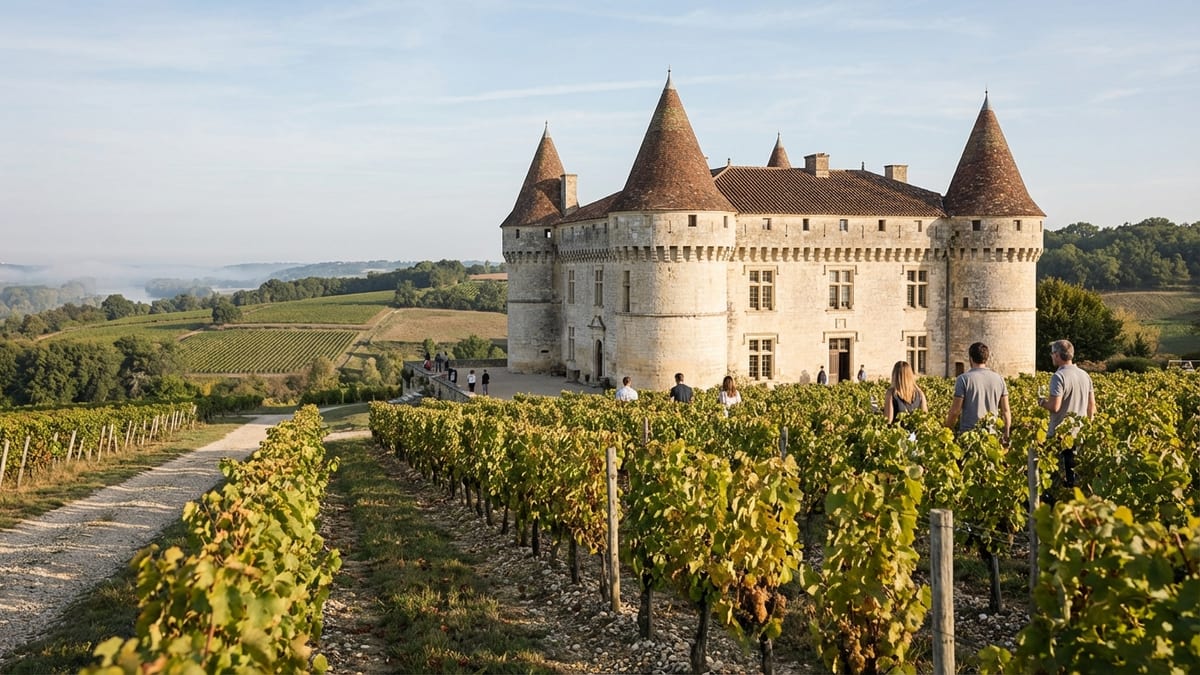
A Renaissance Vision in the Loire Heartland
Commissioned by King François I in 1519 as a monumental hunting retreat, Château de Chambord has long symbolized the ambition and artistic flair of the French Renaissance. Publicly available historical accounts describe how the king, inspired by the architectural innovations he encountered in Italy, sought to create a residence that would showcase his power while embracing new ideas in design and engineering.
Chambord today stands as the largest château in the Loire Valley, with a central keep, four massive towers and an immense roofline bristling with chimneys, turrets and lanterns. UNESCO documentation highlights the château and its surrounding cultural landscape as emblematic of the broader Loire Valley World Heritage Site, recognized for its blend of architecture, history and cultivated nature.
The estate sits within a vast walled park in the Loir-et-Cher department, surrounded by forests, wetlands and managed farmland. This mix of built and natural heritage is central to Chambord’s appeal, offering visitors a sense of stepping into a self-contained world where royal ceremony, hunting traditions and experimental design once converged.
Architectural Marvels and the Spirit of Leonardo
Much of Chambord’s enduring fascination lies in its architecture, which combines traditional medieval forms with audacious Renaissance experimentation. Official estate interpretations note that while the château retains the silhouette of a fortified castle, its military features are largely symbolic, serving aesthetic and ceremonial purposes rather than defensive ones.
The most celebrated element inside is the double-helix staircase at the core of the central keep. This ingenious construction consists of two intertwined flights of stairs that allow people to ascend and descend without crossing paths, while still remaining visible through openings in the central column. Comparisons between the staircase and surviving sketches from Leonardo da Vinci’s notebooks have led many scholars to point to his influence, even though the exact architect of Chambord remains the subject of debate.
Above the staircase, visitors reach the vast terraces that open out beneath the sculpted roofline. From here, hundreds of chimneys and spires form a fantastical skyline, sometimes compared in travel coverage to a stone version of a miniature city. The design reflects Renaissance fascination with geometry and perspective, with symmetrical façades, carefully proportioned towers and axial views that extend toward the surrounding forest and canals.
Five Centuries of Power, Politics and Preservation
Chambord’s story did not end with François I. Over nearly 500 years, the château has hosted monarchs, exiled royals and military figures, and has repeatedly adapted to changing political fortunes. Historical summaries recall how Louis XIV used Chambord as a setting for courtly stays and theatrical performances, while the 19th century saw the estate associated with the Bourbon pretender known as the Comte de Chambord.
In the 20th century, the property passed fully into French state ownership, becoming a symbol of national heritage and a key stop on the growing Loire châteaux tourism circuit. Conservation campaigns have sought to stabilize and restore the sprawling building, which faces structural challenges from age, prior modifications and evolving climatic conditions.
Recent press coverage in France has drawn attention to a major restoration program focused on the François I wing, where structural fragility has led to the partial closure of certain rooms since 2025. Reports indicate that a multi-phase works plan running into the next decade aims to reinforce foundations, repair masonry and safeguard key interiors. Public information released by the estate and the French culture ministry points to a combined funding approach, including state allocations, on-site revenue and a high-profile public donation campaign.
Visiting Chambord in 2026: Practical Details and New Experiences
For travelers planning a visit in 2026, Chambord offers a mix of historic spectacle and contemporary cultural programming. Current visitor information from the estate describes a ticket that generally covers access to the château and its formal French gardens, with an adjusted pricing system introduced on an experimental basis from January 2026. Admission levels differ for European Economic Area residents and international visitors, and there are concessions for young people and certain eligible groups.
Published schedules show that the château’s opening hours vary slightly by season, with extended hours from late March to late October to accommodate peak travel months in the Loire Valley. Travelers are advised to check times for specific dates, as occasional large-scale events can alter closing times or vehicle access around the estate. Regional tourism listings indicate that for the 2026 high season, Chambord continues to anchor itineraries that also include nearby sites such as Blois, Cheverny and Amboise.
The estate has also invested in visitor tools that bring the architecture and history to life. Official materials highlight an interactive 3D model of the double-helix staircase and a digital guide application designed to help guests navigate the château, its gardens and the wider park. These tools support self-guided visits through royal apartments, ceremonial spaces, 18th century kitchens and exhibition areas that explore themes from court life to contemporary art.
Gardens, Forests and Events in the Loire Landscape
Beyond the stone façades, Chambord’s setting is integral to its character. The château stands inside what is described as the largest enclosed park in Europe, with a perimeter wall extending more than 30 kilometers around a mosaic of woodland, meadows and waterways. Visitors can explore signposted walking and cycling routes, observe wildlife and experience the landscape that originally drew François I to use the site as a hunting domain.
The formal French gardens, restored and reinterpreted over recent decades, present geometric parterres, clipped hedges and framed views of the château’s monumental façades. Estate information notes ongoing work to balance historical authenticity with ecological considerations, including careful planting choices and water management in response to shifting weather patterns.
Chambord’s cultural calendar adds another layer of appeal. The official program for 2026 features events ranging from equestrian shows and open-air performances to temporary art exhibitions, designed to animate the courtyards and park without overshadowing the historic fabric. A highlight of the upcoming season is a major open-air concert scheduled for late June 2026, which is expected to draw large crowds and briefly transform the château’s setting into a contemporary stage for international music.
For travelers, these activities underscore Chambord’s dual role as both a carefully managed historic monument and a living cultural venue. Combined with nearby vineyards, river landscapes and other Loire Valley châteaux, the estate offers a comprehensive introduction to the region’s blend of art, history and scenic beauty that continues to captivate visitors from around the world.