


More news on this day
American Airlines passengers at Tampa International Airport faced an evening of mounting disruption as two departures were cancelled and several more delayed, snarling travel plans to cities including New Orleans, Philadelphia, Pensacola, San Antonio and Denver.
Get the latest news straight to your inbox!
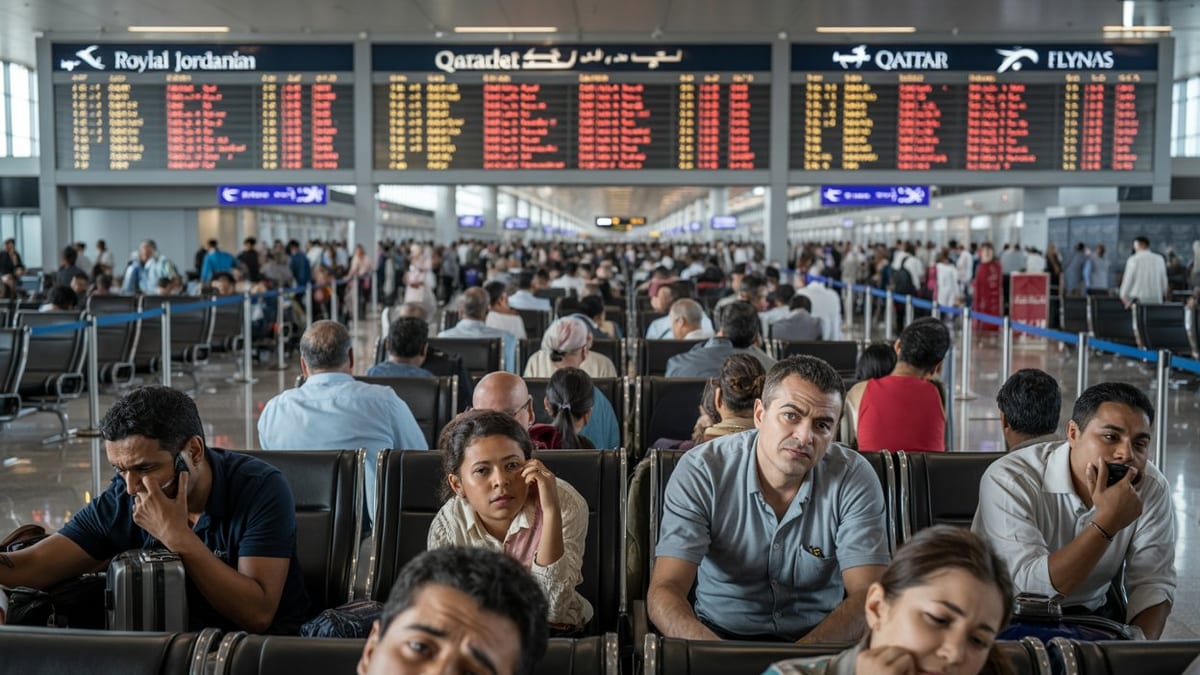
Localized Disruption Hits Key American Airlines Routes
Publicly available flight-tracking data and schedule boards on Monday indicate that a cluster of American Airlines departures from Tampa International Airport has been affected by a mix of cancellations and extended delays, concentrating the impact on a relatively small but busy group of domestic routes. Destinations such as New Orleans, Philadelphia, Pensacola, San Antonio and Denver feature prominently in Tampa’s network and rely heavily on connections via major American hubs.
The pattern seen in Tampa reflects a broader reality of tightly choreographed airline operations across the United States. When an individual aircraft or crew pairing goes out of sync, the effects can cascade along a route map, creating localized pockets of disruption even when the wider airport schedule appears to be functioning normally. For travelers headed to secondary and mid-sized cities, these disruptions often translate into long waits for the next available seat.
According to recent performance data, services between Tampa and Philadelphia, a key American Airlines gateway, have shown sensitivity to late-evening delays on multiple days as aircraft arrive behind schedule from the Northeast and Midwest. Those knock-on delays can compress the overnight maintenance and repositioning window, increasing the risk of short-notice cancellations on subsequent rotations.
In the current episode, Tampa-bound and Tampa-originating flights tied into New Orleans, Pensacola, San Antonio and Denver are among those seeing the greatest disruption, illustrating how issues affecting one or two high-demand aircraft can ripple out to a web of connecting flights across the Southeast and central United States.
Weather, Congested Skies and Operational Strain
Reports from aviation advisories and recent operations summaries suggest that spring weather patterns remain an important backdrop for delays and cancellations nationwide. Ground-delay programs and traffic-management initiatives have been in place at various major hubs in recent weeks as storm systems move across U.S. coasts, forcing airlines to slow or temporarily halt departures and arrivals.
When such programs are activated at hub airports, airlines often respond by trimming schedules, consolidating lightly booked flights or cancelling select rotations to preserve overall network resilience. For a carrier like American Airlines, whose Tampa services feed through large connecting hubs, any upstream disruption can quickly translate into missing aircraft or crews for later departures in Florida.
Industry analyses published this year note that weather is still the most commonly cited external factor behind U.S. flight cancellations, followed by air traffic control constraints and runway or taxiway congestion. Behind those factors, staffing imbalances and tight aircraft utilization patterns can amplify the impact, particularly during peak travel periods and in the evening hours when operational buffers are thinnest.
In Tampa’s case, the latest round of disruption occurs against a backdrop of strong demand on routes to Denver, Philadelphia and Texas and Gulf Coast cities, which have all seen steady or growing passenger volumes through early 2026. That demand limits the number of empty seats available on later services, making same-day rebooking slower for travelers whose flights are suddenly cancelled.
Ripple Effects for New Orleans, Pensacola and the Gulf Coast
The cancellations and delays at Tampa International are also being felt downline across the Gulf Coast, where cities such as New Orleans and Pensacola depend heavily on a mix of leisure, business and visiting-friends-and-relatives traffic. Airline schedule snapshots for May highlight regular flows between these markets and Florida, with Tampa serving as both an origin and an intermediate point for travelers reaching smaller airports.
When Tampa departures are cancelled, travelers bound for New Orleans or Pensacola often face the prospect of multi-stop routings through distant hubs, overnight stays or switches to other airlines and airports. In some cases, a missed Tampa connection can turn what should be a short, same-day journey into an itinerary stretching well into the next day.
Published data from recent months show that Gulf Coast airports have already been managing a variable pattern of delays tied to weather and traffic-management initiatives along the southern tier of the United States. The additional shock of same-day cancellations from a key origin like Tampa can push gate capacity, baggage handling and customer service desks to their limits during busy afternoon and evening departure banks.
For tourism-reliant destinations around the Gulf, irregular operations at multiple feeder airports can also complicate hotel check-in patterns, cruise departures and event logistics, particularly when groups arrive late or not at all. Travel providers monitoring Monday’s disruptions are likely to be watching closely for any spillover into midweek demand.
Philadelphia, San Antonio and Denver Face Connection Challenges
Farther afield, disruptions on Tampa departures are adding stress to itineraries that connect through or terminate in Philadelphia, San Antonio and Denver. These cities function both as endpoints and as crucial links in American Airlines’ wider network, and delays at one end of a route frequently cascade through to the other.
Operational snapshots show that Philadelphia remains a major gateway for transcontinental and transatlantic itineraries, making on-time performance of feeder flights from Tampa particularly important for passengers with international connections. A late or cancelled Tampa departure can quickly mean missed long-haul flights and the need to rebook scarce seats on subsequent departures.
San Antonio and Denver, important nodes for business and leisure travel in Texas and the Mountain West, face similar challenges. When aircraft that should be rotating through Tampa arrive late from other cities, departures to these destinations may be held for connecting passengers, reshuffled among available aircraft or in some instances cancelled outright if crew or maintenance constraints arise.
Travel industry commentary notes that these dynamics are not unique to American Airlines, but the carrier’s specific hub structure and scheduling practices determine how and where the strain appears on any given day. For passengers on Tampa-linked routes, that can mean a disproportionate share of evening and late-night disruptions when schedules are already tight.
What Stranded Travelers at Tampa Can Do Now
For travelers caught up in Monday’s cancellations at Tampa International, rebooking options will depend largely on seat availability, fare class and the cause of the disruption. Consumer advocacy guidance generally recommends that passengers first use an airline’s mobile app or website to search for alternative flights while simultaneously monitoring departure boards inside the terminal, rather than waiting solely in line at service counters.
Publicly available airline policies indicate that when cancellations are within the carrier’s control, such as those tied to aircraft maintenance or certain crew scheduling issues, travelers may be eligible for complimentary rebooking on the next available flight and, in some circumstances, hotel or meal vouchers. When weather or air traffic control restrictions are identified as the primary cause, assistance often focuses on rebooking, with out-of-pocket costs for accommodation and meals left to the traveler.
Travel experts consistently advise building extra time into connections involving busy hubs and spring travel dates, particularly on routes where historical data shows recurring evening delays. For those heading to New Orleans, Philadelphia, Pensacola, San Antonio or Denver from Tampa, considering earlier departures, nonstop options where available, or even alternative Florida airports may reduce the likelihood of being caught by a late-day cancellation.
As Tampa International continues to handle hundreds of daily departures, the current American Airlines disruptions serve as a reminder that even a handful of cancelled and heavily delayed flights can leave a visible mark on concourses and departure lounges. For passengers, preparation, flexibility and close monitoring of flight status remain the best tools for navigating an increasingly busy and weather-sensitive U.S. air travel system.